Astronomers discover lunar landslides triggered by moonquakes
Scientists say moonquakes can last for hours due to how dry the Moon is
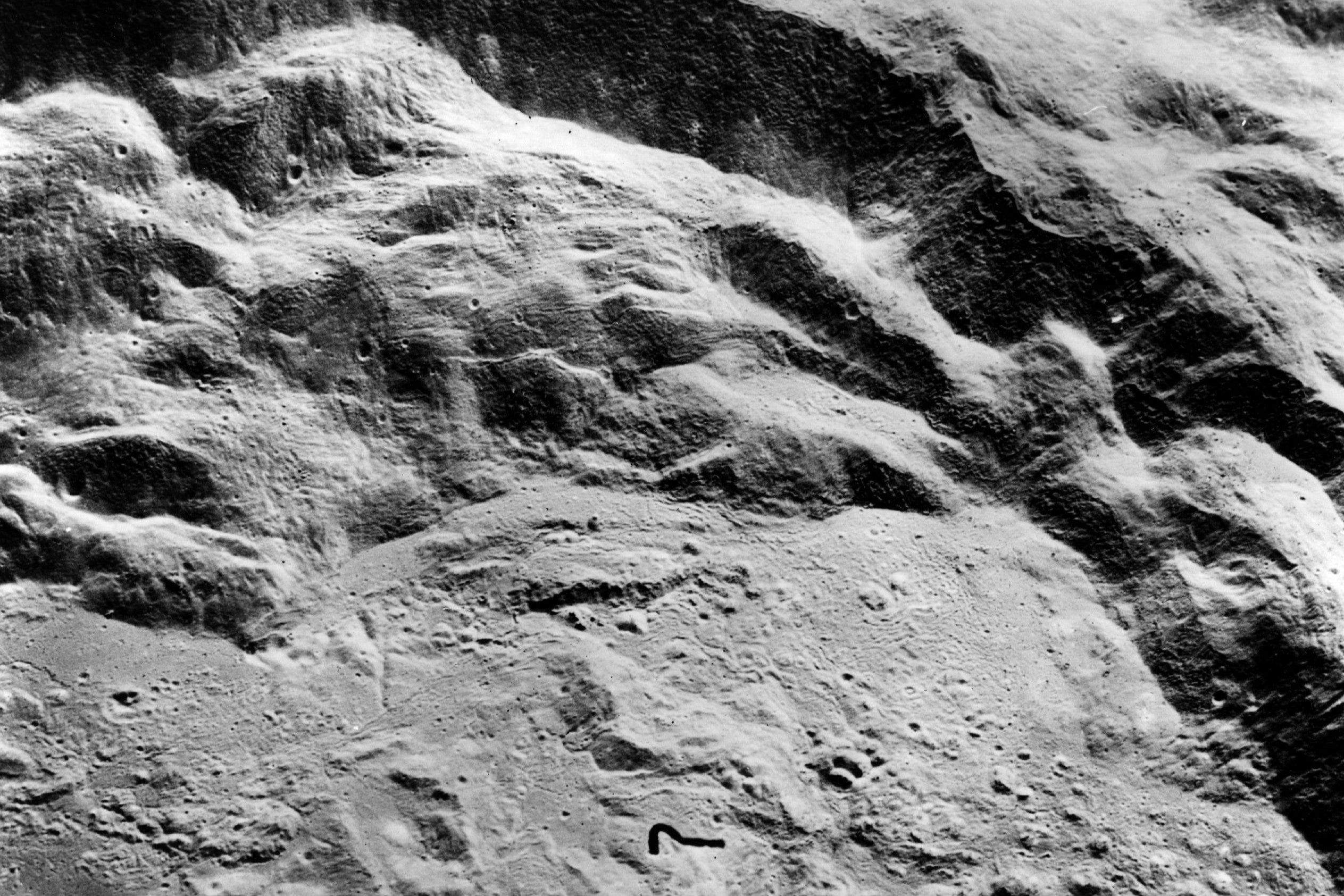
Astronomers have discovered landslides on the Moon triggered by geological activity under the lunar surface.
A team from China observed the so-called moonquakes using before-and-after satellite imagery, with the findings offering a new insight into suitable landing locations for future spacecraft.
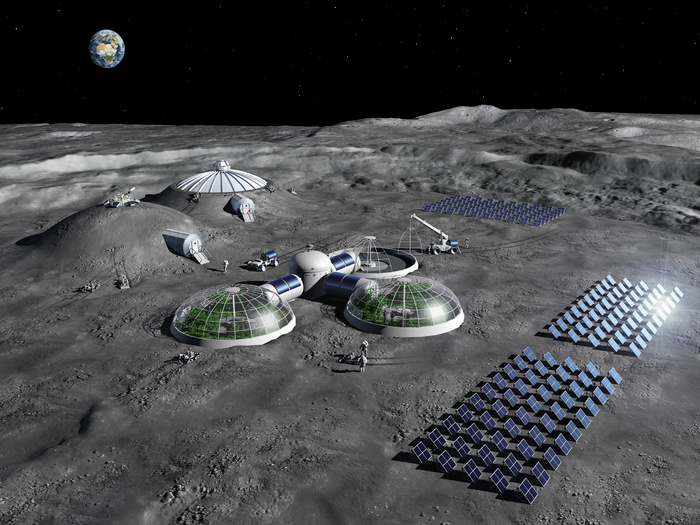
The scientists from Fuzhou University, Shanghai Normal University and Sun Yat-sen University said their research could also inform international space agencies who are hoping to establish lunar bases and research stations in the next decade.
“Human civilisation has never been closer to establishing permanent infrastructures on the Moon, which will serve as scientific research stations and/or deep-space outposts,” the researchers wrote in a paper, which was published in the National Science Review journal.
“While moonquakes were detected during the Apollo missions, conventional geological wisdom posited that lunar endogenic activity had essentially ceased, leaving geological hazard assessments of lunar seismicity largely unexplored.”
The research team observed 41 new landslides on the Moon since 2009, with each one measuring an average of 1 kilometre (0.6 miles) long 100 metres (328 feet) wide – much smaller than the average landslide on Earth.
Despite the size disparity, moonquakes could be potentially more hazardous than earthquakes due to how dry the Moon is.
Without water to absorb the shock of the seismic waves, moonquakes could conceivably last for hours, the researchers noted.
The China National Space Administration (CNSA) is currently working with Russia’s Roscosmos to build a research station at the lunar South Pole by 2035.
In the US, Nasa is working with international partners like the European Space Agency (ESA) to set up a lunar outpost as part of its Artemis program.
As well as containing abundant resources like hydrogen and rare earth elements, the Moon can serve as a launch pad for missions further out into the Solar System.
The US space agency said in its Artemis program plan that a permanent presence on the Moon can allow for a “sustained program of lunar exploration and development”, bringing both economic and scientific rewards.
“The Moon is the gateway to the solar system,” the document stated.
“Over the next decade, the Artemis program will lay the foundation for a sustained long-term presence on the lunar surface and use the Moon to validate deep space systems and operations before embarking on the much farther voyage to Mars.”
Join our commenting forum
Join thought-provoking conversations, follow other Independent readers and see their replies
Comments
Bookmark popover
Removed from bookmarks