Geminid meteor shower peak will see multi-coloured shooting stars
Meteors will appear yellow, red, green and blue this week as they burn up in the Earth’s atmosphere
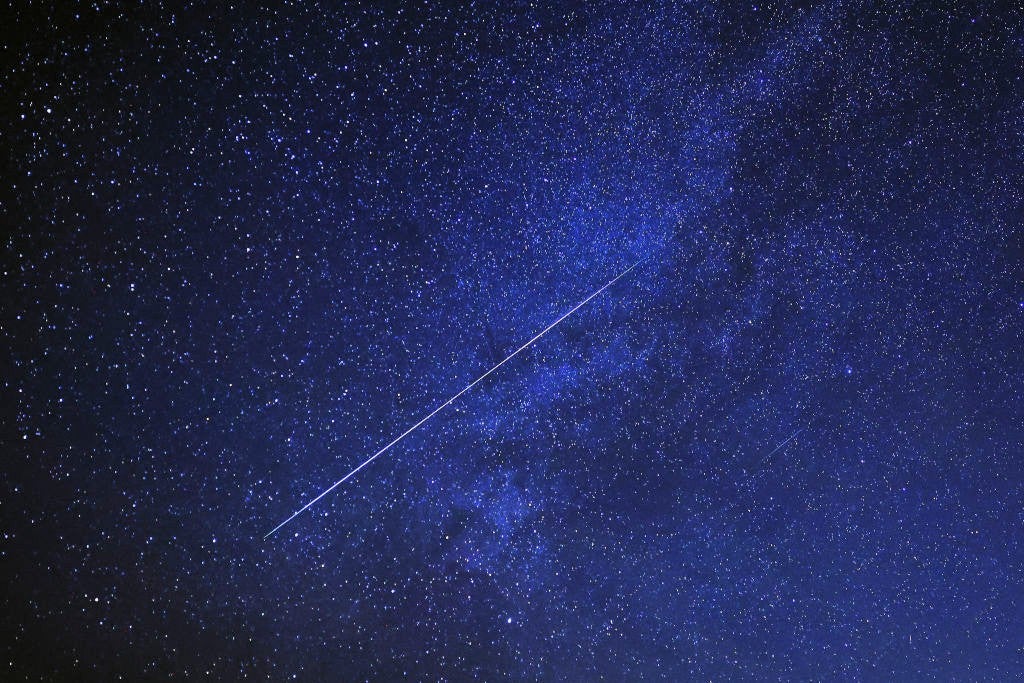
The final major meteor shower of 2025 is set to peak this week, delivering up to 120 shooting stars per hour.
The Geminid Meteor Shower is typically one of the most dazzling displays of meteors each year, as it peaks when skies are darkest in mid December.
It is also one of only two annual meteor showers – along with the Quadrantids – that does not originate from a comet, which consist mostly of ice.
This means that the meteors can produce a different colours, as different metals burn up in the Earth’s atmosphere.
While most of the meteors will appear white, others can appear yellow, red, green and blue.
The first Geminid meteors began appearing on 4 December, and will continue until 20 December, however the peak will take place in the early hours of Sunday 14 December.
“This meteor shower is known for being bright and colourful, made up of debris trailing the asteroid 3200 Phaethon,” Nasa noted in a blog post.
“To catch the Geminids peak, look to the eastern sky all evening on 13 December and 14 December. The meteors will appear near the bright planet Jupiter.”
The intensity of the Geminid meteors mean they will be visible even from well-lit suburban areas, however for the best viewing experience, sky gazers are advised to observe them from an area with low levels of light pollution.
Advice from the American Meteor Society is to wrap up warm and allow at least 30 minutes for your eyes to adjust to the darkness without looking at phone screens or other artificial light sources.
Current forecasts from the UK Met Office suggest that there will be relatively clear skies this weekend, though cloud cover could impact some areas.
If there is low visibility during the peak hours, then there is still a chance to catch a good meteor display on the preceding nights.
“If it appears that the night of 13/14 December will be cloudy, plan to observe prior to maximum,” Robert Lunsford, who has written a book on observing meteors, wrote in a post to the American Meteor Society.
“Geminid rates will be roughly 75 per cent of maximum on the night of the 12/13 December and 50 per cent of maximum on the 11/1 December.”
Join our commenting forum
Join thought-provoking conversations, follow other Independent readers and see their replies
Comments
Bookmark popover
Removed from bookmarks