America is at war with drug cartels not Venezuela, US insists after capturing Maduro
Venezuelan leader will be held at Brooklyn’s Metropolitan Detention Center ahead of his first court appearance, which could be as early as Monday
America is at war with drug cartels, not with Venezuela, US secretary of state Marco Rubio has insisted, as military leaders in Caracas demand the release of Nicolas Maduro.
The Venezuelan president was captured in a dramatic US operation in the early hours of Saturday, with at least seven explosions and low-flying aircraft reported over the capital, before Donald Trump confirmed that elite Delta operatives had detained Mr Maduro and his wife, Cilia Flores.
They were later transported aboard the USS Iwo Jima to New York.
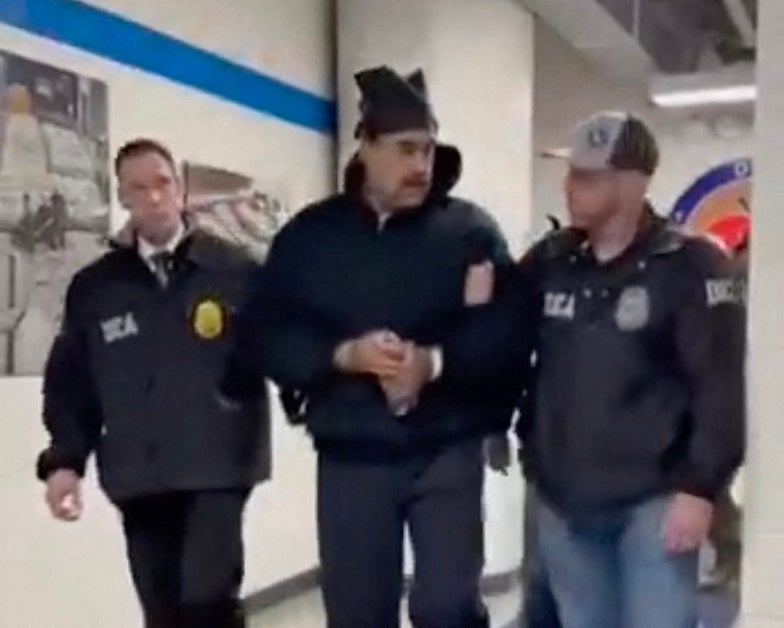
In a video posted by the White House on Sunday, Mr Maduro was shown being led down a hallway, handcuffed and flanked by agents inside the Drug Enforcement Administration’s Manhattan offices.
Mr Maduro and Ms Flores are now being held at the Metropolitan Detention Center in Brooklyn and are expected to appear before a federal judge in Manhattan on Monday, charged with narco-terrorism, conspiracy to import cocaine, and conspiracy to possess machine guns.
Mr Trump said his administration would assume temporary control of Venezuela and begin selling its vast oil reserves abroad. “Rebuilding there and regime change, anything you want to call it, is better than what you have right now,” he told The Atlantic. “Can’t get any worse.”
He added that Venezuela’s acting president, Delcy Rodríguez – Mr Maduro’s second-in-command – would “likely lead the transition” but warned she would pay a “very big price” if she failed to cooperate with the US.
Mr Rubio, meanwhile, sought to downplay suggestions that the US had launched a full-scale intervention. “People keep fixating on who’s running Venezuela,” he told reporters on Sunday.
“Here’s the bottom line: we expect to see changes in Venezuela – changes of all kinds, long term and short term. We’d love to see all kinds of changes but the most immediate changes are the ones that are in the national interest of the United States.”
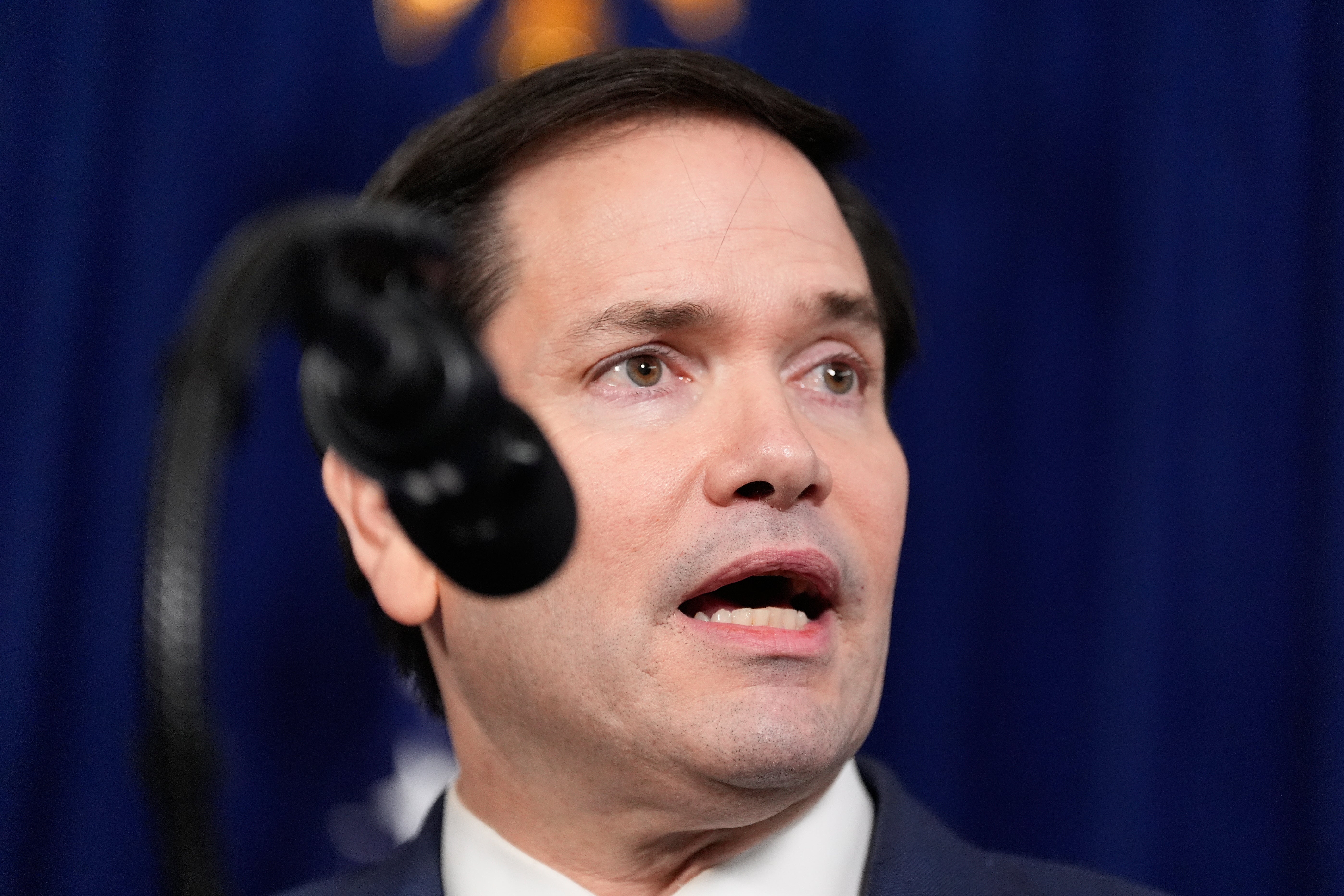
The secretary of state also expanded on Washington’s intentions for Venezuela’s oil sector, the largest in the world. “What we’re not going to allow is for the oil industry in Venezuela to be controlled by adversaries of the United States,” Mr Rubio said. “Why does China need Venezuelan oil? Why does Russia? Why does Iran?”
The operation – the culmination of months of escalating Trump administration pressure on the South American nation – has drawn swift condemnation from neighbouring Latin American governments and from Venezuela’s traditional allies, Russia and China.
Iran called the strikes a “flagrant violation of national sovereignty”, while North Korea’s foreign ministry described the move as “another example confirming once again the rogue and brutal nature of the United States”.
Despite Mr Trump’s claims that American forces were already “running” Venezuela, there was little evidence of any US control on the ground. No American troops were visible in Caracas, and local media reported that Delcy Rodríguez remained in office as acting president, demanding Mr Maduro’s immediate release.
On Saturday, Ms Rodríguez declared that Mr Maduro was the “only legitimate president” of Venezuela and accused Washington of “state terrorism”.

Mr Trump responded by repeating his threat that she would face a “very big price” if she resisted US oversight.
Sir Keir Starmer said Britain would “shed no tears” over Mr Maduro’s downfall but called for restraint and international consultation.
“The UK has long supported a transition of power in Venezuela,” Sir Keir said in a statement on Sunday.
“We regarded Maduro as an illegitimate president and shed no tears about the end of his regime. The UK government will discuss the evolving situation with US counterparts in the days ahead as we seek a safe and peaceful transition to a legitimate government that reflects the will of the Venezuelan people.”
Pressed earlier on whether the US operation breached international law, Sir Keir declined to comment, saying he would speak to Mr Trump and other allies first “to establish the facts”.
Join our commenting forum
Join thought-provoking conversations, follow other Independent readers and see their replies
Comments
Bookmark popover
Removed from bookmarks