Revealed: Toxic old Iraqi oil barrels being sold as water tanks
Across the southern province of Maysan, people are storing water in discarded oil field containers sold to them as ‘safe’. Aya Mansour investigates a public health crisis in the heart of the Iraqi marshlands
This article first appeared on our partner site, Independent Arabia
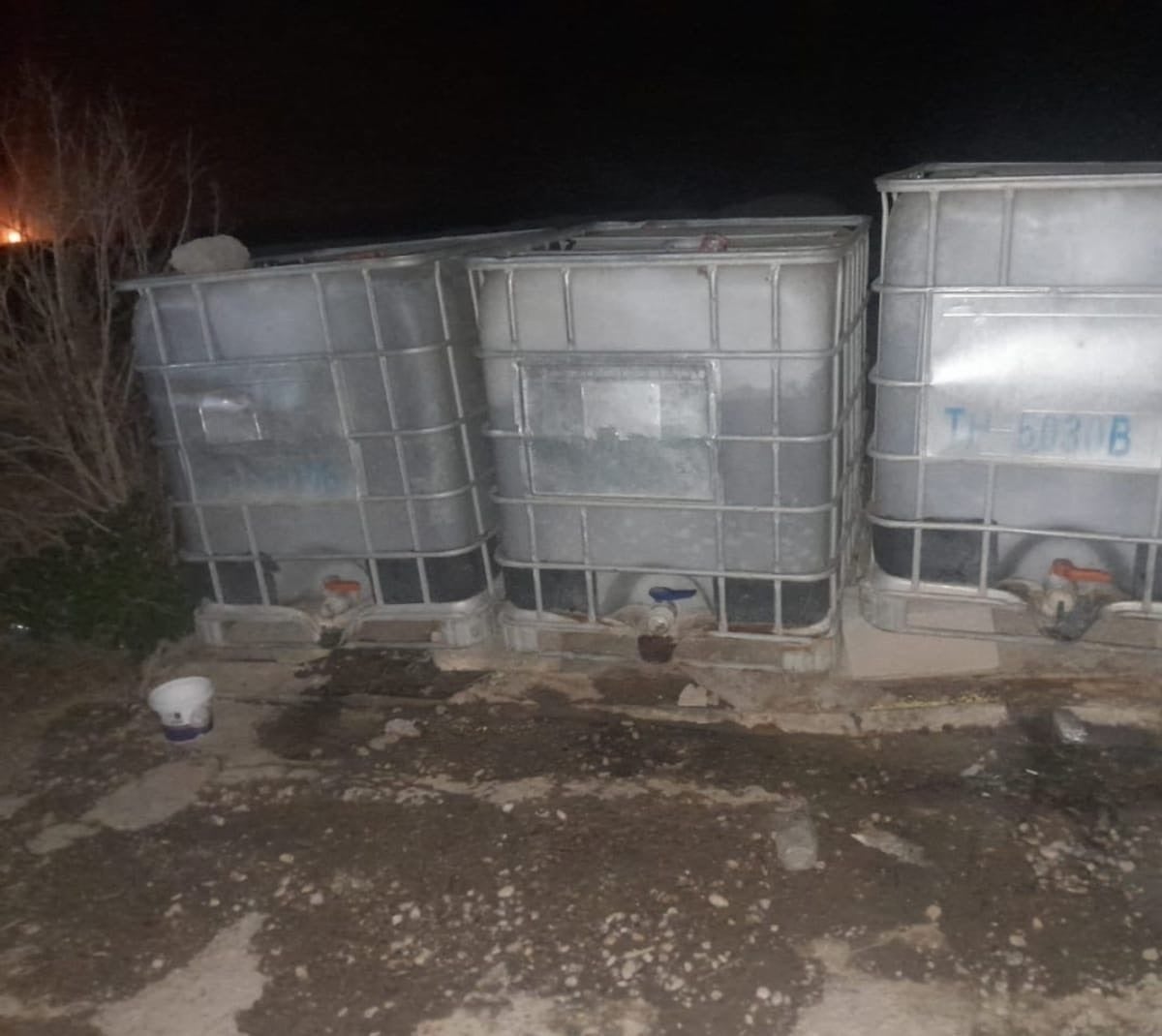
Haider, a father of three from a village in the rural area of Iraq known for its proximity to marshlands, stands beside a large blue barrel in his courtyard.
“The cheapest water tank I could get my hands on”, he states as he remembers buying it four years ago from a scrapyard on the road leading to the oil fields in Maysan. The seller had told him they were “clean and washed oil company barrels, suitable for storing water”.
As time passed, Haider began to notice that the water would smell different on hot days. He also observed a thin film that clung to the inside of the barrel despite repeated washing. Yet financial constraints silenced his fears, as buying a new tank would mean spending money he simply did not have.
Haider says he only became aware of how dangerous the barrel was when he heard about warnings issued by environmental activists in Maysan that the barrels that had come from oil fields were originally intended for chemicals.
The warnings made it clear that washing the barrels was insufficient to remove traces of those substances.
.jpeg)
Speaking to Independent Arabia, he recounts: “At that moment, I realised that everything I had been hearing about in the news about the dangers of commercial waste was not far away in the marsh or in the field; it was standing right at my doorstep.”
Although Haider now tries to use the barrel for non-drinking purposes only, he admits that for several years, it would store the water his children drank daily.
He has no way of knowing whether the container, once used in an oil field, had introduced any of that world into their bodies.
“I wake up in horror every day seeing the two barrels in front of me. I want to cry. What have I done to myself? What have I done to my children? Should I expect our cancer diagnoses any day?”
Barrels sold in markets


A worker at a Chinese oil company provides a detailed account of how chemical barrels make their way from the oil fields into people’s lives.
For years, some Chinese employees and local contractors have been selling these barrels and tankers outside the field gates, usually for money and sometimes through local barter arrangements.
He adds that some oil police officers at checkpoints, sometimes with good intentions, encourage residents to use the barrels for storing drinking water, swimming and washing, granting them a kind of “social legitimacy,” while the residues clinging to the interior walls remain completely unaccounted for.
Engineer “Ahmed”, a pseudonym, from the Maysan Environmental Directorate, explains that washing these barrels does not remove the danger, as some of the substances remain attached to the plastic or metal surface and gradually leach into the stored water.
This exposes families, particularly children, to chronic contact with chemicals that may affect the liver, kidneys and nervous system over the long term.
-barrels.jpeg)
He notes that his department has, over the past years, issued multiple warnings about the sale of contaminated containers to the general public, yet no clear regulations have been put in place to stop this trade, or track where the barrels go after leaving the fields.
In his view, when a chemical container becomes a water tank on the roof of a house in a Maysan village, the issue of oil waste becomes a direct threat to the health of the local community.
In May 2023, the Integrity Commission announced the seizure of 6,540 barrels of toxic substances left exposed at the Lukoil site in the West Qurna oil field in Basra, dating from 2013–2016.
This was despite the existence of a $19m (£14.2m) contract for the disposal or removal of these materials outside Iraq. The Commission described the seized items as “hazardous chemical waste that threatens the security, safety and public health of citizens”.
The effects of oil pollution
Kazem, a fisherman in his fifties from a village near the edge of the Huweiza marshes, sits on the doorstep of a mud-brick house overlooking a water channel that has narrowed considerably compared with how he remembers it years ago.
He recalls that before the drought and before the encroachment of oil fields, his family survived on marsh fish, buffalo milk and the occasional sale of livestock.
“We would set out in the morning, return with enough to cover the day’s expenses, and leave the rest of our livelihood on the water,” he says.
“After years of drought, and with dirt roads and exploration sites creeping around the village, fishing has declined, the buffalo have died or were sold at low prices, and the man who once relied on the marsh for income now has to visit company offices in search of daily work.”
Today, Kazem works as a field services contractor, spending ten hours each day carrying iron, transporting equipment, and cleaning work sites for less than $10 (£7.50) a day.
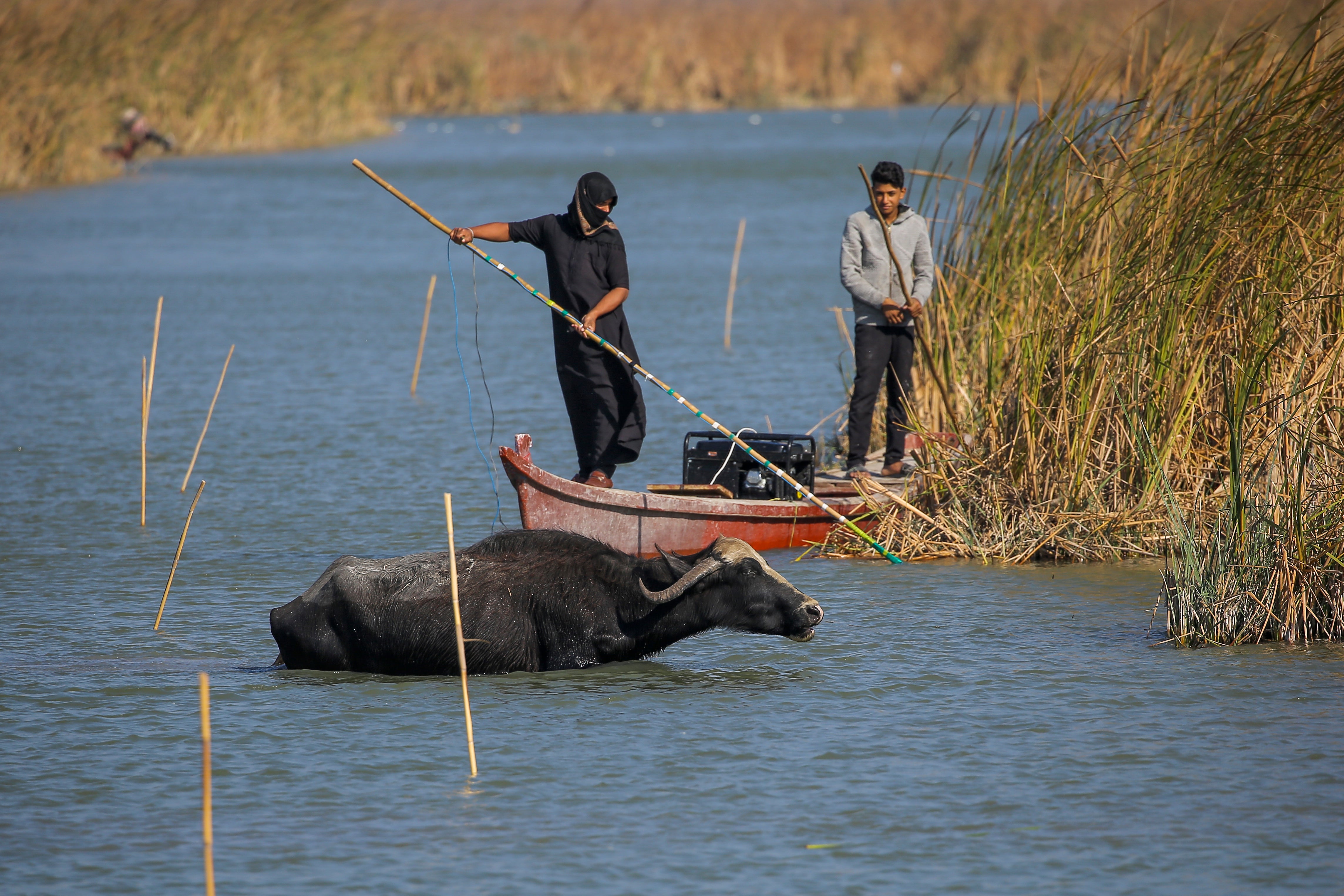
“The very place that took our land and water is now the source of our daily sustenance, yet the pay is not even enough to buy a kilo of meat,” he says. He adds that those who refuse to leave the village have no other options. There is no arable land, no water sufficient for fishing or grazing and government jobs remain out of reach for the people of these communities.
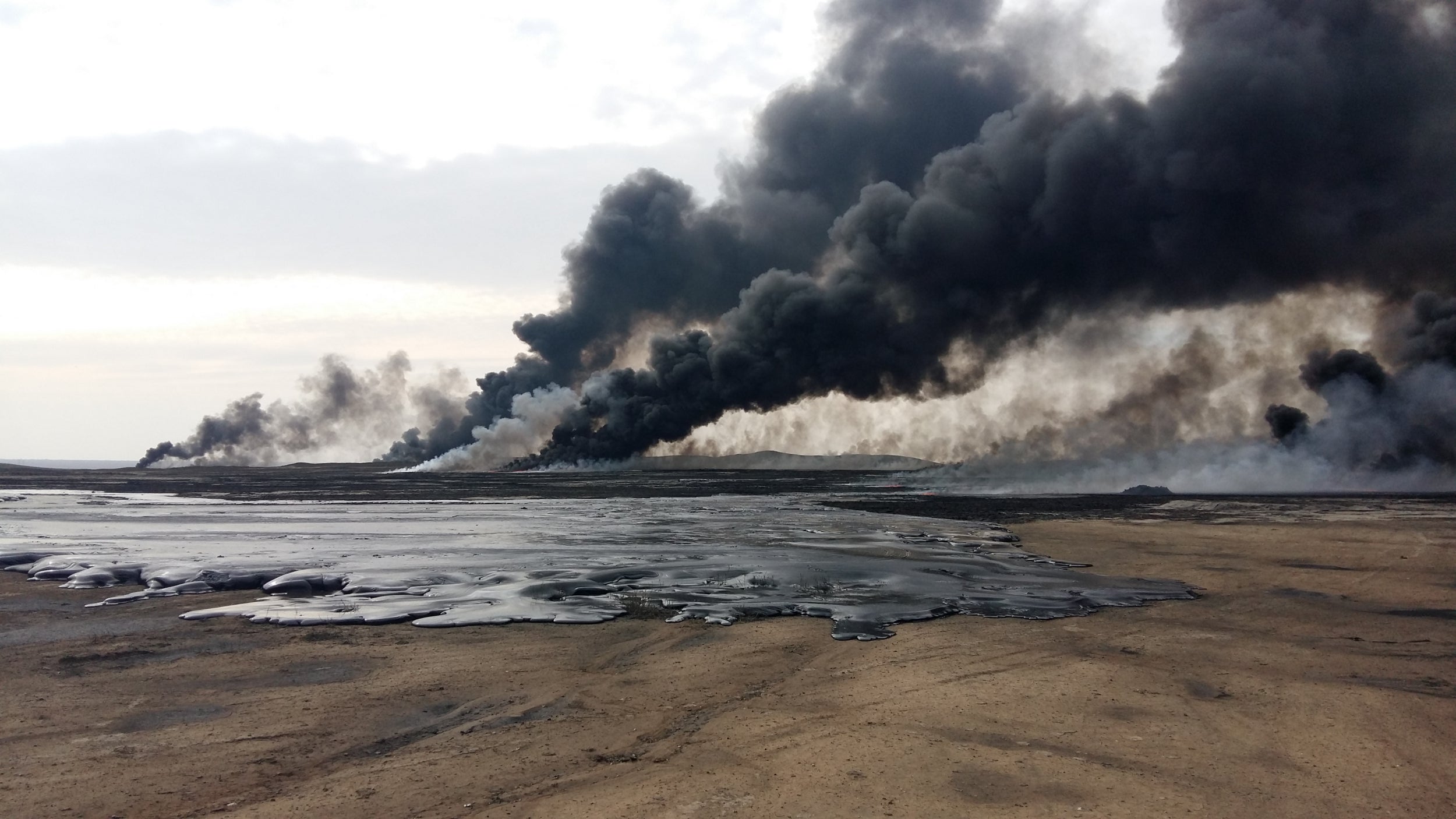
According to Kazem, his children’s coughing worsens on nights when the flares burn strongly, and they sometimes wake up with headaches and shortness of breath.
He says the danger comes from every direction: previously, water scarcity was the main threat, but now the air carries its share of gas and smoke, which are inhaled daily.
“We have sent dozens of letters to the Maysan authorities and complaints to official offices without seeing any real response – no public water testing, no clear plans to isolate waste from village waterways, leaving no trust in official statements. The land is shrinking around me and my family. It kills me every day that what was once our source of life is gradually turning into our graves.
“Residents have submitted complaints and staged small protests demanding independent assessments of oil field waste and compensation for those affected, yet the state’s presence remains limited to committees and brief visits, producing no clear protection policy, leaving villages in daily contact with the slowly expanding effects of oil waste in one of Iraq’s most fragile ecosystems.”
A study from the University of Basra on bacteria in produced water from the Halfaya oil field found that part of this water is reinjected into wells, while the rest is discharged into open ponds at the site, with high salinity levels (over 90,000 mg per litre), low pH and petroleum content in these ponds.
The scale of oil expansion appears to have proceeded without a transparent health or environmental monitoring system. There are no official, “reliable” statistics on the victims of company waste in Maysan, nor is there a government database reporting the levels of contamination and residues from these companies.
However, a study published in the Iraqi Geological Journal in 2021 examined the waters and sediments of the Al-Maeel River, which flows past villages such as Abu Khasaf and borders the Halfaya oil field.
The results revealed concentrations of eight heavy metals – including arsenic, cadmium, lead and nickel – that exceeded both Iraqi limits and World Health Organisation standards in almost every sample. For instance, the average lead concentration in the water was around 0.844 milligrams per litre, compared with the Iraqi and WHO limit of 0.01 milligrams per litre – more than 80 times higher.
In contrast, the Ministry of Water Resources presents a different account of the situation. Its official spokesperson, Khalid Al-Shamal, stated that oil exploration areas “do not threaten the natural environment”, explaining that the projects are surrounded by earthen dams intended to prevent pollutants from seeping into the marshes’ waters.
He added that, from the ministry’s perspective, these projects will result in improved services, road access and development in the areas where work is being carried out.
Environmental activist Mustafa Hashim explains that in recent years, Maysan province has been transformed into a densely mapped landscape of oil fields, with six producing fields matched by six others under exploration.
He asks: “What do you expect from us? Are we supposed to leave our land and depart? Children are falling sick more often.”
He points out that residents have staged protests, submitted complaints, and sent appeals to the relevant ministries, yet none of this has led to genuine action or strict oversight of the companies.
He adds that the prevailing feeling among people today is that the land is dying beneath their feet, and they are being carried along with it, while their story remains ignored by the government, the companies and the public.
Independent Arabia reached out to numerous official bodies, including the Iraqi Ministry of Oil, for comment but received no response.
Translated by Dalia Mohamed; Reviewed by Tooba Khokhar and Celine Assaf
Join our commenting forum
Join thought-provoking conversations, follow other Independent readers and see their replies
Comments
Bookmark popover
Removed from bookmarks