Iran opens door to dialogue after Trump threatens ‘serious’ military action over protests
Tehran has accused the US of lacking seriousness after talks between Iranian foreign minister Abbas Araghchi and Trump envoy Steve Witkoff
Iran and the United States have opened the door to dialogue, even after Tehran responded to threats of military action by Donald Trump by warning that it is “ready for war”.
The US president said Washington officials may meet with their Iranian counterparts, as he continued piling pressure on the regime to call off its repressive response to the protests taking place in Iran. Rights group Iran Human Rights says at least 600 people have been killed since the demonstrations began just over a fortnight ago.
A spokesperson for Tehran’s foreign ministry confirmed on Monday that a “communication channel between our foreign minister Abbas Araghchi and the US special envoy [Steve Witkoff] is open” and that “messages are exchanged whenever necessary”.
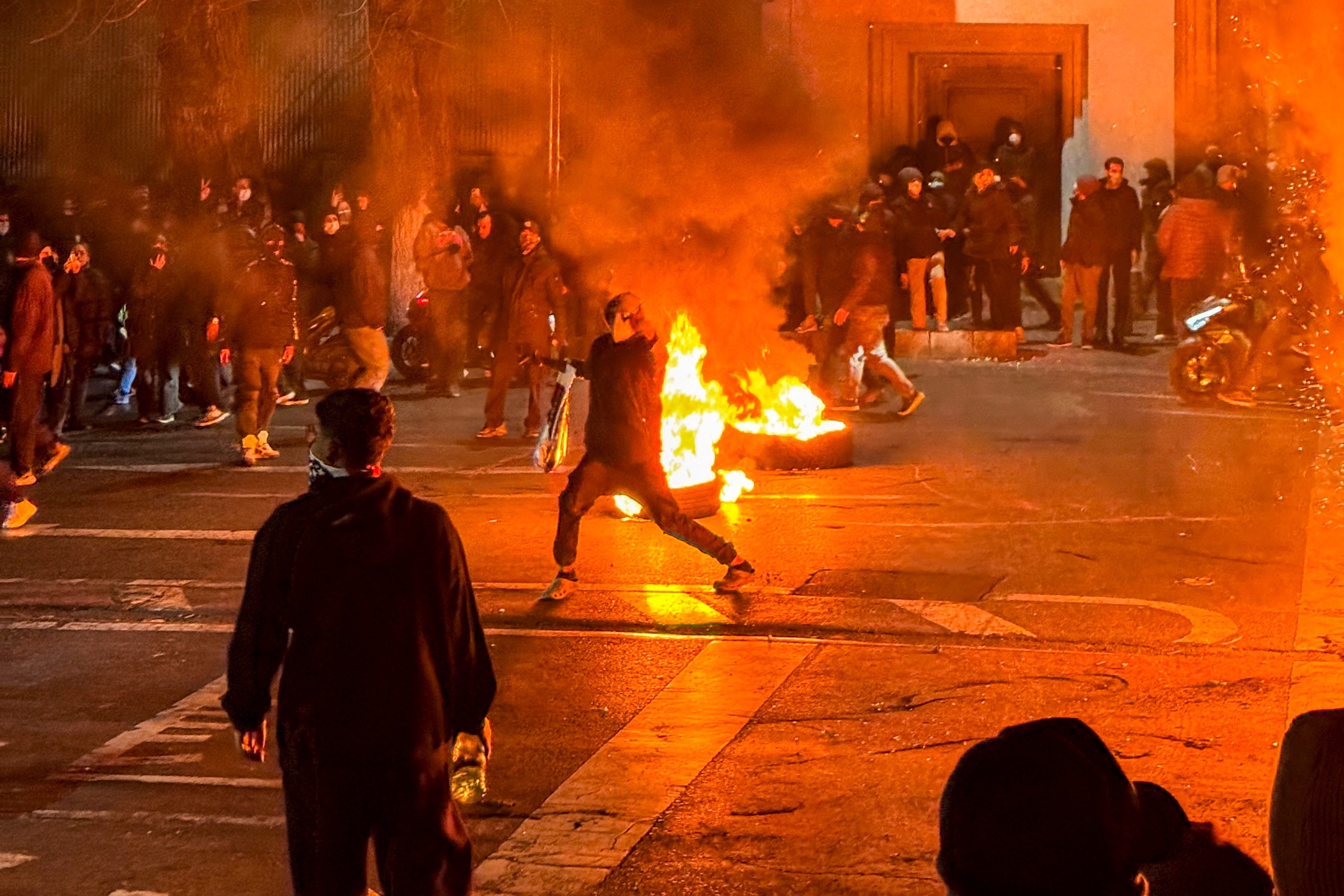
Mr Trump told reporters early on Monday that he was receiving “hourly” updates on the situation in Iran, and that the US was “looking at some very strong options”. Iran, he said, was “starting” to cross his red line.
Later in the day, White House press secretary Karoline Leavitt said Mr Trump was “unafraid to use military options”, but “diplomacy was his “first option”. He is due to be briefed by officials on Tuesday on US’s possible response.
On Monday night, Mr Trump announced on social media imminent 25 per cent tarfiffs for any country doing business with Iran.
Britain condemned the brutal suppression of anti-government protests by Iran, but downplayed the prospect of designating the Islamic Revolutionary Guard Corps (IRGC) a terrorist organisation.
Foreign secretary Yvette Cooper said she had spoken to her Iranian counterpart and told him that “the Iranian government must immediately end the violence, uphold fundamental rights and freedoms, and ensure British nationals are safe”.
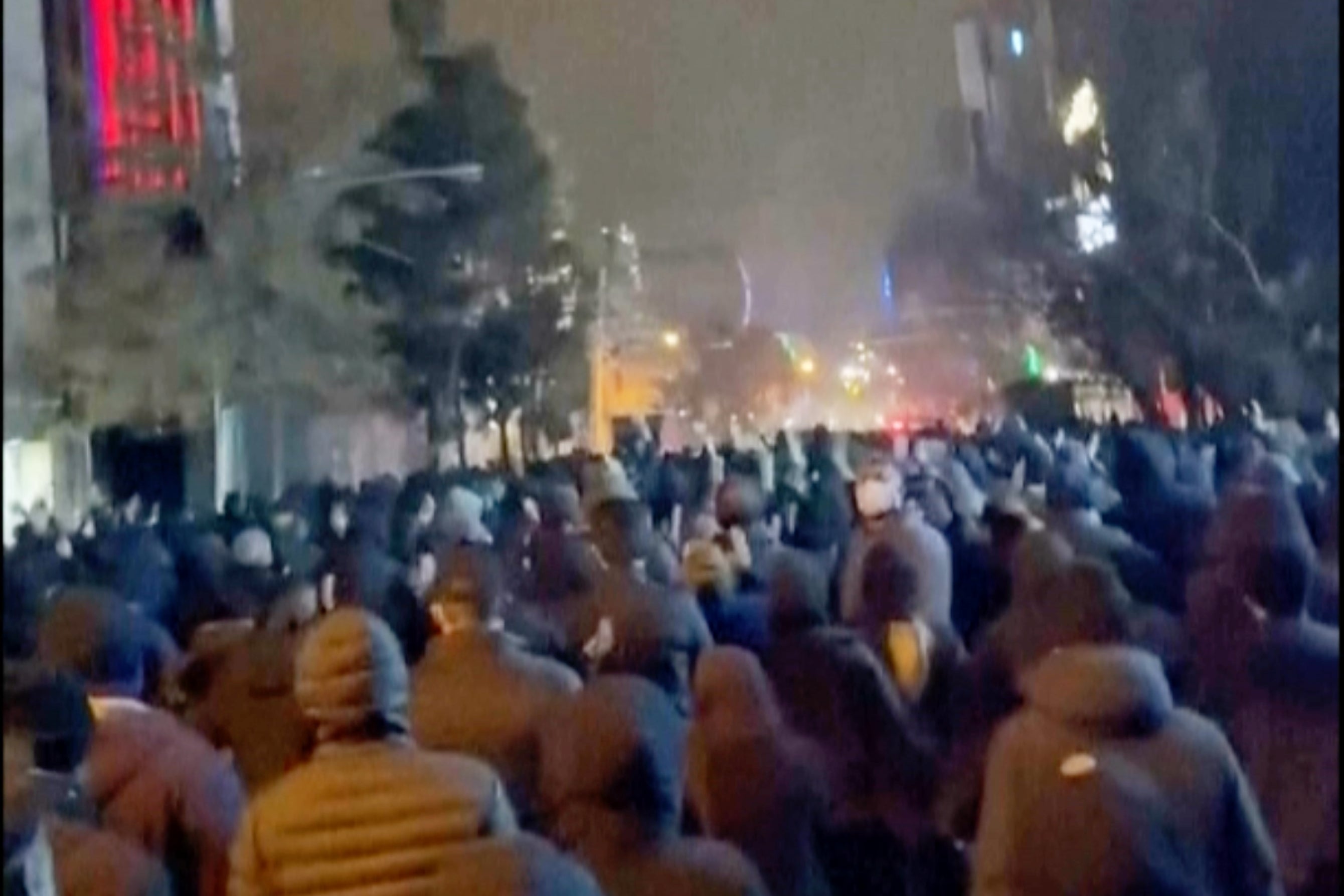
The protests began on 28 December in reaction to the economic situation in Iran. In the days since, Norway-based Iran Human Rights reports that 648 protesters have been killed, and more than 10,000 people have been arrested.
A total blockade on internet and telephone communications has also been imposed throughout the country, but Mr Araghchi has claimed that the situation is “under total control”.
During contacts between Mr Araghchi and Mr Witkoff on Monday, the US had “touched upon some cases” and brought up “ideas”, Iranian spokesperson Esmaeil Baghaei said. He also accused the US of showing a lack of seriousness and of giving “contradictory messages” that were not convincing.

Verified video footage shows Iranians gathered at the Kahrizak Forensic Centre in Tehran on Sunday, many in tears as they stood over rows of dark-coloured body bags that numbered at least in the dozens. Tehran has not provided an official death toll.
Many Iranians have grown increasingly resentful of the powerful Revolutionary Guard Corps (IRGC), whose business interests, including oil and gas, construction and telecommunications, are worth billions of dollars. The protests were sparked by soaring prices, then turned into demonstrations against the clerical rulers who have governed the country for more than four decades.
The EU warned on Monday that it could take action against Iran as the number of protesters killed across the country grows. The bloc is prepared to propose a package of new and severe sanctions on Tehran if it does not halt its repressive measures, a spokesperson for the EU Commission said on Monday morning.
Meanwhile, the president of the European parliament, Roberta Metsola, said on social media on Monday that she had banned all diplomatic staff and other representatives of the Islamic Republic of Iran from European parliament premises.
“It cannot be business as usual,” she wrote. “As the brave people of Iran continue to stand up for their rights and their liberty, today I have taken the decision to ban all diplomatic staff and any other representatives of the Islamic Republic of Iran from all European Parliament premises.”
The semi-official news agency Tasnim reported on Monday that British, Italian, German and French ambassadors in Tehran had been summoned to the foreign ministry, and were asked to inform their respective governments of Tehran’s request that they withdraw their support for the protests.
Iran deems political support for the protests “an unacceptable intervention in the internal security of the country”, Tasnim added.
Join our commenting forum
Join thought-provoking conversations, follow other Independent readers and see their replies
Comments
Bookmark popover
Removed from bookmarks