Lack of DNA testing leaves the dead in Gaza without a name or dignity – and relatives in limbo
New data shows that at least 1,129 bodies have been recovered in Gaza but remain unidentified. Experts on the ground tell Maira Butt that the uncertainty is leaving families in agony
In the middle of a crowded hospital in Gaza, Mahmoud Ashour watches as different families crowd around a dead body.
They have come from all over the strip in the hope that they will be able to identify a loved one. But many of the bodies are so decomposed that they will remain unknown – and forensic experts who can identify the dead lack the technology to do so.
At least 1,129 bodies have been recovered but remain unidentified, according to figures shared with The Independent by Gaza’s forensic evidence department. Experts say the figure is probably an underestimate given the death toll from Israel’s war. More than 70,000 Palestinians have died in the territory since the war began in October 2023. A further 10,000 people are believed to be dead under the rubble, according to local officials.
Authorities say the Israeli government is blocking excavation equipment to recover the dead and DNA testing tools to identify them when they are found. Of the 360 bodies handed over to the Red Cross as part of a ceasefire agreement between Israel and Hamas, only 101 have been identified.
“In some cases, multiple families gather to identify the same body, each believing it belongs to their missing relative,” Mr Ashour, from Gaza’s forensics department, tells The Independent. “We are often unable to determine which family the body belongs to due to the absence of advanced DNA identification capabilities.”
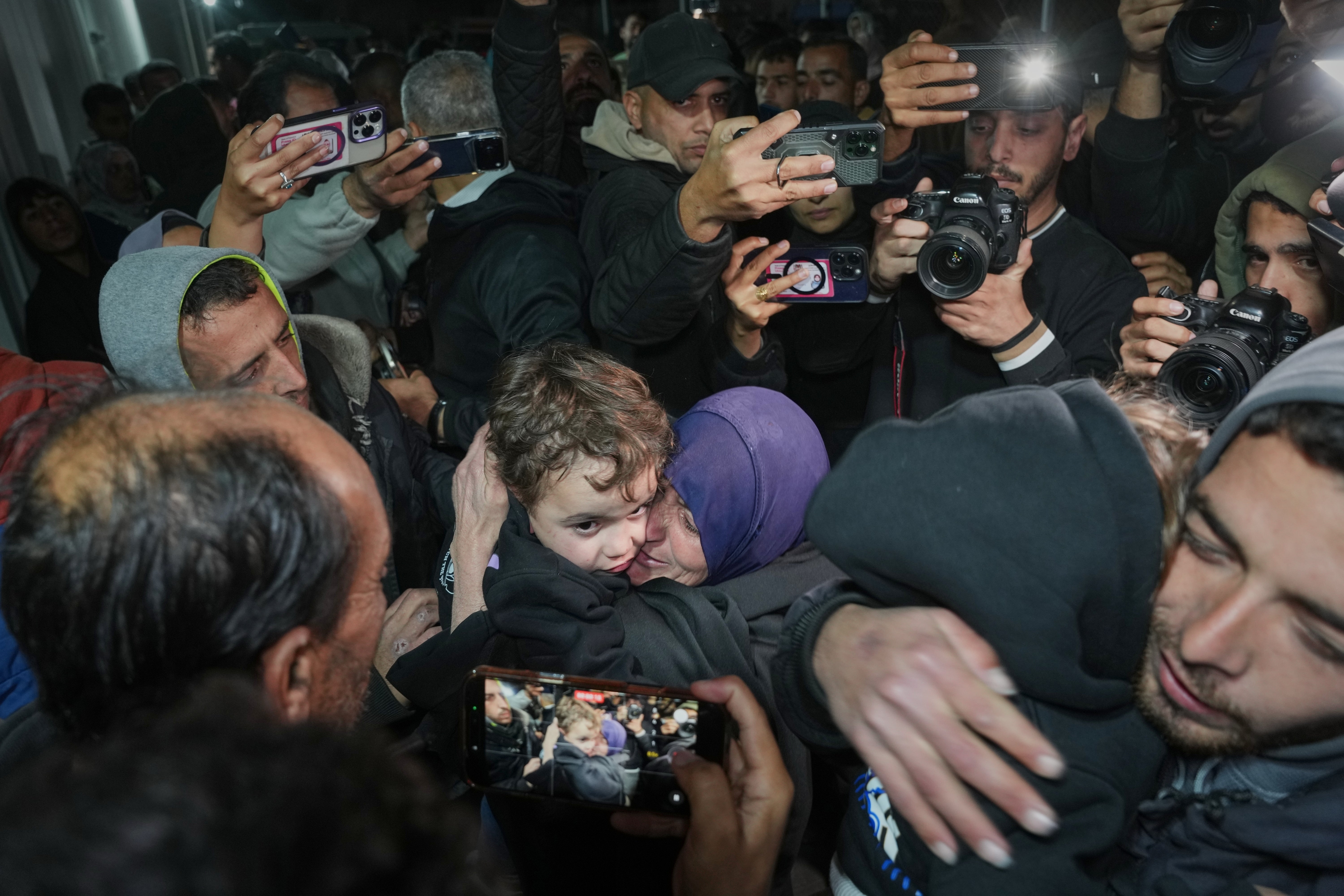
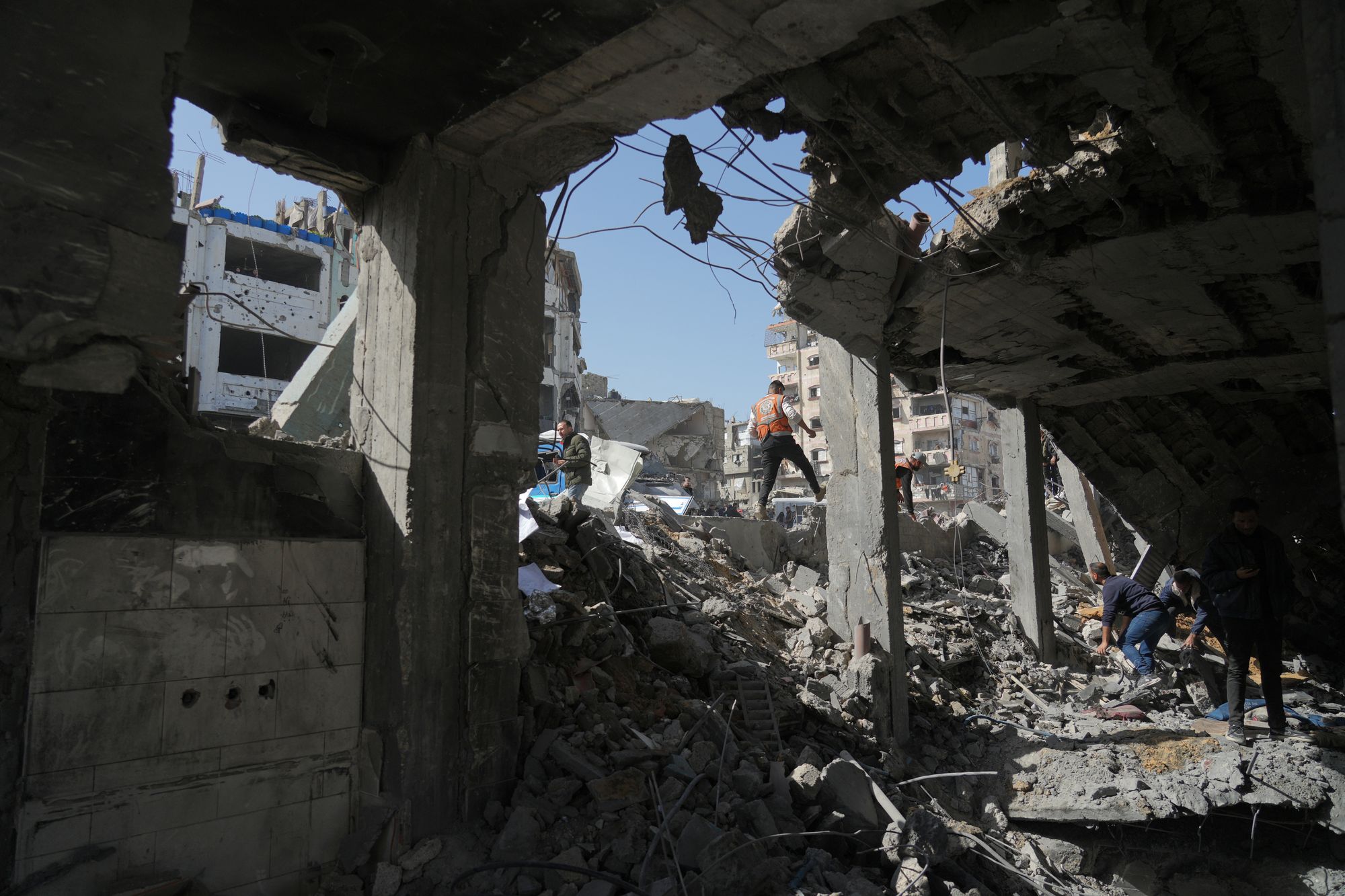
After more than two years of daily bombardment, authorities are working to clear an estimated 60 million tonnes of debris. Despite the advancement of Donald Trump’s peace plan for Gaza, the strip remains a wasteland of tents and bullet-scarred concrete.
A shortage of equipment means that clearing the rubble alone is a difficult task. According to the Red Cross, there is only one fully functioning digger in the enclave.
Mr Ashour says that the Israeli government is preventing the entry of equipment, devices and laboratories necessary for conducting DNA examinations, significantly hindering the process. He has called on international governments and the United Nations to increase pressure on Israel to allow the entry of DNA testing laboratories.
The dead should be granted dignity and a final resting place, he says, but Israeli forces have buried bodies “using military machinery” and “piled them together, on top of one another, without identifying them”.
Last year, more than 1,000 bodies were recovered from roads, beneath destroyed buildings and from those received through the International Committee of the Red Cross.
The Independent has contacted the Coordination of Government Activities in the Territories (COGAT) and the Israeli prime minister’s office for comment.
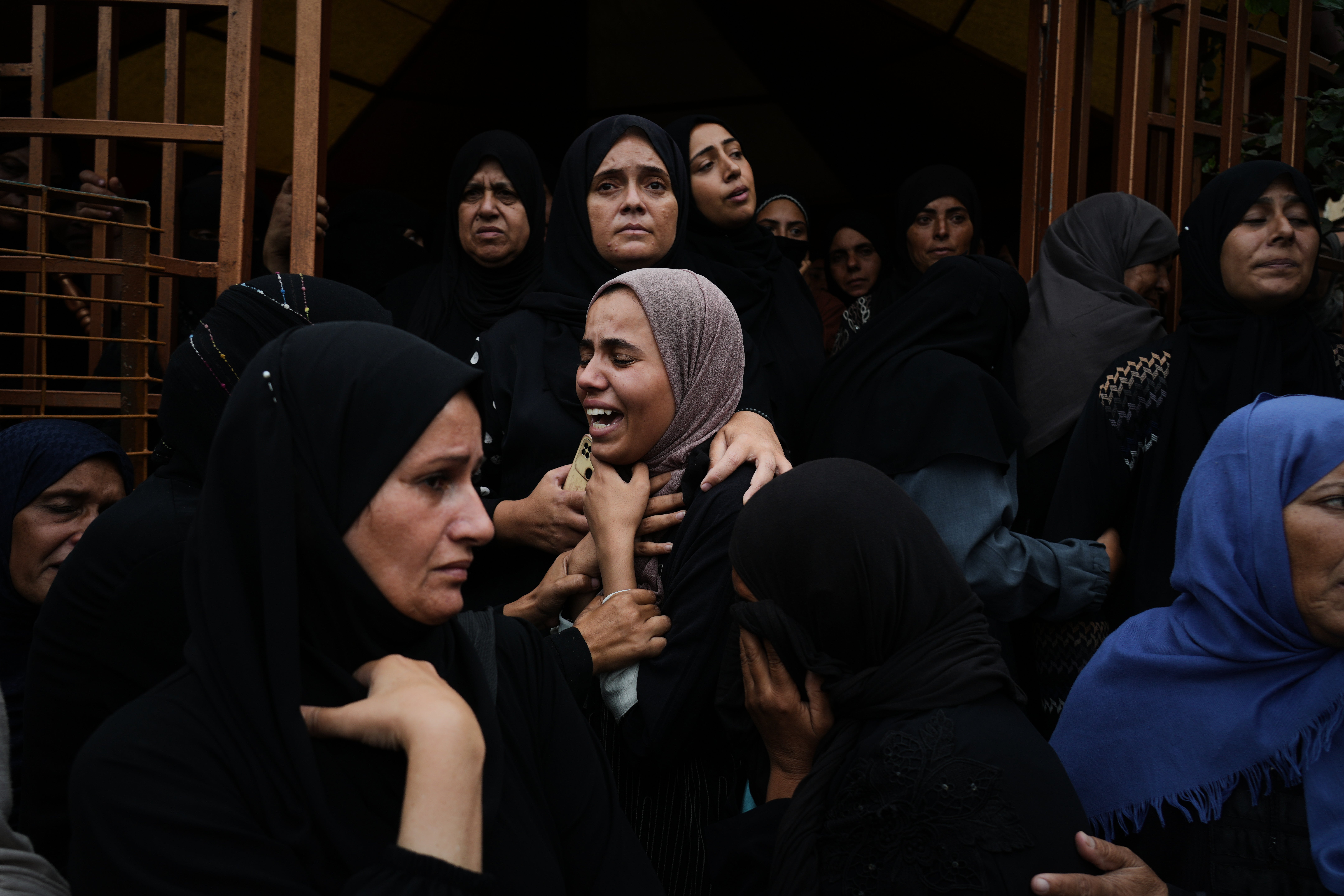
Pat Griffiths, a spokesperson for the International Committee of the Red Cross in Gaza, says the uncertainty has left families in a state of “ambiguous loss”: trapped in a limbo between hoping to be reunited with their loved ones and the painful reality that they may already be dead.
He says that the recovery of the dead, as in conflicts including Bosnia and Afghanistan, can take years, meaning many families will face prolonged agony.
”All of this work that we do with forensics and speaking to families who are missing loved ones has the goal of them eventually receiving answers, so that they have some form of closure,” he said.
“We do it so they can mourn in their own way, and bury their loved ones according to their own traditions and with dignity. For many of them, the saddest thing is that they won't be able to do that.”
What feels like insult to injury has been particularly hurtful to the bereaved. As the body of the final Israeli hostage was recovered last month, EuroMed Monitor said they received reports of large-scale exhumations, including of graveyards where the dead had been buried.
Palestinians say their loved ones were not reburied with the appropriate respect and that their remains were scattered haphazardly after the operation. The Israeli military says it took all appropriate steps to "preserve the dignity of the deceased" and in accordance with international law.
“The IDF has employed a wide range of technological and forensic methods to determine whether remains found in Gaza belong to Israeli hostages,” it told The Independent. “Any suggestion that the IDF has deliberately sought to desecrate or target cemeteries is a grave and misleading distortion of the facts. The IDF denies any allegation that it removed the bodies of civilians buried in Gaza.”
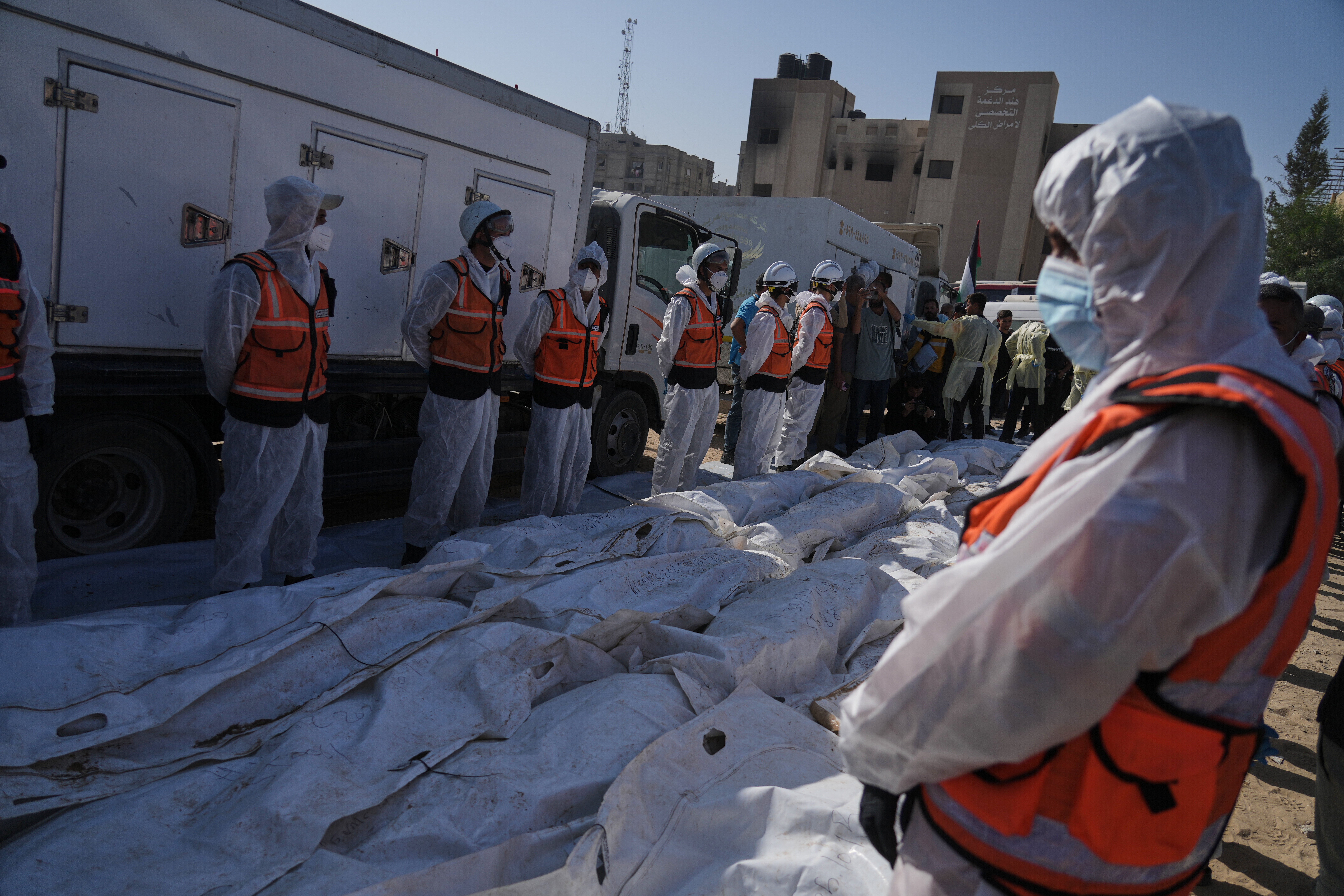
But many of the dead have been buried without a name. Last October, 54 unidentified Palestinians who had been handed over by Israeli authorities were buried in the sandy soil of Deir al-Balah. Countless others were laid to rest haphazardly in side streets, public spaces and the remains of gardens.
The United Nation’s office for Human Rights in the Occupied Palestinian Territory told The Independent that it is “gravely concerned by reports” of the missing, unidentified and those “subjected to enforced disappearance by Israeli authorities”.
“Hundreds of bodies remain unidentified, including remains reportedly recovered from several mass graves in Gaza; and many remain unrecovered,” it said. “Israel continues to block the access of forensic and identification tools, including DNA kits and other essential equipment.”
They added that the lack of equipment can lead to “improper burials, loss of evidence, preventable mis-identification, and prolonged anguish for families and loved ones”.
Husam Zomlot, Palestinian ambassador to the United Kingdom, said: “More than a thousand bodies remain unidentified in Gaza because the means to identify them are being denied, amid the bombing of cemeteries and the desecration of graves.
“This dehumanisation extends beyond Gaza: in the occupied West Bank, hundreds of Palestinian bodies are withheld for years as a form of collective punishment against families. From mass graves near hospitals to the missing under the rubble, even death is denied dignity. Forensic and DNA equipment must be allowed in immediately.”
Join our commenting forum
Join thought-provoking conversations, follow other Independent readers and see their replies
Comments
Bookmark popover
Removed from bookmarks