Ukraine left waiting for US aid as country endures winter blackouts
The Trump administration has paused or delayed Ukraine aid before
Concerns are mounting among US and European officials over hundreds of millions of dollars in American energy assistance for Ukraine that remain unreleased, even as a brutal winter pushes the nation's war-battered power grid to its breaking point.
The aid was originally intended to help Ukraine import liquefied natural gas and rebuild infrastructure damaged by Russian strikes, say sources including a US and a Ukrainian official.
The US Agency for International Development (USAID) had notified Congress during the Biden administration of its intention to disburse some funds.
Yet, after USAID was effectively shuttered in the initial weeks of the Trump administration, some money fell into what sources described as "bureaucratic limbo."
Some administration officials now argue for the State Department, which oversees remaining USAID functions, to disburse the funds.
Others instead push for a role for the Development Finance Corporation, an agency expected to play a major part in Ukraine's reconstruction.

The Trump administration has paused or delayed Ukraine aid before. For example, the U.S. has temporarily halted military aid shipments several times, in some cases to force concessions from Ukraine amid ongoing U.S.-led peace negotiations between Moscow and Kyiv.
This time, the delay in energy aid appears to stem from bureaucratic confusion and infighting instead of an attempt to exert leverage over Ukraine, two of the sources said.
Still, the stalled aid - valued at roughly $250 million by two of the sources - has stirred frustration in recent weeks, as Russian attacks on power plants and pipelines have left millions of Ukrainians exposed to brutal winter cold, according to a Ukrainian official, a U.S. official, a European official and two others with knowledge of the matter.
One source said aides on Capitol Hill were aware of the stalled funds and were seeking additional information.
A Ukrainian official said Kyiv was also aware, but fearful that broaching the topic could provoke diplomatic blowback. U.S. President Donald Trump has at times reacted coolly to Ukrainian requests for assistance.
Halyna Yusypiuk, a spokeswoman for the Ukrainian embassy in Washington, said Ukraine and the U.S. were working closely on energy-related matters.
"(The) Ukrainian and American sides are working on a daily basis to strengthen the stability of Ukraine's energy system," she wrote in an e-mail.
A Development Finance Corporation spokesperson said the agency is "working closely with all interagency partners with the goal of supporting Ukraine's reconstruction efforts and advancing shared economic security and prosperity for the United States and Ukraine."
The White House's Office of Management and Budget, in an apparent reference to a critical USAID inspector general report, suggested energy assistance funds for Ukraine had been misused in the past.
"The Biden Admin support to Ukraine's energy sector was a disaster, we have an USAID IG report showcasing how contractors in Ukraine likely lost millions worth of energy products due to no oversight, corruption, theft, etc," a spokesperson wrote in an email.
"President Trump has done more than anyone to bring peace to this brutal war."
The sweeping changes to the federal bureaucracy imposed by the Trump administration have complicated U.S. efforts to distribute aid to its allies.
The de facto elimination of USAID, for instance, has caused confusion about how and when to disburse funds, several sources told Reuters.
Additionally, the National Security Council, which in previous administrations would sort out conflicts between intelligence, national security and diplomatic agencies, has been radically downsized.

Beyond this, energy assistance for Ukraine has long been slow to go out the door amid concerns about widespread corruption in the nation's power sector, said one source.
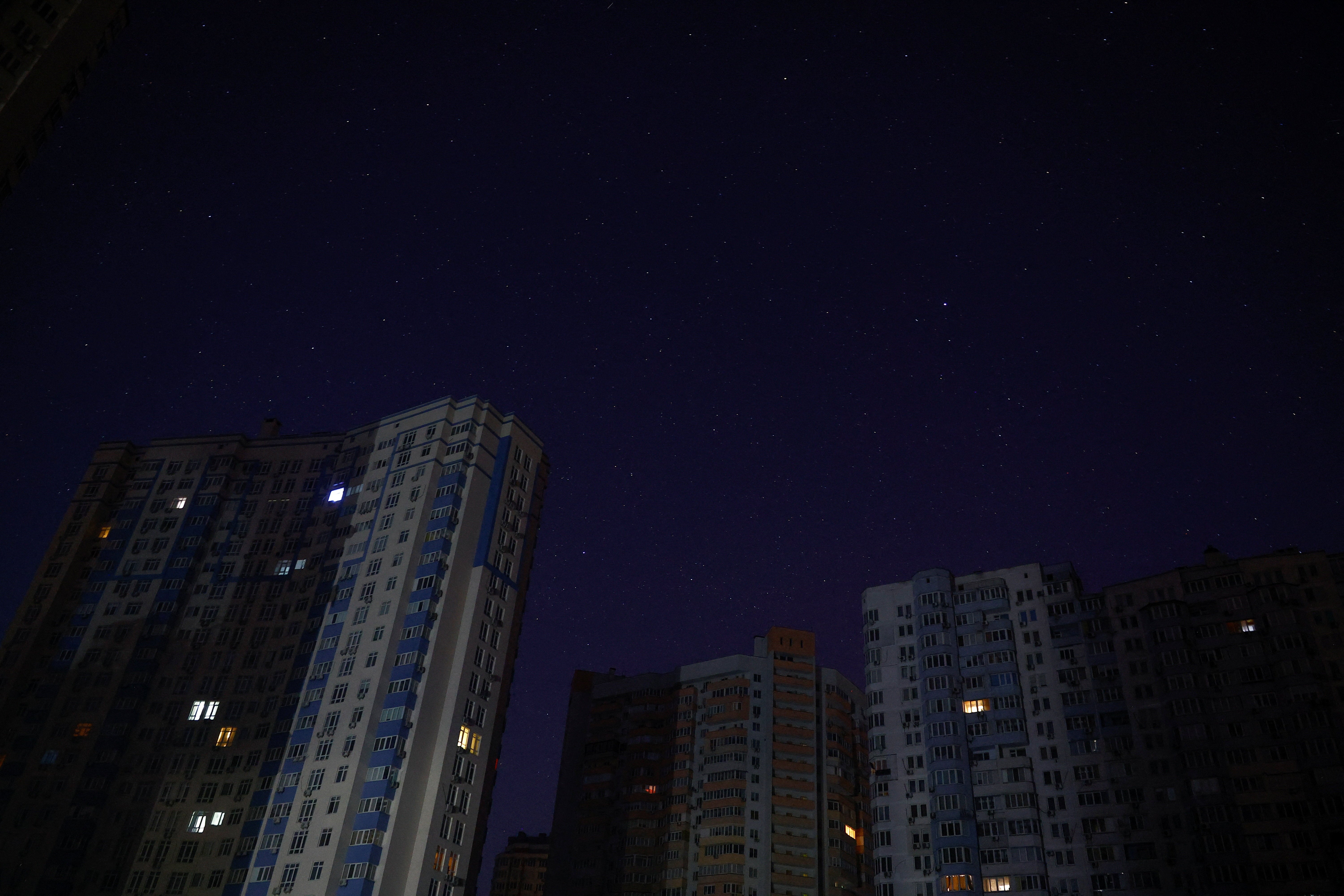
Residents of Ukraine's major cities, including Kyiv, are currently struggling with power outages that are lasting hours or days, as well as cuts to heating that leave homes as cold as 45 degrees Fahrenheit (7 degrees Celsius). Water supplies have also been disrupted.
The rumble of generators is a near-constant presence on city streets, which are often plunged into widespread darkness in the evenings. Overnight lows in Kyiv are expected to fall to around -12 Fahrenheit next week.
Ukrainian officials told foreign diplomats in Kyiv in recent days that all of the country's major energy plants had been "damaged or ruined," according to a presentation seen by Reuters. The presentation identified roughly 675 million euros ($807 million) in unfunded energy needs.
"They're preparing for the fact that people in the upper (stories) of apartment buildings are going to freeze to death," Mykola Murskyj, the director of advocacy at Razom, a non-profit group supporting Ukraine, said of next week's expected cold snap.
"They're preparing to retrieve the bodies. It's extremely grim."
Join our commenting forum
Join thought-provoking conversations, follow other Independent readers and see their replies
Comments
Bookmark popover
Removed from bookmarks