Inside Putin’s ruthless ‘winning’ mindset – and the major risk to Trump
While Donald Trump boasts that he is the master of the deal, it is Putin who has perfected the art of the ‘win’ – which often includes humiliation through gestures, slights and power moves, writes Anne McElvoy


Understanding how Vladimir Putin thinks in the run-up to the crucial summit with Donald Trump in Alaska is about understanding what the Russian leader is accustomed to: being dominant at home, but seen as a pariah in most of the democratic world.
In his view, this Friday’s summit is about his grand re-entry onto the international stage and a complex psychological interplay with a US leader who is also fixated on what a “win” in ending (or rather stalling) the war in Ukraine would do for his personal brand.
The dynamics of a summit that has already sidelined Ukraine’s Volodymyr Zelensky – and reduced European leaders to holding their own meeting in Berlin – will be driven by the needs of two men with immense but fragile egos.
For Putin, this means a return to an aspect of the Cold War he has long hankered to revive: a bilateral relationship between Moscow and the Washington that downgrades European leaders, creating a club of neo-imperial “winners”. Anything that diminishes the role of European powers and Nato is seen as an advantage to the Kremlin – the old Soviet rules of the game still apply.
Trump, meanwhile, is seeking the best terms for American retreats from costly foreign commitments, which means outcomes from the summit will be more about appearance than durable reality; a performative sign that the only “special” relationship that matters is between Moscow and Washington. The currency of success for the participants is the image of their partnership – a message intended to resonate in London, Berlin, Paris, and also Beijing. Any other concerns, as the dismissive Russian phrase would put it, are pustyaki – small potatoes.

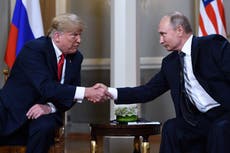
Trump and Putin are united in a ruthless quest for success bound up with their persona and drive for control. While their systems, biographies and characters may be different – Putin plans methodically several moves ahead, whereas Trump has become a byword for sudden moves that knock rivals off balance – their similarities run deep.
Both were brought up by strict fathers, with childhoods shaped more by discipline than affection, and both harbour a deep suspicion of outsiders. “Putin doesn’t like other people naturally,” says Mikhail Zygar, author of a bestseller on the corridors of Kremlin power, written before he and other independent journalists were forced to leave Moscow after the full-scale invasion of Ukraine.
“He considers politicians who talk about their own values to be cheating him.” That is because there is only one value that matters: abject loyalty – something Trump understands. Putin has said his father’s war stories and survival shaped his own sense of duty and suspicion of weakness. Competitors in the Russian system – like his brief “successor” president, Dmitry Medvedev – are corralled, cajoled and pressured into supporting roles.
Similarly, Mary Trump (Donald’s niece) wrote in Too Much and Never Enough that Fred Trump’s harshness crossed into emotional abuse, fostering in Donald a need to project strength at all times and avoid vulnerability. This makes him similarly suspicious of attempts to outshine him – meaning that potential competitors like JD Vance must balance expressing their own ideological views with repeated public expressions of fealty to their boss.

However, for all of America’s current dysfunctions and risks to its legal and democratic norms in the Trump era, it is not Russia under Putin. Fall foul of the Kremlin and enemies can be (literally) defenestrated – business figures die in unusual numbers after falling from windows or being shot in hallways. Anyone deemed inconvenient or hostile to the project of absolute social and political control can simply disappear into a system of prisons and camps. Those like Alexei Navalny – the charismatic opposition leader who scored a “win” by building a sizeable movement – are harried, poisoned, convicted, and ultimately killed.
This is the zero-sum mentality at its most brutal. But it also has roots in a fear of losing, which, in Putin’s case, goes back to the contest between the Soviet Union and the West before 1990. Having experienced what he considered a devastating defeat – for which he blamed Mikhail Gorbachev for winding up the Soviet Union and Boris Yeltsin for a chaotic retreat on the world stage – the war in Ukraine is his chance to reset the great game of global power.
In that sense, the talks in Alaska are not really about Ukraine at all (“not even a proper country” remains the Putin view, as once expressed to former president George W Bush). They are about a “win” over America – by dictating terms on a matter where he can downgrade its commitment to Nato, the biggest Cold War target in the Russian leader’s sights, and cajole and confuse a maverick US leader into aligning with his interests.
That is why Keir Starmer, as well as other European leaders, have sought to warn Trump that Putin is not to be trusted and that he is being “played” in the way an intelligence officer manages an asset to get the desired result.

While Trump has threatened Putin with “severe consequences” if the Russian leader does not agree to a ceasefire after crunch talks in Alaska, a “win” for Trump is often measured on a personal scale – he has long had a fascination with building a Trump Tower-style complex in Moscow. This means that property deals, as well as mineral deals and the fate of nations, might end up in the mix of personal and state arrangements – a far harder matter for Western allies to warn against.
Over the years, I have watched hundreds of moments of Putin’s determination to create “wins” – often the result of policies and approaches that have been mismanaged or corrupted under his sway in the first place. One episode which stands out in over two decades of his rule is simply known as “Putin’s pen moment”.
In 2009, he set out to rein in aluminium and nickel oligarch Oleg Deripaska, whose feuding had led to the Norilsk plant ceasing production and workers going unpaid. Putin saw the perfect opportunity to dole out humiliation – inviting Russian media to witness him tearing down Deripaska for “incompetence and greed” and demanding he sign a pledge to end the dispute. When a singularly cross Deripaska did so sulkily and slouched away with the pen still in his hand, Putin summoned him back, demanding: “Give me back my pen.”
Doubling down on humiliation through gestures, slights and power moves is the norm for Putin. Prominent Russians who once sought proximity can easily find themselves cold-shouldered. One of the last of the “minigarchs” close to Putin to still live in the UK told him about a mutual acquaintance who was marrying an English partner and asked if he should pass on greetings. “Aren’t there enough beautiful women in Russia for him?” retorted Putin.
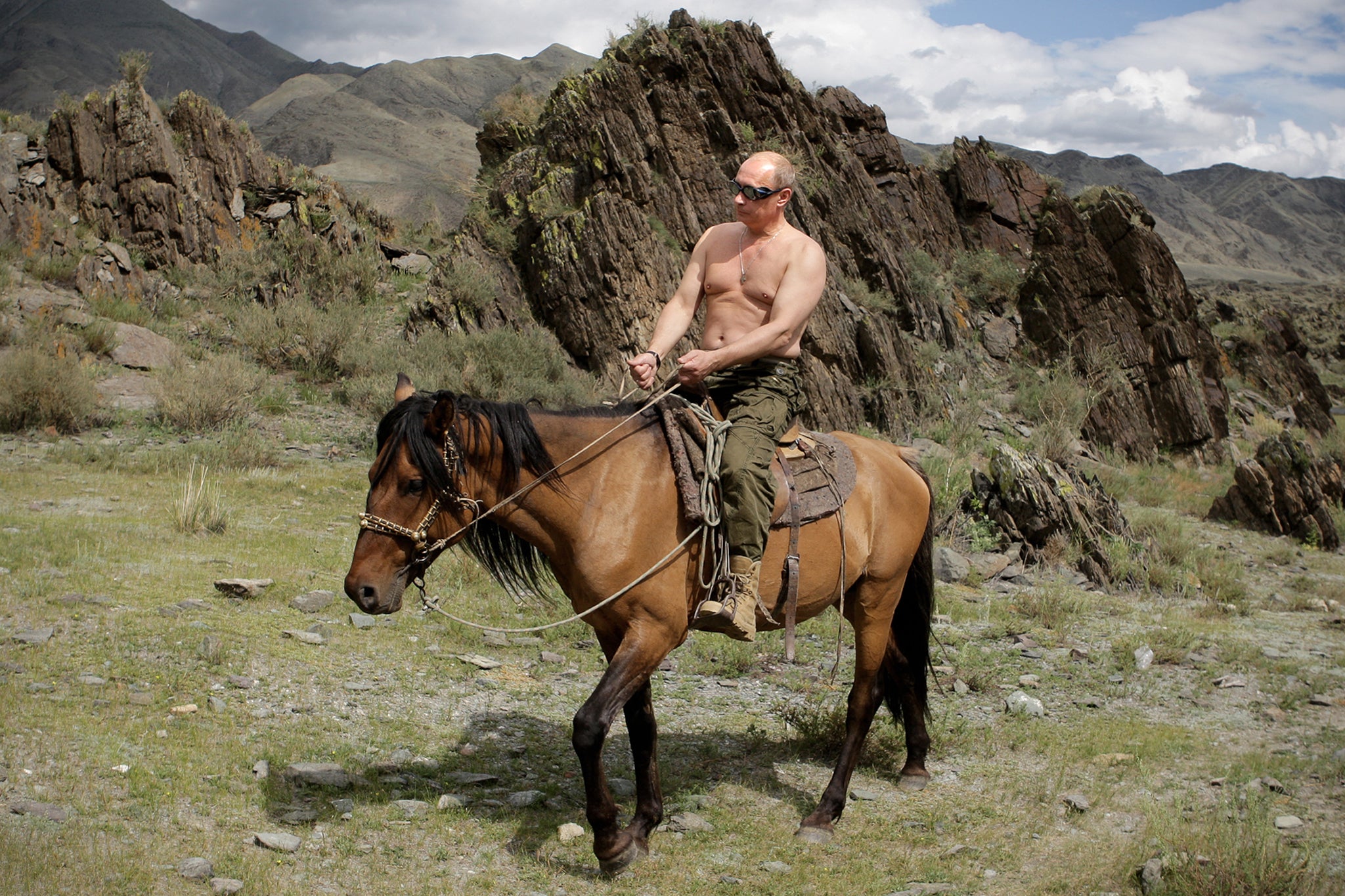
The “wins” for Trump and Putin this week are on different timelines. Trump wants the Nobel Prize for ending wars – and, in his last term as America’s leader, is in a hurry to shape a new deal with Europe in which the US will no longer be the backstop to its defence. Putin’s eye is on weakening Zelensky, whom he personally loathes for meting out the humiliation of standing up to him in the war.
But Putin has time on his side to squeeze the best from this deal – whereas Trump counts in days and weeks. Whatever the outcome this week, Ukraine will not become the satrapy of Moscow he intended it to be when he invaded the place he doesn’t even deem a “real country”. A desire to declare supremacy rests on the need to portray a conflict as a victory that will outlive both leaders. The main thing for each of them is that it can be sold at home as a characteristic triumph – even when a messy and undeliverable “deal” creates many more problems and risks than it resolves, and not just for Ukraine.
That is what this baked Alaska offering will look like – a chimera, not a solution. And that suits both participants just fine.
Anne McElvoy is a former Russia/Ukraine correspondent and executive editor at Politico
Join our commenting forum
Join thought-provoking conversations, follow other Independent readers and see their replies
Comments
Bookmark popover
Removed from bookmarks