Venezuelans in Europe dream of returning home after fall of Maduro - but face an uncertain future
The capture of Maduro by US special forces sparked jubilation in the Venezuelan community in Spain, the largest in Europe. But Venezuelans living in Barcelona tell James C Reynolds that anxiety remains over the direction their country’s politics could take
Cora Galavis teared up as she reflected on why she left Venezuela.
“Basically all my life decisions have been based on politics,” the 34-year-old said from the heart of a large crowd in Barcelona, which gathered on Sunday afternoon to celebrate the ousting of president Nicolás Maduro.
“When I was really young, they took my family’s company... and we actually saw what it meant to not have food on your table, even though our families were educated. They were working, they were doing everything that they should have done to have a good life.”
Ms Galavis is among the 33,000 Venezuelans who emigrated to Barcelona during the successive presidencies of Hugo Chávez and Maduro, which lasted from 1999 until 2013, and then from 2013 until Saturday. There are some 400,000 Venezuelans living across Spain today.
Speaking to The Independent, she paints a grim picture of life back home, defined by a constant sense of fear.
“I have friends whose parents were killed by kidnappers because that was what the regime did. And to be honest, I would accept even more bombings in order for them to just leave,” she said. “That’s a reality. My reality.”
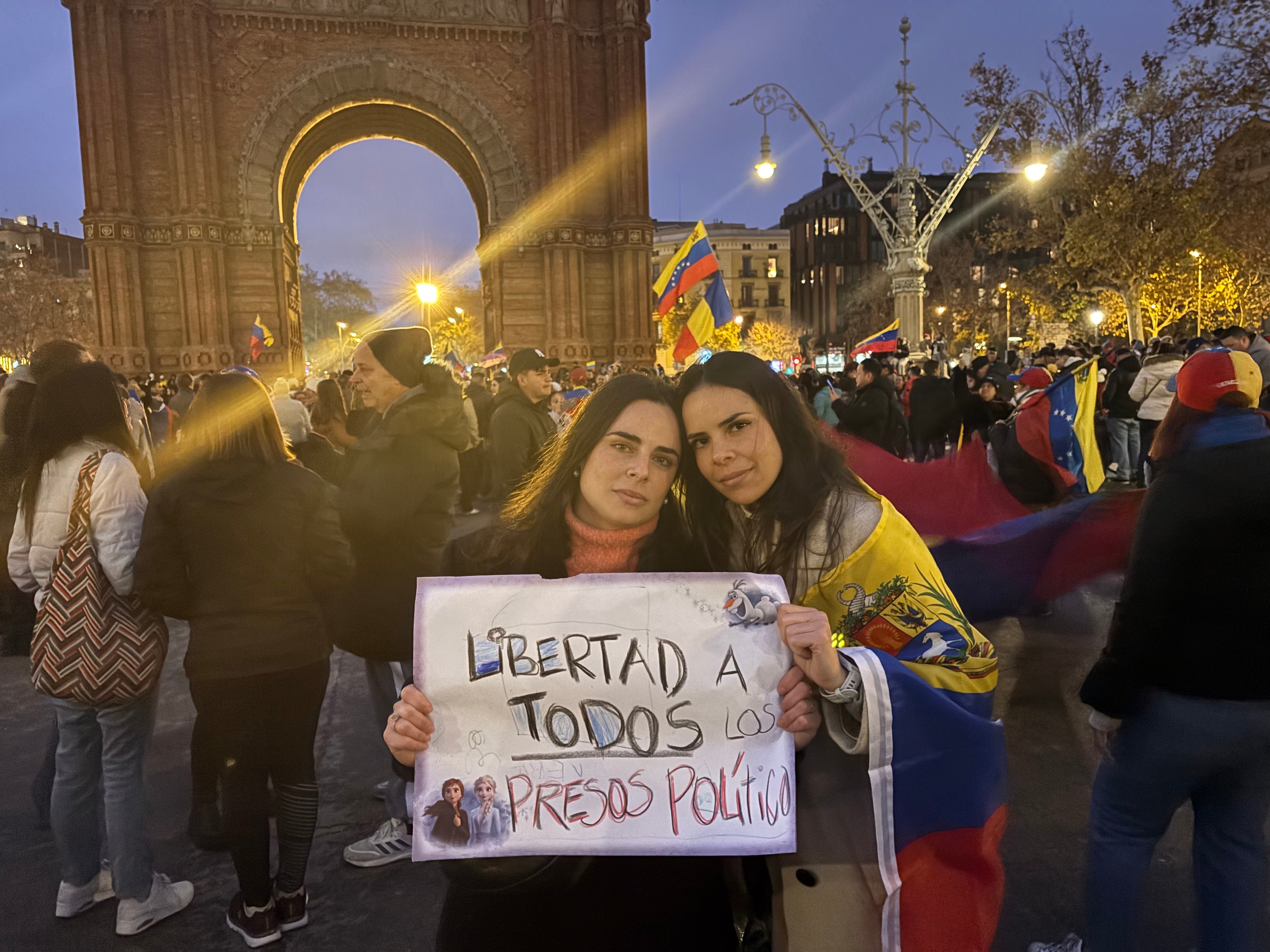
News of Maduro’s capture by US forces raised the possibility of returning for the first time in years for a diaspora held in limbo overseas. As hundreds gathered at the central Arc de Triomf on Sunday, many struggled to reconcile a sense of hope for the future with an anxiety about the present.
The demonstration drew a diverse mix of old and young. Some brought megaphones and held up placards reading “Viva free Venezuela” and “freedom for all”.
“This is not a celebration of any strikes. It’s not a celebration of Venezuela being invaded by Trump,” insisted Ms Galavis, who has lived in Barcelona for the last 10 years. “It’s about the freedom of a country that has been oppressed for more than 26 years.”
The US strikes were controversial among Venezuelans living abroad. Earlier on Sunday, scores had gathered outside the US embassy in Madrid to condemn what they called “Yankee terrorists”. The day before, Barcelona had seen similar protests railing against US intervention near the Venezuelan consulate.
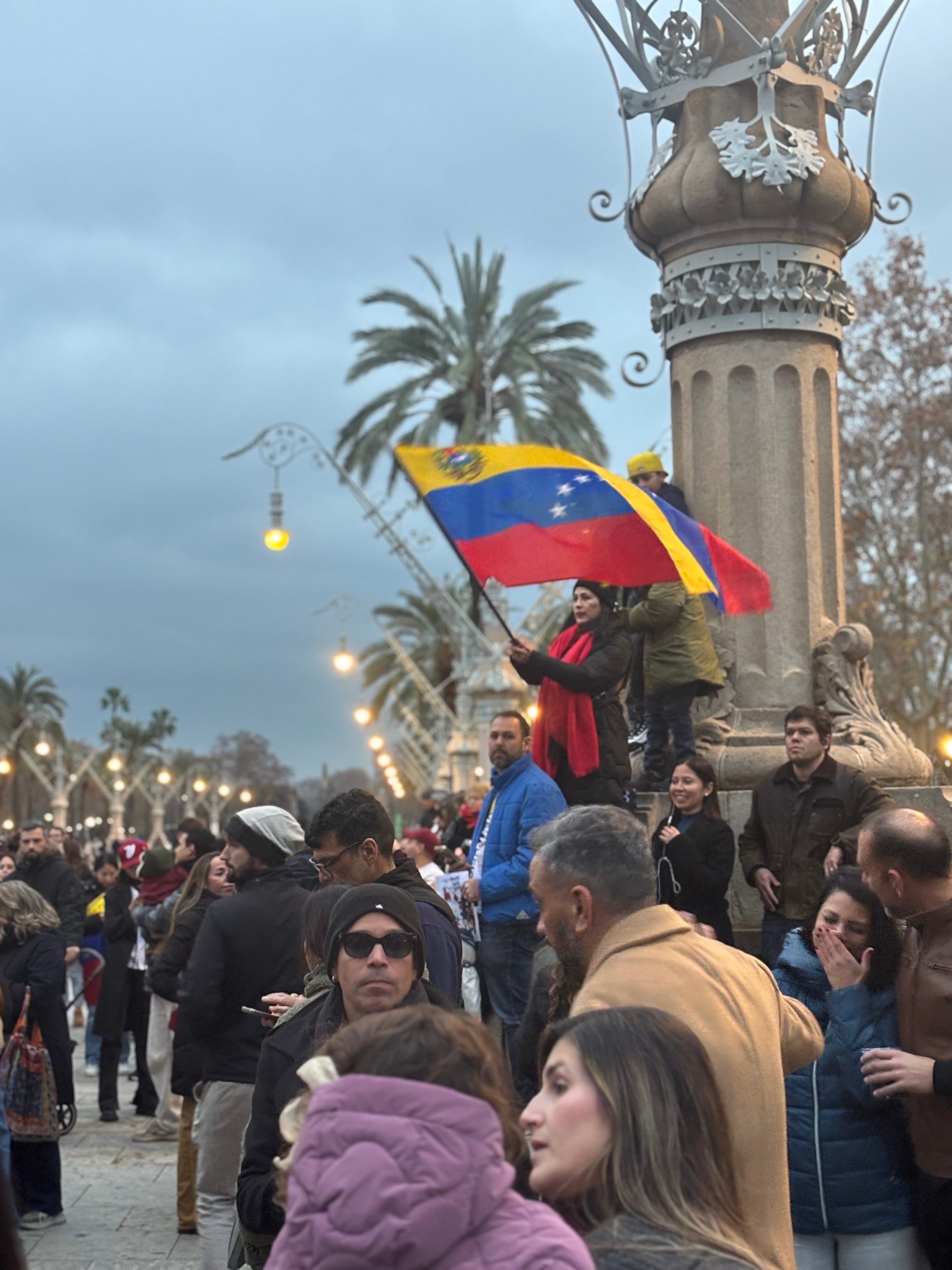
Ms Galavis told The Independent: “I don’t think that Trump is a good person at all. I’m not with him. But at the same time, I’m tired of not seeing the resources that Venezuela has put into its people.”
It was a turbulent weekend for Venezuelans in Spain, who on Saturday morning awoke to news of the US bombardment and texted family members to check they had survived.
Maduro’s capture has created difficult questions about what will fill the political vacuum. With no clear plan for a transition to democracy, the Venezuelans who have built lives, businesses and relationships in Spain remain uncertain about whether they can or should return.
At the demonstration on Sunday, Luis Arres, 34, from Caracas, said he hoped he would be able to go home after seven years living in Barcelona, and some time in the United States – but acknowledged that challenges remain.
Mr Arres said he was hopeful that Venezuela would be able to work with the US for mutual gain.
“Nothing in this world is free. We have to actually fight [for] change,” he said, adding that the US “has a lot of things that we need”.
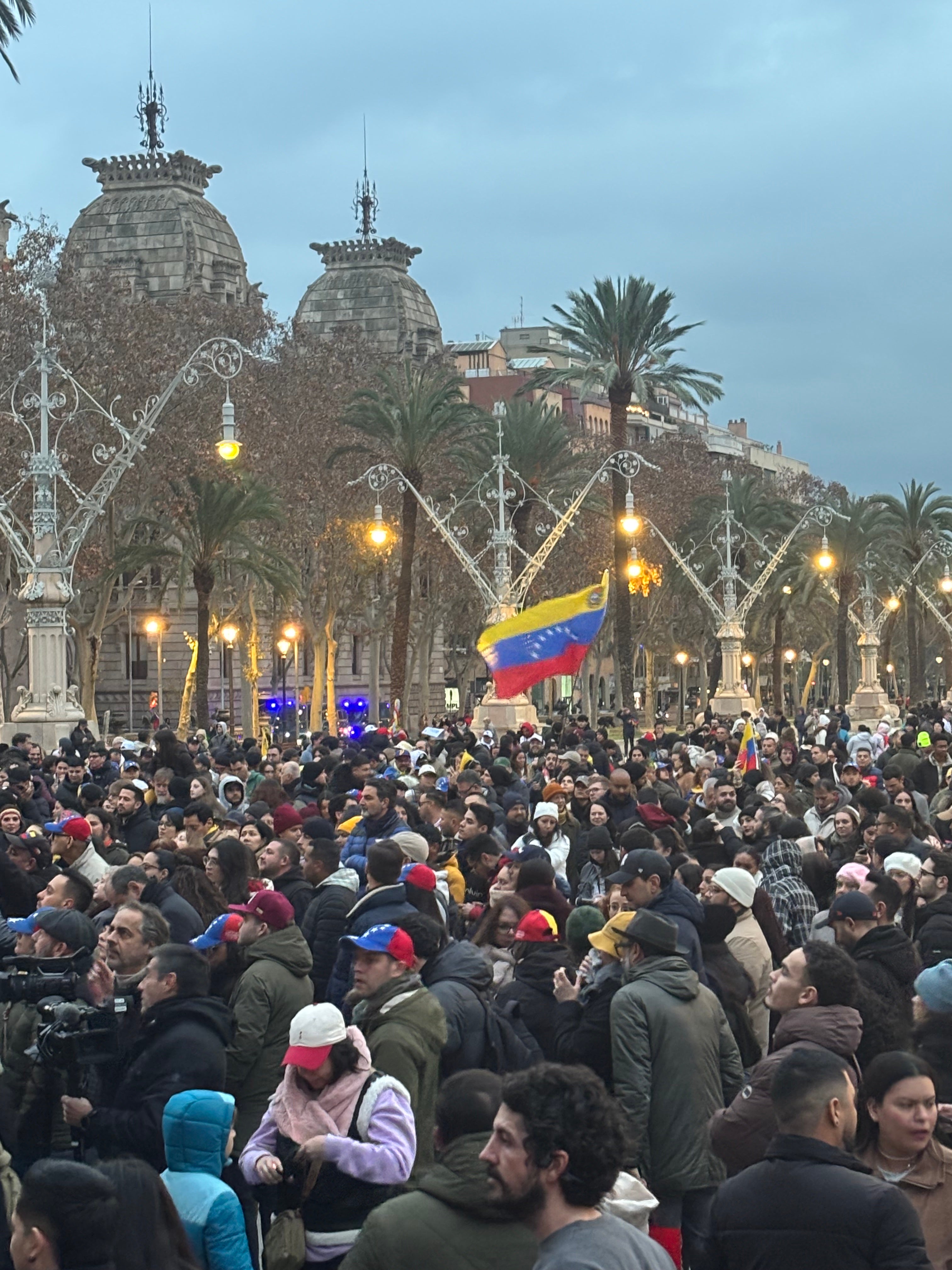
Krishna, 29, said his first reaction to the news of Maduro’s capture was “happiness”.
“Now I have a thousand times more hope than before” that he might be able to go home, he told The Independent, adding that he had been in Barcelona for two years.
“Finally, I can return. More than anything, that.”
He said whatever might come next, the possibilities are better now and he has no fears for the future.
“I’m here to celebrate the fall of Maduro and that the dictator has gone, and that they’ve taken him and they’re going to judge him in the United States.”
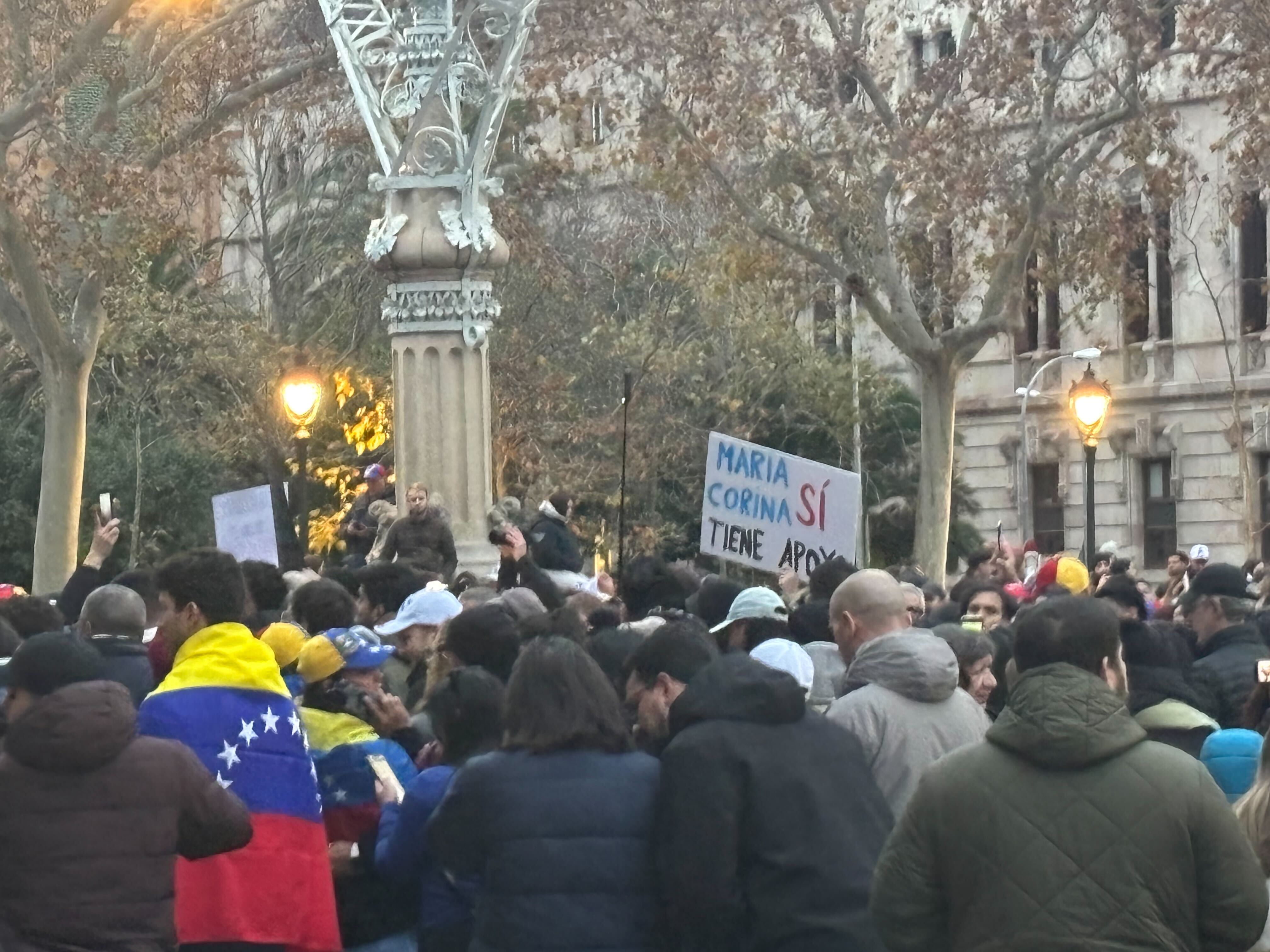
Spanish prime minister Pedro Sanchez wrote on social media on Sunday that while his government “did not recognise the Maduro regime”, it would not recognise “an intervention that violates international law and pushes the region toward a horizon of uncertainty and belligerence”.
But for the hundreds of thousands of Venezuelans living in Europe, there is tentative hope that the removal of Maduro is the beginning of a new future.
“We have a lot of things that we have to work on, but the first step is being a democracy,” Mr Arres said. “After that, we can develop a new country, different to what we had before.”
Join our commenting forum
Join thought-provoking conversations, follow other Independent readers and see their replies
Comments
Bookmark popover
Removed from bookmarks