Notre Dame residents told to test blood for lead poisoning after cathedral fire
One child already found to have high levels of toxin in blood, authorities say
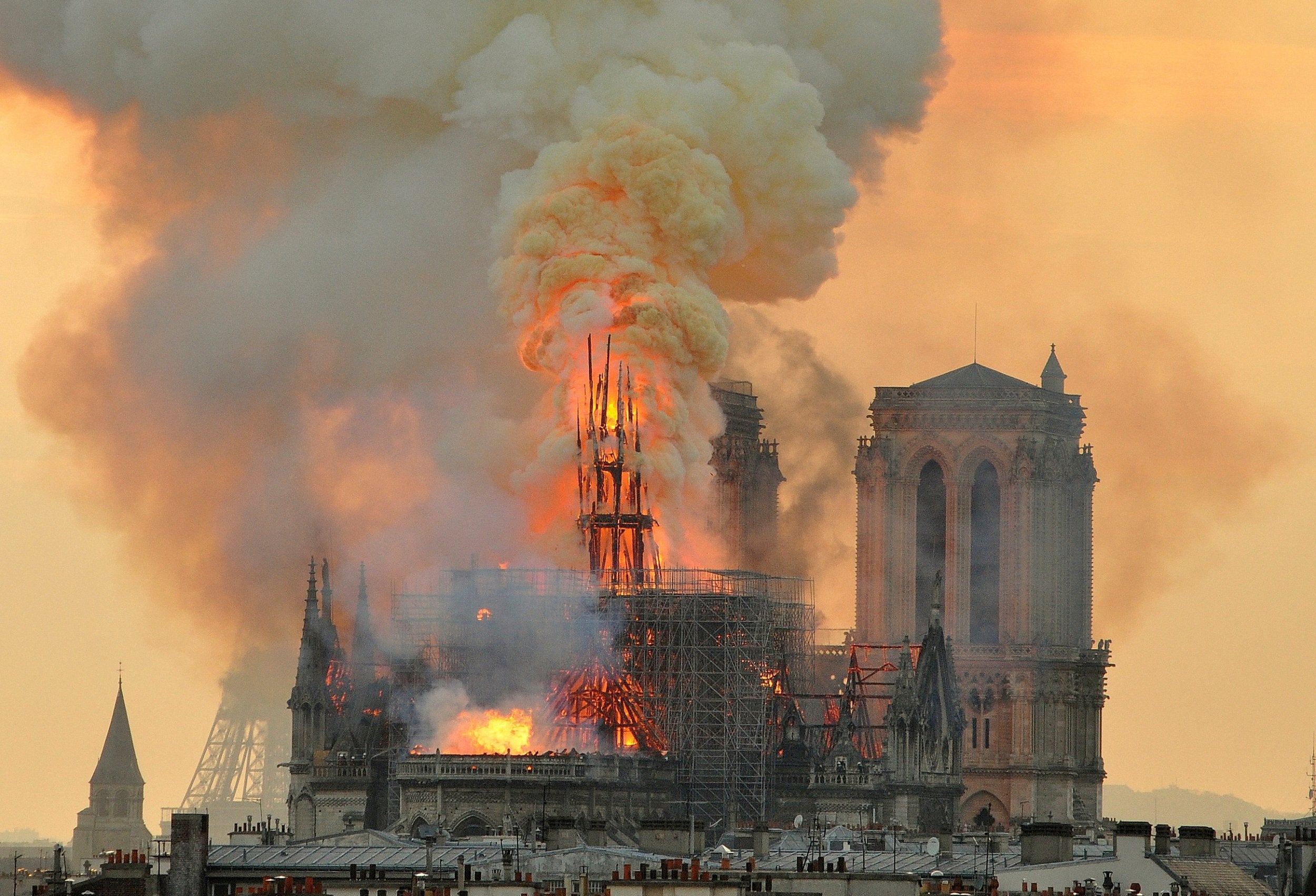
People who live near the Notre Dame cathedral in Paris could have been exposed to lead pollution by the fire which destroyed the spire and much of the roof of the world famous monument.
Paris’s regional health agency has recommended children under seven years old and pregnant women living near the cathedral should take blood tests for lead.
The enormous fire in the French capital on 15 April sent tons of toxic lead from the cathedral’s roof into the air, which would have later sunk to the ground as dust.
The authorities in Paris said they have identified one child from the area with “a blood lead level above the regulatory threshold”.
Soil samples and some administrative buildings nearby have also tested positive for high levels of lead.
The health agency said their tests indicated there is “no risk linked to air quality”.
Paris authorities have begun a cleanup of lead dust in the remaining cordoned-off parts of Notre Dame’s forecourt with a vacuum-style machine.
According to the World Health Organisation, young children are particularly vulnerable to the toxic effects of lead and can suffer profound and permanent adverse health effects, which can include damage to the development of the brain and nervous system.
Lead also causes long-term harm in adults, including increased risk of high blood pressure and kidney damage.
Exposure of pregnant women to high levels of lead can cause miscarriage, stillbirth, premature birth and low birth weight.
Additional reporting by AP
Join our commenting forum
Join thought-provoking conversations, follow other Independent readers and see their replies
Comments
Bookmark popover
Removed from bookmarks