From the Elysee Palace to a prison cell: The scandal-ridden life of Nicolas Sarkozy
The man known as the ‘hyper-president’ remains an influential figure in France, despite being plagued by legal troubles and allegations of corruption. Peter Popham looks at how the fiery right-winger was brought down
Former president Nicolas Sarkozy was at the pinnacle of French politics for just five years, but left a long and lurid trail of corruption allegations behind him.
Eight years after retiring from politics, the man known as the “hyper-president” remains influential, a trusted adviser to Emmanuel Macron, who turned to the fiery right-winger when his centrist liberalism wilted under attack from Marine Le Pen’s National Rally party. “The right haven’t found anyone to replace him,” was how one insider put it.
Yet this pillar of the French state has begun a five-year jail sentence for his role in a conspiracy to illegally raise campaign funds from Libya. On Tuesday morning, he swapped the comfort of his Paris home - where he lives with his third wife, model and singer-songwriter Carla Bruni-Sarkozy – for a prison cell.
In a separate case he was accused of a vast overspend in his unsuccessful 2012 presidential campaign. But these and other scandals are dwarfed by the Libyan campaign-finance saga: the charge that he sealed a corruption pact with the late Libyan leader Muammar Gaddafi to obtain millions of euros in cash for his 2007 presidential campaign.
Sarkozy was cleared of all other charges in the case, including corruption.
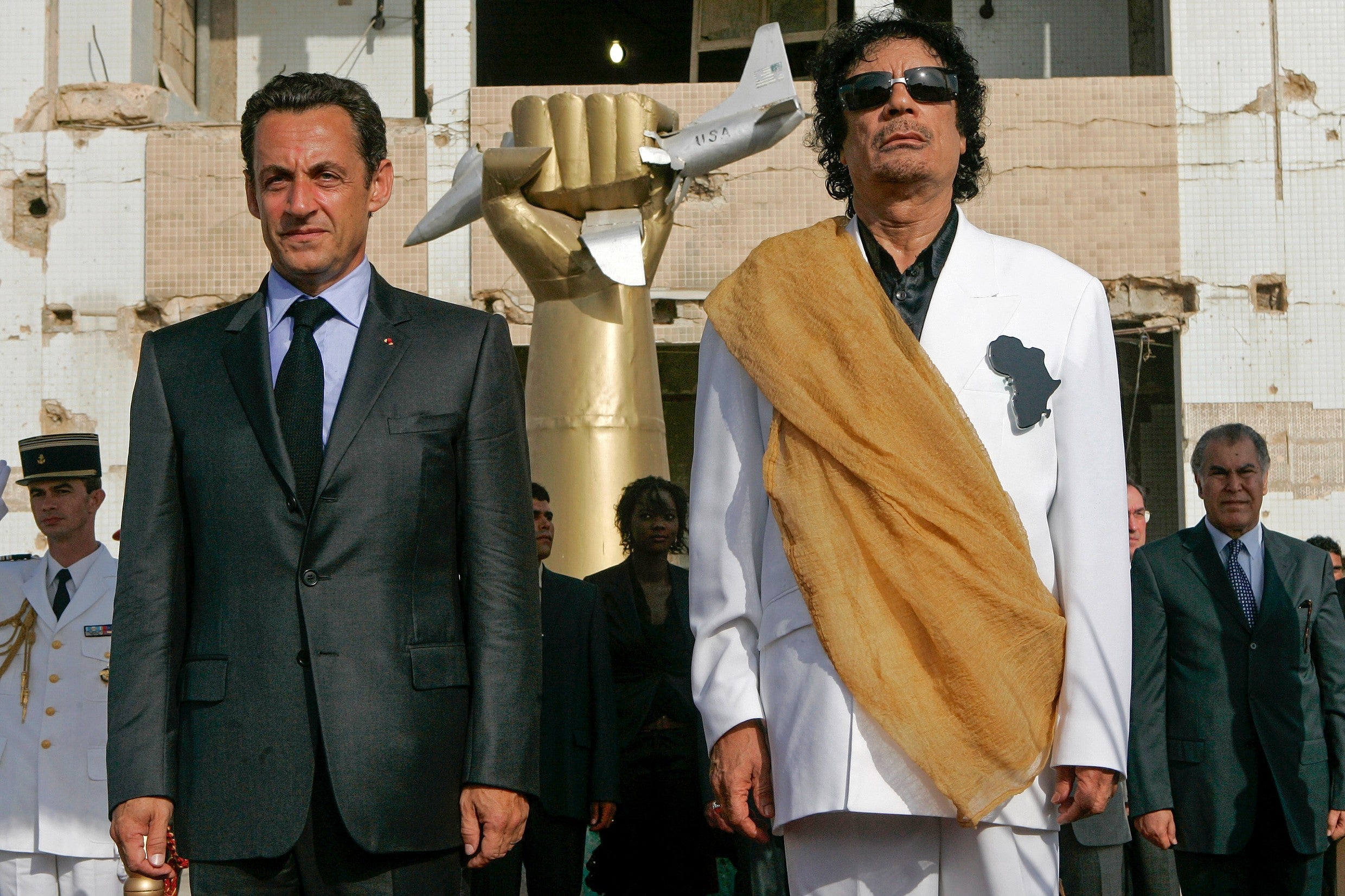
“The story is so crazy and complicated that it was hard to believe,” a French journalist who has followed the case told The Independent. “It’s a very serious case; there has been nothing else like this.”
Gaddafi had for years been an international pariah for sponsoring terrorist attacks, including the downing of a French DC-10 in Niger in 1989 with the loss of all 170 souls on board, 40 of whom were French. But after the September 11 attacks, the Libyan strongman made a sustained bid for international respectability.
And it came to pass. In 2007, two months into Sarkozy’s presidency, Gaddafi pitched his tent in the garden of the Elysee palace, snarling the Paris traffic with his 100 limousines and enraging many French citizens. To the many French voters appalled by the invitation, Sarkozy explained it as a gesture in recognition of Gaddafi having agreed to free a group of Bulgarian nurses jailed in Libya on trumped-up charges. The Parisian court was told, however, that the truth was almost unbelievably squalid – and reckless.
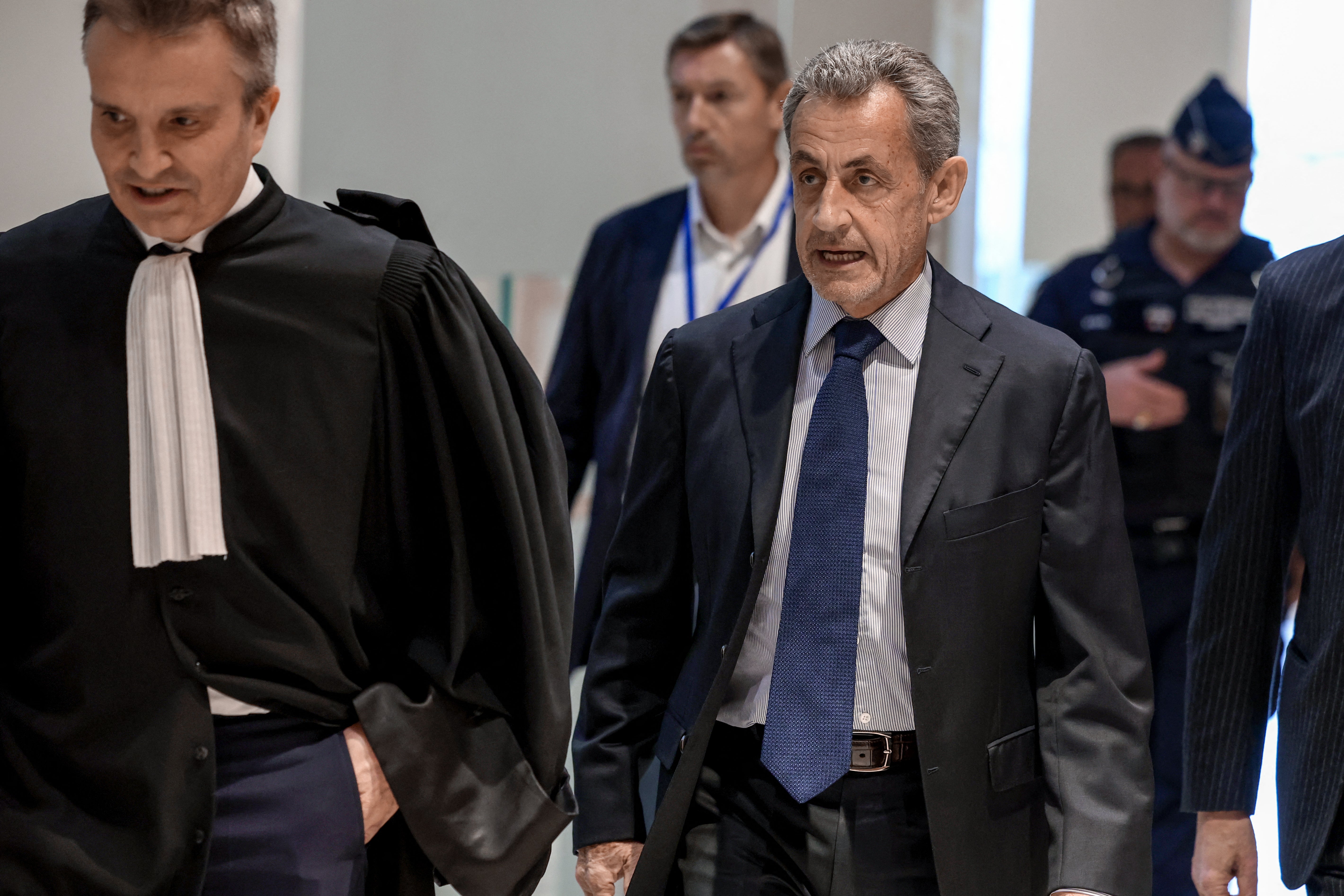
How was a politician of matchless ambition to gain an edge on his rivals when election campaign donations were rigidly controlled? Sarkozy’s answer, prosecutors claimed, was to obtain massive funding from a source that no one would suspect.
“Behind the public image, investigations reveal a man driven by overwhelming personal ambition, ready to sacrifice integrity, honesty and rectitude on the altar of power,” prosecutors said.
Sarkozy is the son of an aristocratic Hungarian refugee, and his mother was from a mixed Catholic and Sephardic Jewish background. He had none of the classical education of the French political elite. He was educated modestly, and qualified as a barrister. But from his teens he was driven by fierce political ambition, unhindered by either his outsider background or the short stature that caused him to be written off as “little Sarkozy”.
A charismatic showman, Sarkozy was the first French politician to master television. An early step on the ladder was becoming mayor of the prosperous Parisian suburb of Neuilly, a post in which he gained the patronage of the prime minister at the time, Jacques Chirac.
He showed his ruthless instincts when he turned on Chirac, backing a rival for the presidency in 2002; when that gambit failed, he returned to Neuilly – and stunned the nation in 1993 by becoming the hero of a real-life hostage drama, in which 21 Neuilly infants were held by a terrorist in their kindergarten.
Brushing the professional negotiators aside, he strode into the school, negotiated directly with the perpetrator, and brought the unharmed children out in his arms one by one. He never looked back.
Winning the presidency in 2002, Chirac appointed his trusted former protege to the high-risk role of interior minister. As such, Sarkozy paid his fateful visit to Gaddafi’s tent in Tripoli – to discuss illegal immigration, but also, prosecutors claimed, to hammer out his deal with the Libyan leader.
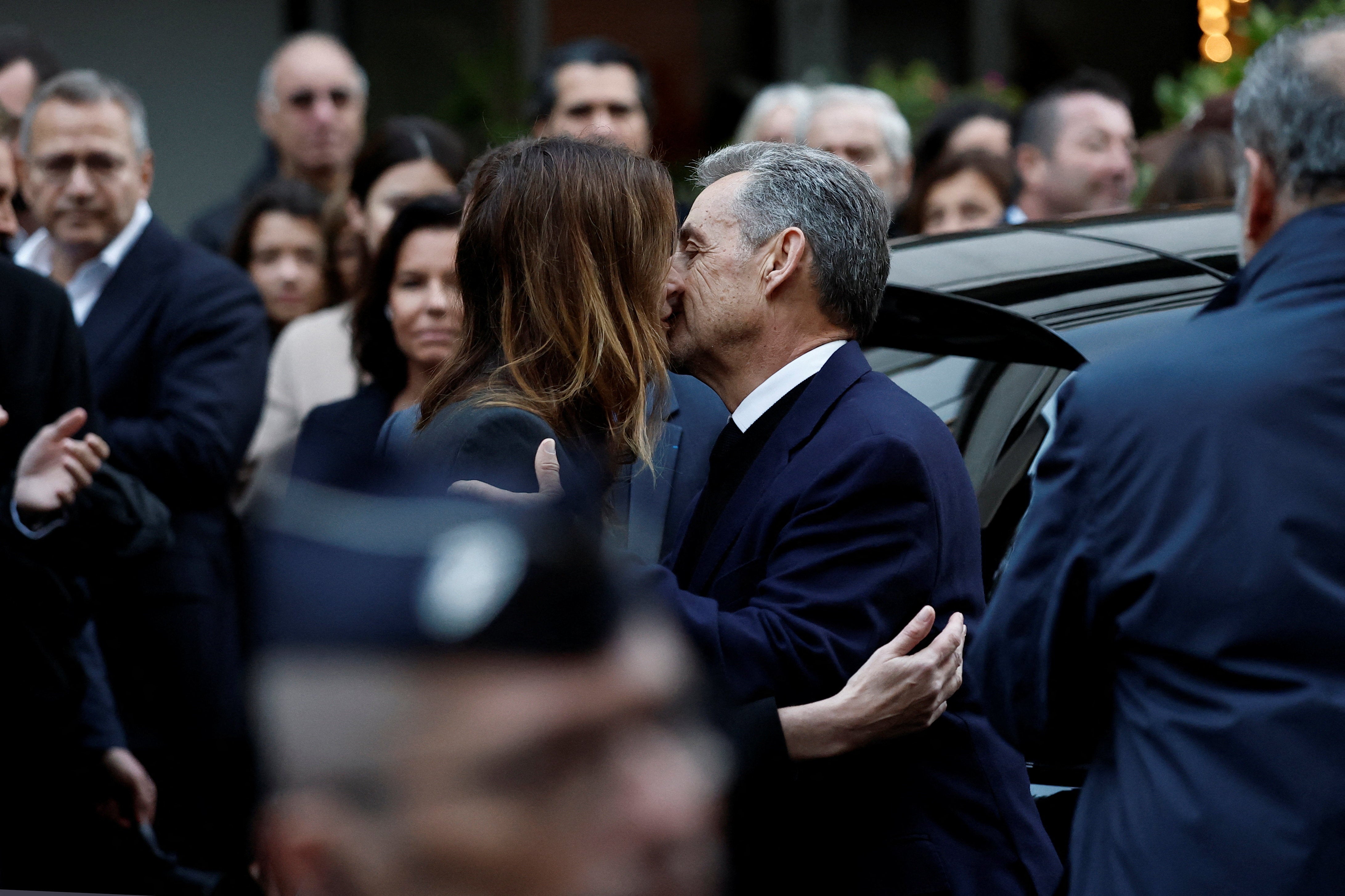
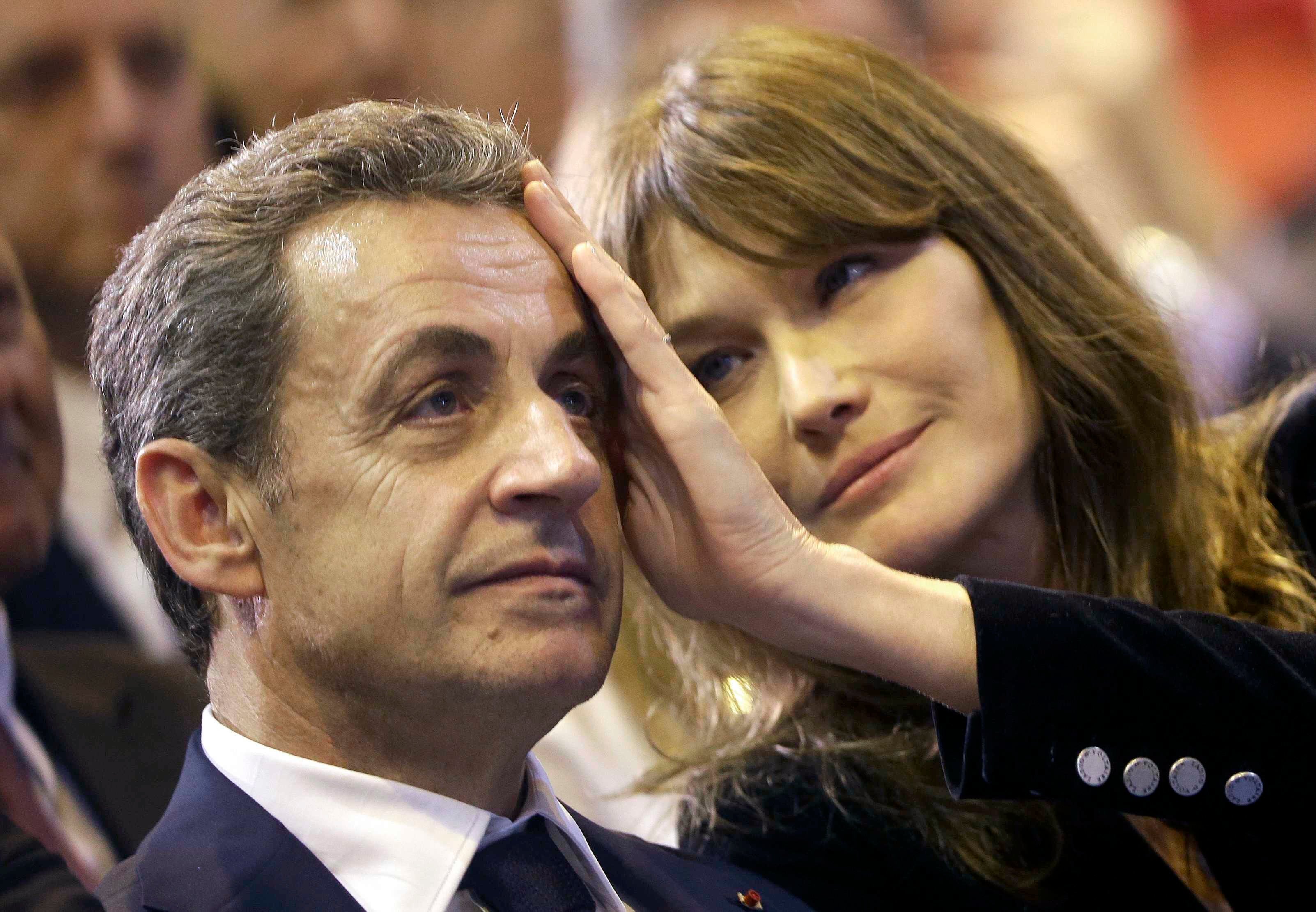
Also in Neuilly he fell in love with Cecilia Ciganer-Albeniz, the bride at a wedding he conducted as mayor, subsequently cuckolding the bridegroom and marrying her. His second wife, Cecilia Sarkozy became his closest political adviser, until their marriage fell apart in 2007 on the eve of his becoming president.
Almost immediately, Sarkozy again grabbed the tabloid headlines, falling in love at a dinner party with Carla Bruni and marrying her shortly afterwards. His three marriages have produced three sons and a daughter.
For his latest trial, prosecutors accumulated a vast weight of circumstantial evidence, including the claim by Franco-Lebanese middleman Ziad Takieddine that he had brought €5m (£4.4m) in three suitcases from Tripoli to Paris, the renting by Sarkozy’s then chief of staff of a very large safe in a Paris bank, and the paying of €250,000 in cash bonuses to campaign workers. Takieddine died in Beirut two days before this week’s verdict was due.
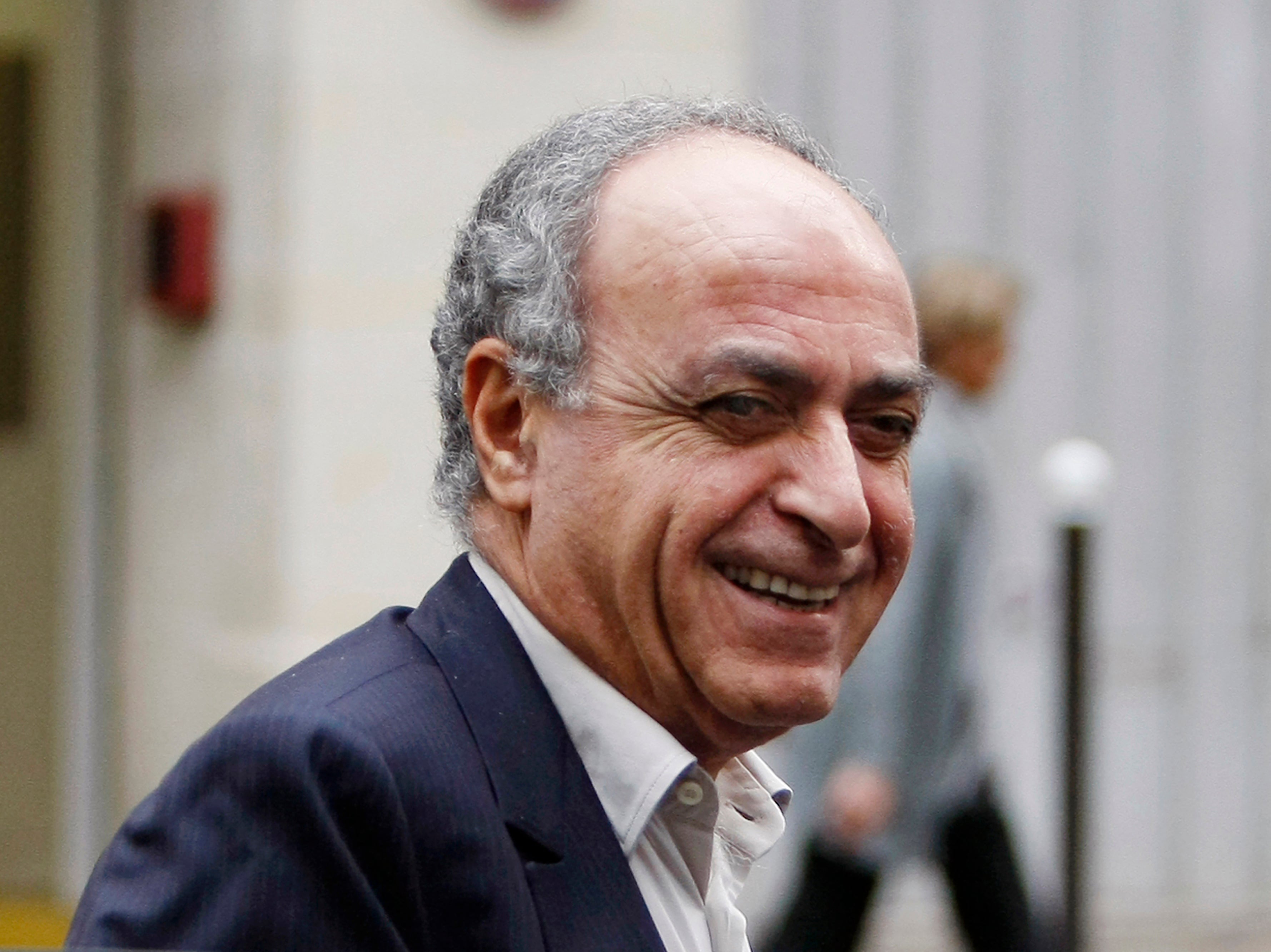
The court on Thursday found Sarkozy guilty of criminal conspiracy in a scheme that operated from 2005 to 2007 to finance his campaign with funds from Libya in exchange for diplomatic favours. But he was acquitted of three other charges, including passive corruption, illegal campaign financing, and concealment of the embezzlement of public funds.
Sarkozy had fiercely denied wrongdoing, and pointed to the fact that even after years of investigation, no smoking gun had been discovered.
“It’s a conspiracy,” he told the court. “Ten years of slander, 48 hours in police custody, 60 hours of interrogations, 10 years of investigations, four months before the court... [but] you will never, ever find one Euro [that I have taken] from Libya, not even a single cent.”
Muddying the waters further is the behaviour of key witnesses. In 2012, middleman Takieddine claimed to have evidence that Libya had poured more than €50m into Sarkozy’s campaign, but then in 2020 retracted the claims – induced to do so, the Liberation newspaper alleged, by Sarkozy’s allies, including Carla Bruni-Sarkozy, who is on bail on witness-tampering charges.
Join our commenting forum
Join thought-provoking conversations, follow other Independent readers and see their replies
Comments
Bookmark popover
Removed from bookmarks