Trial set to begin for climber who ‘left his girlfriend to die’ on Austria’s highest mountain
Kerstin Gurtner froze to death after she was left ‘exhausted, hypothermic, and disoriented’ on Grossglockner mountain
The trial of an Alpine climber charged with manslaughter after he left his girlfriend on Austria’s highest mountain before she froze to death, is due to begin on Thursday.
Thomas Plamberger and Kerstin Gurtner were just 50m away from the 3,798m (12,460ft) summit of Grossglockner when she started suffering from exhaustion and disorientation, according to the Innsbruck public prosecutor’s office.
Mr Plamberger decided to leave her at 2am on Sunday, 19 January last year and descend to the nearest mountain hut to seek help, only returning six and a half hours later in the morning to find her dead, according to the public prosecutor.
Gurtner, 33, froze to death alone on the mountain after she was left in -8C temperatures, with winds of up to 45mph contributing to temperatures that “feel” as low as -20C.
Prosecutors undertook an 11-month investigation into the incident and examined the couple’s mobile phones, sports watches, and photographs of their climb, as well as commissioning an independent report from an Alpine mountaineering expert.
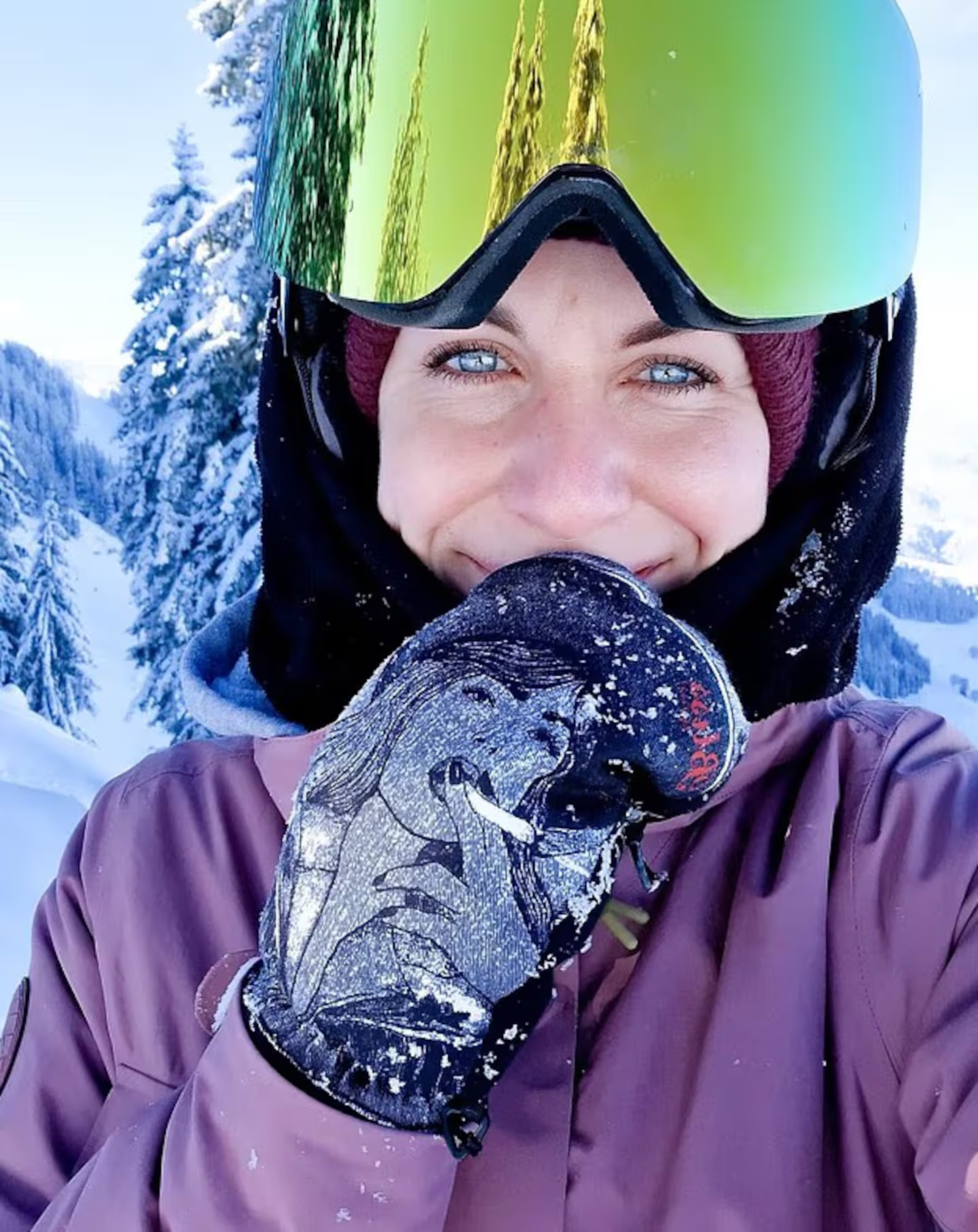
They have now charged Mr Plamberger with negligent manslaughter, arguing that he made nine key mistakes that led to Gurtner’s death, from not planning the expedition properly to failing to make contact with search teams and police.
The trial, which opens in Innsbruck, Austria, will focus on whether Mr Plamberger’s actions amounted to gross negligent manslaughter.
Prosecutors argue that, as the more experienced climber and the person who organised the ascent of the Grossglockner, he was the “responsible guide for the tour”.
Mr Plamberger has denied any wrongdoing. His lawyer has previously rejected part of the Innsbruck prosecutors’ timeline of events, claiming he left Gurtner on the mountain “by mutual agreement”.
Prosecutors say the couple set off two hours too late on the morning of 18 January to realistically summit Grossglockner and return safely.
They effectively became stranded by stormy weather at approximately 8.50pm, but prosecutors allege that Mr Plamberger made no attempts to call for help and did not issue any distress signals to a police helicopter that flew over their position at 10.50pm.
Police tried to call Mr Plamberger multiple times before he called an officer back at 12.35am. The prosecutor’s office said the contents of the call remained “unclear” but that Mr Plamberger then put his phone on silent and no further contact was made.
“At approximately 2am, the defendant left his girlfriend unprotected, exhausted, hypothermic, and disoriented about 50m [metres] below the summit cross of the Grossglockner. The woman froze to death,” the statement said.
“Since the defendant, unlike his girlfriend, was already very experienced with alpine high-altitude tours and had planned the tour, he was to be considered the responsible guide of the tour,” it added.
The defence, led by lawyer Karl Jelinek, described Gurtner’s death as a “tragic accident” and disputed parts of the prosecution timeline.
He argued the couple planned the expedition together, believed they were sufficiently experienced and properly equipped, and only encountered sudden difficulties close to the summit.
At 12.35am on 19 January, Mr Plamberger contacted mountain police, though the exact details of the conversation remain unclear. His lawyer says he requested assistance and denies that he told officers everything was fine. Prosecutors allege he then put his phone on silent and did not answer further calls.
Mr Jelinek denies that his client ignored police calls or failed to seek help promptly.
The Grossglockner is considered one of the most challenging climbs in the Austrian Alps, requiring full climbing and glacier gear.

Yet police said Mr Plamberger allowed his girlfriend to use a splitboard – a snowboard that can be divided into two parts to be used like skis for climbing – and soft snowboard boots, equipment that prosecutors said was unsuitable for their high-alpine winter route.
He also allegedly failed to move his girlfriend to a position where she would be sheltered from the wind or to give her their bivouac sleeping bag or aluminium foil blankets to keep her warm before he left.
Prosecutors said the woman was inexperienced and had never undertaken an alpine tour of this length, difficulty, and altitude.
In a series of posts on his now-deleted Instagram, Mr Plamberger said Gurtner’s death was “hurting so much”.
“I miss you so much. It hurts so incredibly much. Forever in my heart. Without you, time is meaningless”, he wrote on social media, and co-signed the obituary her parents wrote, according to Bild.
Tributes on Gurtner’s page since her death have described her as a “beloved daughter, sister, sister-in-law, godmother, granddaughter, partner and friend”.
“Thank you, dear Kerstin, for being you, for being you, and for your soul always will be. Thank you for the mark you left not only on me, but on so many others. Through you, you live on here as well,” a friend of Gurtner wrote.
If Mr Plamberger is found guilty, he could face up to three years in prison.
Join our commenting forum
Join thought-provoking conversations, follow other Independent readers and see their replies
Comments
Bookmark popover
Removed from bookmarks