Foul ‘poo balls’ wash up on Australian beaches amid warnings over giant sewer fatberg
Reports suggest a colossal fatberg, potentially equivalent in size to four buses, was trapped inside a deepwater ocean sewer
Dark, spherical blobs of foul-smelling debris have appeared along parts of Sydney’s coastline, which authorities suspected were fragments of a massive “fatberg” of waste trapped inside a nearby deepwater ocean sewer.
The latest discoveries following intense weekend rainfall were made at Malabar Beach, adjacent to a sewage treatment facility operated by Sydney Water, Australia's largest water utility, as well as along stretches of Botany Bay.
Both areas sit downstream of key components of Sydney’s wastewater network.
The debris, commonly referred to by local media as “poo balls”, contain a mix of human waste, cooking oils, plastic, wet wipes and congealed grease. Fatbergs form when fats, oils, and grease combine with non-biodegradable items such as wet wipes, creating hardened blockages.
Authorities cordoned off the affected areas and warned beachgoers against touching any debris.
Temporary signage was installed while cleanup operations were underway. “This area may be affected by sewage debris balls,” the notice read. “Please do not touch any debris. We are cleaning the area and apologise for any inconvenience.”
On Tuesday night, more than a dozen dark, irregular blobs were visible among seaweed and plastic waste at Malabar. Smaller grey pellets were also scattered across the sand.
It follows reports that Sydney Water identified a colossal fatberg – potentially equivalent in size to four buses – trapped inside the Malabar deepwater ocean sewer. Officials believe this accumulation of fats, oils and grease is the likely source of the so-called “poo balls” that forced the closure of several Sydney beaches last year.
According to an internal Sydney Water report, the blockage is thought to sit in an “inaccessible dead zone” near the start of the outfall pipe, which carries primary-treated wastewater more than two kilometres offshore.
The report suggests debris can be dislodged during “sloughing events”, triggered by sudden changes in pumping pressure, often linked to power failures or heavy rainfall.
Sydney experienced precisely those conditions over the weekend, with storms dumping more than 100mm of rain across parts of the city in just a few hours. Authorities noted that such intense rainfall can overwhelm sewage systems, increasing the risk of overflow and discharge incidents.
Similar contamination was also observed at Foreshore beach, near the point where Mill Stream, a highly engineered waterway and wetland system, enters Botany Bay. The site consistently ranks among Sydney’s most polluted swimming areas due to its proximity to a major overflow valve in the Malabar sewage network.
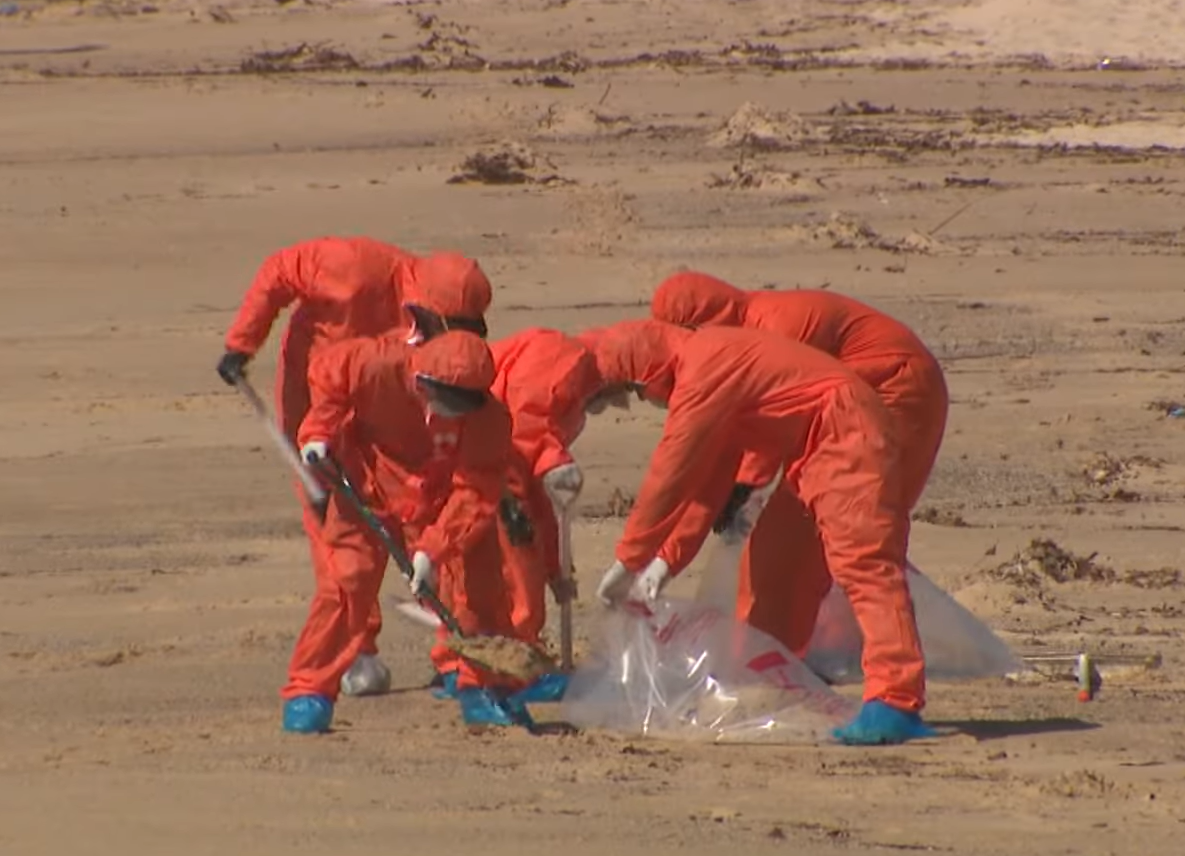
By Wednesday morning, the shoreline was strewn with waxy grey lumps – some roughly the size of half a brick – alongside smaller spherical debris. Contractors wearing high-visibility clothing were seen clearing the material, the Guardian Australia reported.
Sydney Water currently operates under an agreement with Sydney airport and the Environment Protection Authority allowing the discharge of sewage into Mill Stream until mid-2027. The arrangement is intended as a temporary measure while longer-term infrastructure upgrades are developed.
Sydney Water’s chief executive, Darren Cleary, last week defended the city’s continued reliance on deepwater ocean outfalls – the point where wastewater flows out of a pipe or river channel into a larger body of water like a river or sea – which handle around 80 per cent of Sydney’s wastewater. “Deep ocean outfalls have been meeting environmental standards for nearly three decades,” he said.
Mr Cleary said regular water quality testing was conducted near the offshore diffusers, located between two and four kilometres from the coast, and that Sydney’s beaches generally maintained strong safety ratings.
“The issue of the debris balls is an unexpected event,” he said.
Water and Housing Minister Rose Jackson said planned upgrades would cut the overall amount of wastewater requiring treatment and release through the Malabar deep ocean outfall.
“Sydney is a rapidly growing city and no one wants to see debris balls washing up on our beautiful beaches again – but the truth is our wastewater system needs an upgrade to keep pace with the population,” she said. Last week, it was announced that the New South Wales government has launched a major, multi-billion-dollar upgrade of Sydney’s wastewater system, focused on the Malabar network, to support rapid population growth in the city’s south-west and prevent pollution of Sydney’s beaches.
The 10-year, A$3bn (£1.5bn) programme aims to reduce the amount of wastewater discharged through the Malabar deep ocean outfall.
Join our commenting forum
Join thought-provoking conversations, follow other Independent readers and see their replies
Comments
Bookmark popover
Removed from bookmarks