Navy musician plays French horn on the world’s coldest stage
Natalie Paine is stationed in Antarctica, where she has performed in -21C temperatures
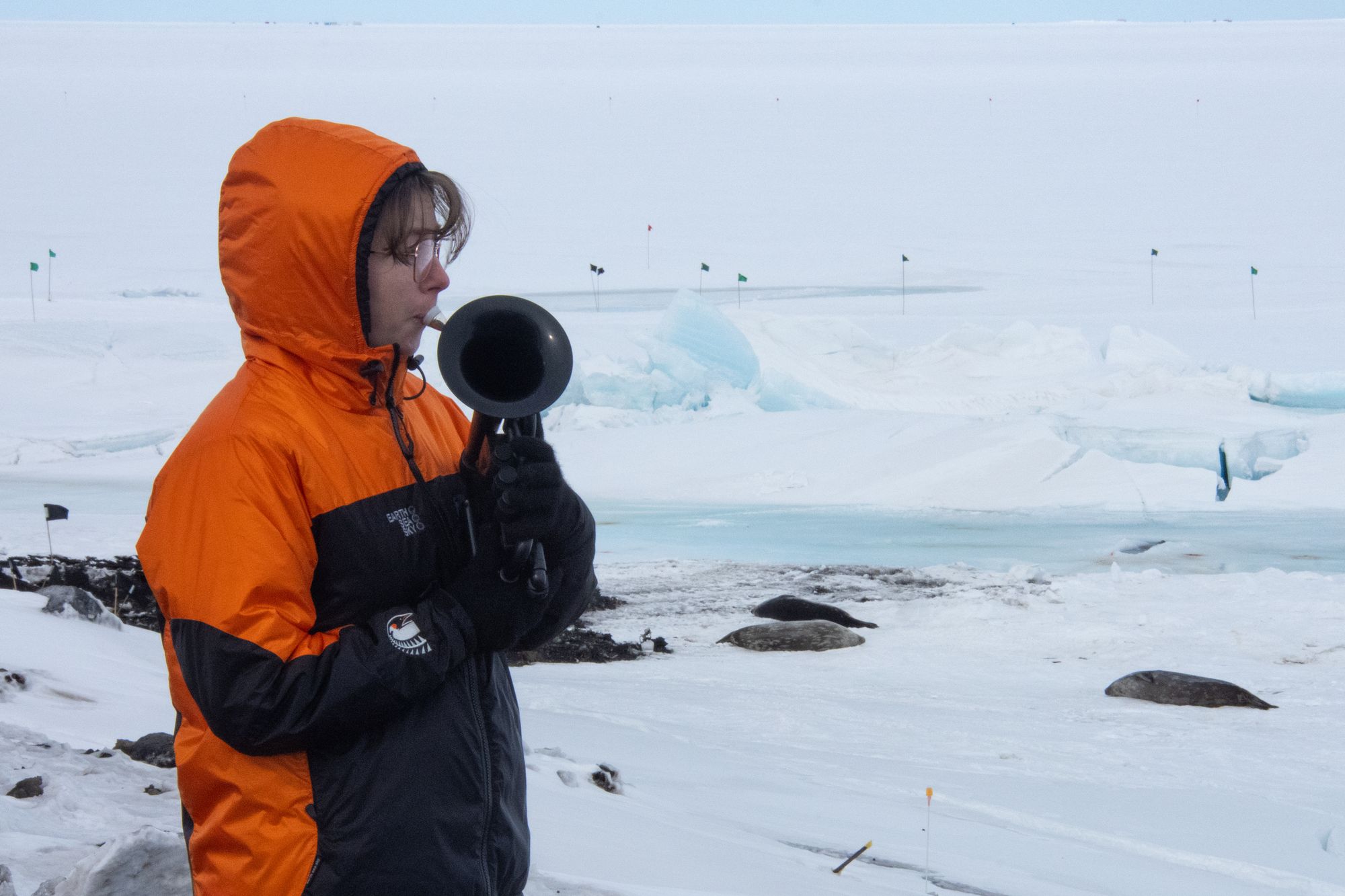
On the frozen edge of the world, a professional musician maintains her craft with ingenuity, grit, and a plastic instrument designed for schoolchildren, guaranteed not to freeze to fingers or face.
Natalie Paine, a French horn player in New Zealand's navy, has been stationed in Antarctica since October, one of 21 military personnel.
Her melodies now drift across the frozen Ross Sea from perhaps the most remote practice room on Earth.
"It's beautiful and very inspiring," Ms Paine said.
"I'll sit there by the window and I will do my routine and play music in my time off, which is not very often."
Her arrival in Antarctica is an unlikely tale. From Australia’s hot, dry Adelaide, Ms Paine once dreamed of being a scientist on the frozen continent. She pursued music instead, setting the idea aside.
Years later, as a New Zealand naval musician, she discovered military personnel supported scientists there. Her instructor confirmed assignments were open to any service member.
"My eyes lit up and I was like, what? Even a musician?" Ms Paine said. "He's like, heck yeah, why not?"
Her dream was revived but enacting it wasn't simple. It took four years of unsuccessful applications before Paine landed a posting as a communications operator.
It is a consuming job, worked in six-day stretches that leave little time for music. Ms Paine monitors radio, phone, email and other communications traffic at New Zealand's mission at Scott Base, sometimes speaking to people on the ice who have not heard other voices for weeks.
In whatever window she can find, Ms Paine squeezes in scales and mouth exercises, going to great lengths not to disturb others on round-the-clock shifts.
That means slipping out of the main base to a hut built in 1957 under the leadership of explorer Sir Edmund Hillary as New Zealand established its presence in Antarctica.
While she plays by the window, watching seals on the ice, Ms Paine finds new musical motifs bubbling up.
"There's so much beauty and it's not tame either, it's this wild, untamed beauty of the land around you and the animals as well," she said. "It's just so overwhelming, spiritually, emotionally, physically sometimes as well."
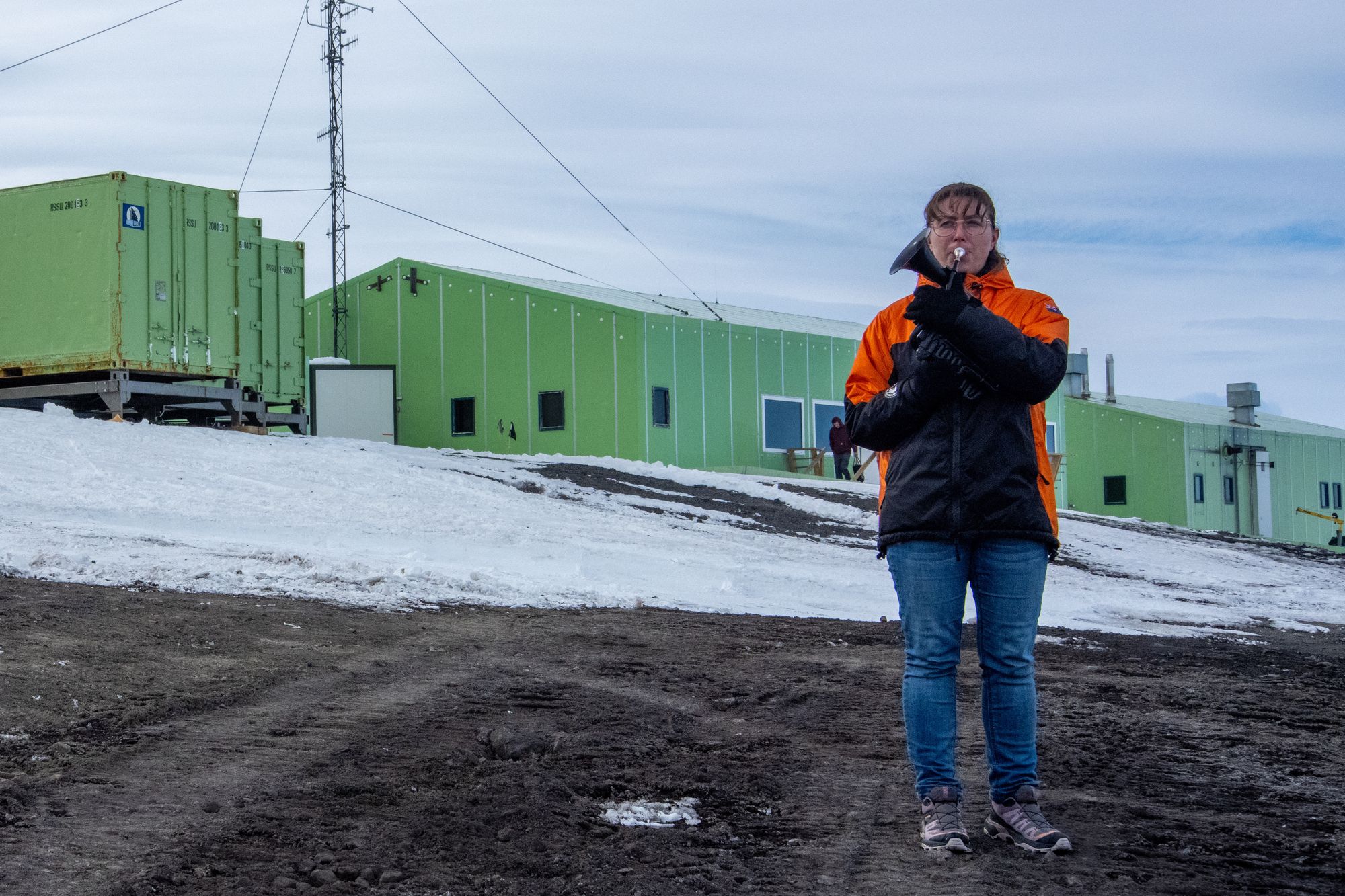
Her practical dilemmas included finding an instrument suitable for Antarctica — something hardy, lighter than a brass French horn and less likely to freeze to her hands. The winner, called a jHorn, isn't elegant.
"It was designed to be a beginner brass instrument for children," said Ms Paine.
"So it was like, super compact, super light plastic, very durable, nowhere near as much maintenance required."
New Zealand's navy doesn't have records of another military musician being posted to Antarctica so Ms Paine, who will be there until March, could be the first.

Her presence has delighted Scott Base and she has provided live music for ceremonies, such as the changing of the flag, instead of the usual tunes from a speaker.
"I had to have ski gloves on with double layers and hand warmers on the inside to be able to hold the trumpet and still my fingers were freezing," she said.
Ms Paine is, however, likely one of the few musicians to perform a solo Antarctic concert in minus 21 degrees Celsius (minus 6 Fahrenheit).
She said the collective effort between nations to work together on the frozen content had a familiar theme. It reminded her of music.
"Music is the universal language and it's something that reminds us that we're all connected," she said.
"It brings that connection back to home, back to land and back to the people you're with as well."
Join our commenting forum
Join thought-provoking conversations, follow other Independent readers and see their replies
Comments
Bookmark popover
Removed from bookmarks