Myanmar: Snipers spotted on streets of Yangon, as neighbouring countries sound alarm
Myanmar’s neighbours call for immediate release of Aung San Suu Kyi
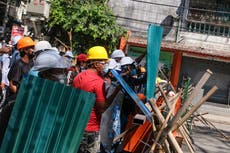
Myanmar’s intense crackdown intensified on Tuesday, with snipers seen on Yangon’s streets even as unarmed protesters defied the military to return for the demonstrations against the coup.
Neighbouring countries of the southeast Asian nation, including Indonesia, Malaysia, and Singapore, suggested that Myanmar should not use lethal force, avoid escalating tension and release political prisoners including Aung San Suu Kyi.
On Sunday, at least 18 people were killed and 30 were reportedly injured in the crackdown by security forces, resulting in severe international criticism. But that has not deterred the authorities, and social media was flooded with pictures and videos of stun grenades and teargas being used against protesters in Yangon.
The videos showed soldiers chasing the protesters and beating them. Many protesters wore helmets to protect themselves, raising placards with slogans and creating barricades to avoid confrontation and arrest.
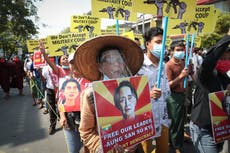
On 1 February, Myanmar’s military replaced the democratically elected government in a coup. Since then, protests demanding restoration of democracy and the release of Ms Suu Kyi and other leaders have not ceased.
 AP journalist arrested while reporting on Myanmar protests
 Final post of slain Myanmar protester asked ‘how many dead bodies’ it would take for UN to act
 Myanmar protests: At least 18 killed and 1,000 arrested as police open fire on demonstrators
 Aung San Suu Kyi seen in public for first time since military coup as more charges added
On Tuesday, Myanmar’s elected parliamentary commission announced the formation of an interim government and appointed acting union ministers in an effort to discredit the military-led regime.
While the violence continued unabated against the protesters, neighbouring countries such as Malaysia called for the unconditional release of Ms Suu Kyi and other Myanmar leaders – including the president, Win Myint – who were detained last month.
In 1997, Malaysia advocated for the inclusion of Myanmar in the Association of Southeast Asian Nations (Asean), a regional intergovernmental organisation, despite objections from the international community.
Singapore’s prime minister, Lee Hsien Loong, called the use of lethal force by Myanmar’s military against unarmed protesters “disastrous” and unacceptable. Mr Lee called for the release of Ms Suu Kyi and suggested that the military negotiate with her and her team to work out a peaceful way forward.
Speaking against the option of imposing sanctions against Myanmar, Mr Lee said that outsiders have historically had very little influence on the situation in Myanmar.
“It will not be the military, or the generals who will hurt. It will be the Myanmar population who will hurt. It will deprive them of food, medicine, essentials, and opportunities for education. How does that make things better?” said Mr Lee, adding that he hoped wisdom would prevail and that the Myanmar military would realise it needed to work out an arrangement with the civilian government.
On Monday, the US warned Myanmar’s military rulers of more action in the event that the security forces continue to harm unarmed protesters.
Kenneth Roth, executive director of Human Rights Watch, wrote on Twitter: “As the US assumes the UN Security Council presidency this month, it promises ‘intense discussions’ on Myanmar. That should include pressing for a global arms embargo and sanctions on military businesses. Dare China to abandon the Myanmar people and veto.”
Additional reporting by agencies
Join our commenting forum
Join thought-provoking conversations, follow other Independent readers and see their replies
Comments
Bookmark popover
Removed from bookmarks