Republicans in the House and Senate spar over Trump’s election takeover claims
Trump’s comments clash with historic Republican support for letting states handle elections, Eric Garcia writes
Donald Trump’s call for the government to “nationalize” voting has unsurprisingly caused Republicans to have tummyaches, with some of the more establishment types saying it would violate states’ rights, but others seeming to cheer him on.
Trump made his push to nationalize voting on the show of Dan Bongino, who, up until recently, served as his deputy FBI director. Unsurprisingly, he called predominantly Democratic cities like Philadelphia, Atlanta and Detroit too corrupt to hold their own elections.
Trump’s plan would, needless to say, be a breach of the U.S. Constitution, since states run elections. White House Press Secretary Karoline Leavitt insisted that the president believes in the Constitution.
“The president believes in the United States Constitution,” she said, though she added a caveat. “However, he believes there has obviously been a lot of fraud and irregularities that have taken place in American elections.”
Leavitt said that he specifically was supporting the Safeguard American Voter Eligibility Act, a Republican piece of legislation that would require voter identification and restrict mail-in ballots. It’s long been a priority of Republicans, particularly in the House of Representatives.
Rep. Chip Roy of Texas, a member of the hardline House Freedom Caucus, said that the legislation would not violate the principles of federalism.
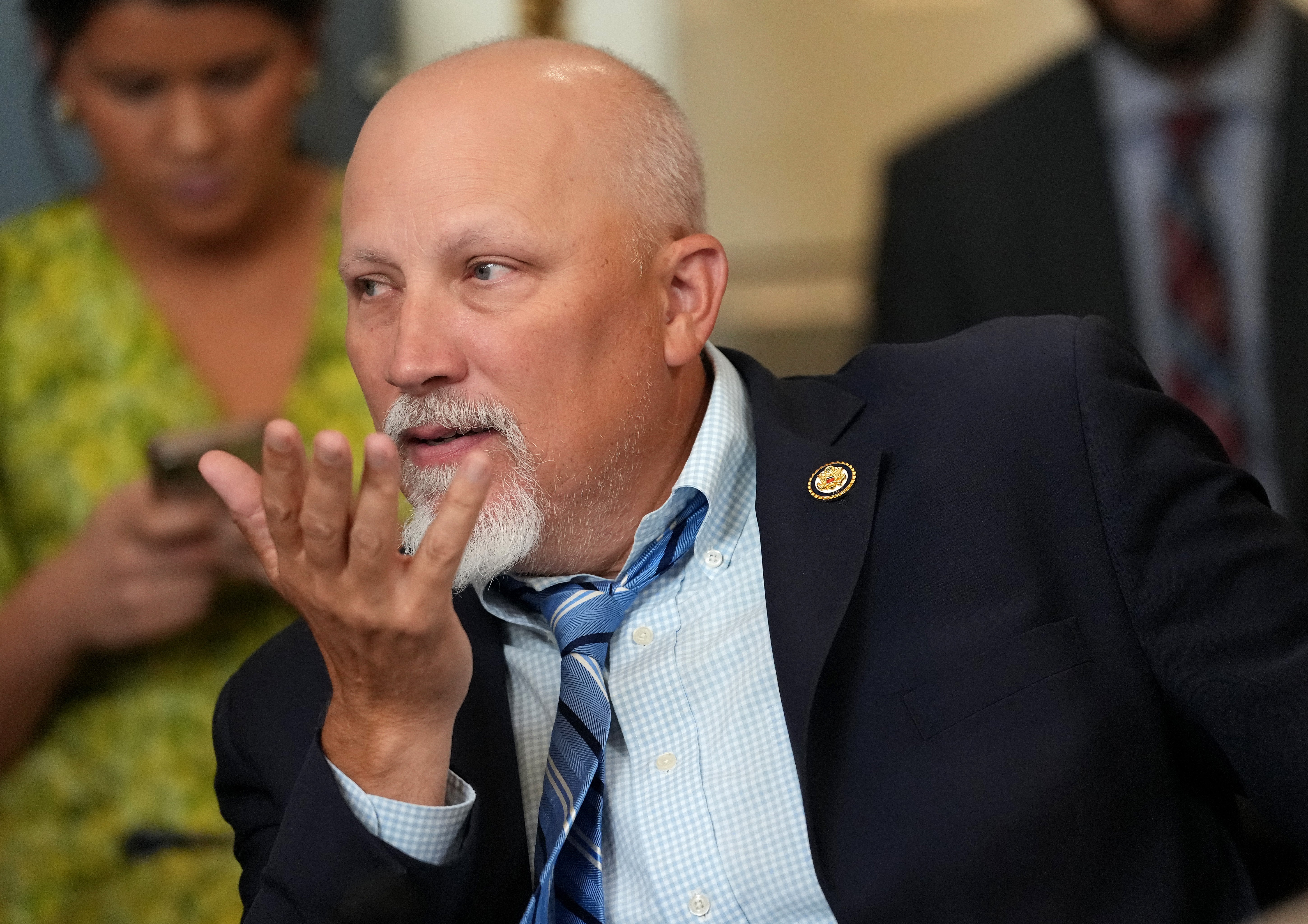
“We have significant federal authority on both of those issues to ensure that citizens are voting,” Roy, who is running for Texas attorney general, told The Independent. “There's a clear nexus there. We allow for states to continue to do what they want to do for their elections.”
House Speaker Mike Johnson, ever the facilitator for the president, defended the remarks.
“What you’re hearing from the president is his frustration about the lack of some of the blue states, frankly, of enforcing these things and making sure they are free and fair elections,” Johnson told reporters on Tuesday. Johnson would then complain that Republicans in California led their races on election day in 2024, only to lose as mail-in ballots filed in.
“It looks on its face to be fraudulent,” he said. “Can I prove that? No."
Even if the SAVE Act passed, it would still need to overcome a filibuster in the Senate, which Democrats will inevitably invoke. And Republicans in the Senate say that’s unlikely. Sen. Thom Tillis of North Carolina, who has emerged as a critic of Trump, said he is a co-sponsor of the SAVE Act on the Senate side but did not like nationalization.
“But nationalizing elections, to me, are as bad now as when I said they were bad when the Democrats tried to do it in 2022,” he told The Independent. “There's never a good time to nationalize elections. There's never a good time to nuke the filibuster.”

He also said that there would be little appetite to get rid of the filibuster.
“There's never a good time to nuke the filibuster,” he said. “And my guess is right now, if you're going to target 15 states, it could be a little tough to get Democrat support.”
Sen. Lisa Murkowski of Alaska, a moderate, also put the kibosh on doing so.
“We, as Republicans, have long maintained it's about state control,” she told The Independent. It is not federal control. So it's somewhat inconsistent with our prior position to now say that we need to nationalize or federalize. I am not a proponent.”
But don’t expect this issue to go away. Republicans in the House will likely continue to press the legislation and Trump is not going to let go of the idea of nationalization.
And in the same respect, a handful of Republican senators still support the idea of a filibuster to create a bulwark against Democratic policy.
Join our commenting forum
Join thought-provoking conversations, follow other Independent readers and see their replies
Comments
Bookmark popover
Removed from bookmarks