Trump officials overhauling aid to Africa in bid to counter China influence in ‘priority sectors’
New bilateral deals to focus on areas such as mineral rights and security to allow U.S. to ‘actively compete’ with Beijing
Donald Trump's administration is reshaping how the US sends aid to Africa as part of a broader effort to counter China, replacing traditional development programmes with targeted deals designed to advance American strategic interests.
After freezing most foreign aid spending when retaking office last year, Trump’s government has begun signing new bilateral agreements with African nations. These seek to tie U.S. funding to specific commitments, including access to critical minerals and health data, or agreement to direct national budgets towards priorities set by Washington.
Given the significant cuts to aid funding Trump launched on his first day back in the White House, the U.S. will not be competing with China “dollar for dollar” on projects such as roads, Nick Checker, head of the State Department’s bureau of African affairs, told Semafor. Rather than attempting to match China’s spending on large infrastructure projects, he said, the U.S. will focus on narrower sectors where influence matters most, including mineral rights, supply chains and security cooperation.
“If it’s a priority sector — or in the mineral space, for instance, and it’s about supply chain resilience — that’s an area where we’d actually want to be actively competing,” Checker said.
The new agreements replace decades of assistance overseen by the United States Agency for International Development (USAID), which funded wide-ranging health and humanitarian programmes across Africa. USAID has since been dismantled during Trump’s first year back in office, with officials arguing that its work was too diffuse and poorly aligned with U.S. strategic goals.
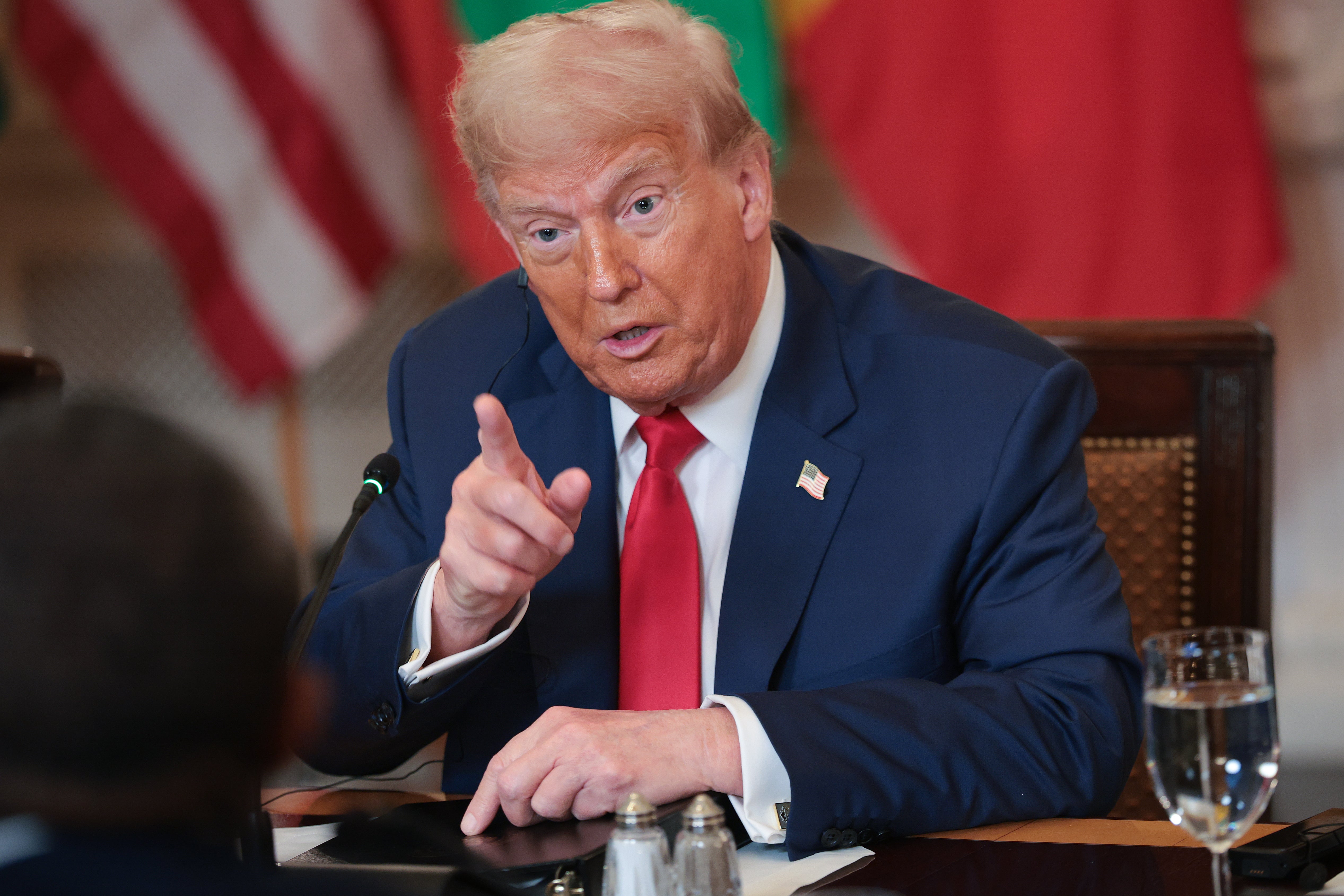
Details of the agreements show how explicitly American interests are now written in, such as the deal with Kenya, seen byThe Independent, saying it is intended to “strengthen the Kenyan health system so that it can become more self-reliant,” but also to “promote U.S. interests abroad,” including granting Washington access to health data.
The Kenya agreement also prioritises the use of faith-based healthcare providers. While such groups play an important role in the country’s health system, critics warn they may not offer specialist services such as HIV care for LGBT+ communities.
Under a new agreement with Nigeria — one of the largest former recipients of USAID funding — U.S. support places a strong emphasis on Christian faith-based health providers. Campaigners say the shift reflects political and strategic priorities rather than public health needs. So far, agreements have been signed in 14 countries, all in sub-Saharan Africa. But most have not been published in full, prompting concerns from aid groups and human rights organisations over transparency.
The narrowing of U.S. aid to Africa comes as Chinese lending to the continent has fallen sharply, with Beijing moving away from large infrastructure projects. Total Chinese overseas lending dropped to $2.1 billion in 2024, nearly half the previous year’s level, according to data released last week by Boston University. It signals a push towards smaller, commercially viable projects.
Senior State Department official Jeremy Lewin said last week that the Trump administration was using “targeted, high-impact” assistance to counter Chinese influence and build partnerships with “pro-American states,” as aid is redirected towards regions and sectors seen as strategically decisive.
This week, US Secretary of State Marco Rubio is hosting a critical minerals meeting in Washington with officials from several African countries. President of the Democratic Republic of the Congo, Felix Tshisekedi, is expected to attend the talks, alongside ministers from Guinea, Kenya and Zambia.
The White House insists Africa still matters, but a leaked email reportedly sent by Checker to U.S. diplomats last month described the continent as “a peripheral — rather than a core — theatre for U.S. interests”.
This article has been produced as part of The Independent’s Rethinking Global Aid project
Join our commenting forum
Join thought-provoking conversations, follow other Independent readers and see their replies
Comments
Bookmark popover
Removed from bookmarks