51st state? The ultra-right Canadian separatists going behind Carney’s back to meet with Trump on secession
Conversations with Alberta secessionist group could be meant to undermine the Canadian leader
One of Donald Trump’s latest moves has left America’s neighbor to the north accusing U.S. officials of meddling in Canadian politics as relations between Ottawa and Washington hit a new low.
With Donald Trump’s trade dispute and bullying of fellow NATO countries over control of Greenland rocking the global political landscape, relations between the U.S. and Canada have taken on a sharply oppositional tone.
In January, the Trump White House’s ambassador to Canada warned that the U.S. would be forced to alter the terms of the NORAD agreement and even fly its own F-35s into Canadian airspace should Canada backtrack on buying the planes from the U.S. And another development now threatens to shake up the tense understanding Trump now seems to share with Canadian Prime Minister Mark Carney.
Members of Trump’s team were revealed to be in talks with far-right separatists in Alberta centered around the group’s effort to push the province to secede from Canada, which Trump has long said he would like to make the “51st state.” The revelation shocked Canadian politicians and quickly resulted in accusations of “treason” being lobbed at the group by top-ranking Canadian politicians, like British Columbia Premier David Eby.
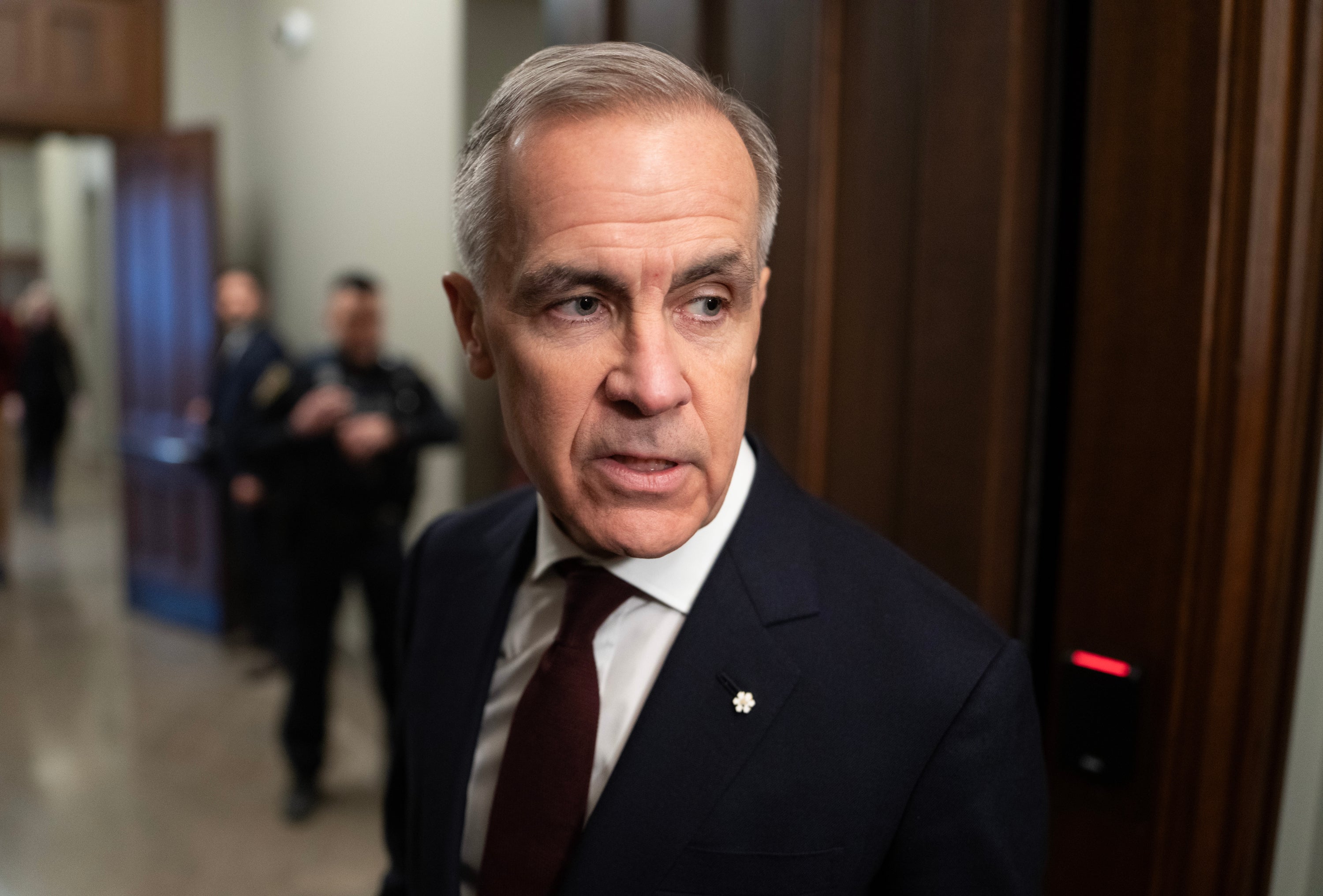
Carney and others swiftly denounced the news. He demanded that Trump and the U.S. stay out of the Alberta independence movement, and declared at a news conference last week: “I expect the U.S. administration to respect Canadian sovereignty.”
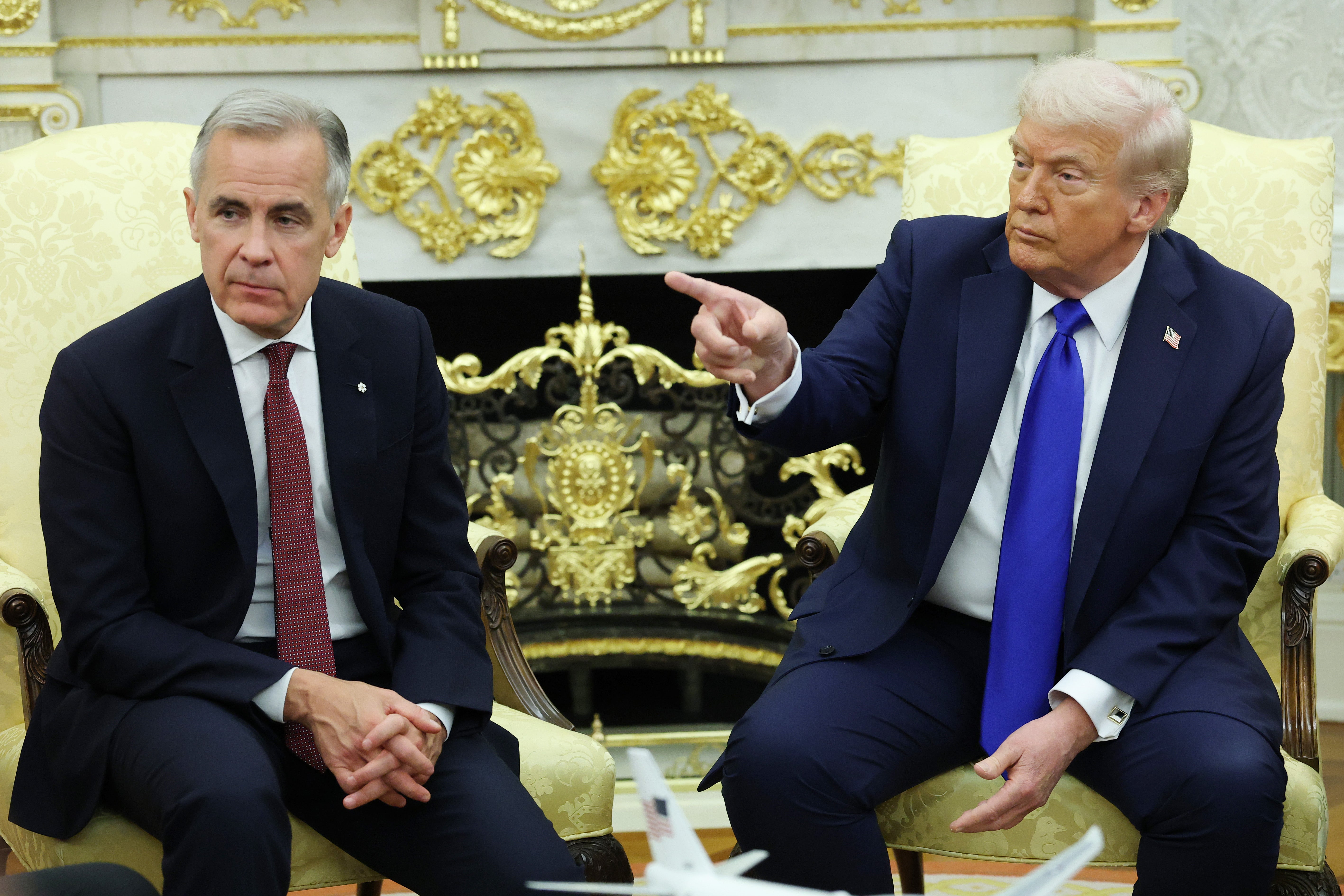
Eby added in an interview with the CBC on Monday: “If you are crossing a border to seek the support of a foreign government to break up our country because you don’t have the support and the resources and the ability within our own country to advance that conversation, and you’re asking the Americans or any other government, I mean that is the definition of treason.”
Officials at the U.S. State Department were revealed to have conducted meetings with representatives of the Alberta Prosperity Project (APP), a group of right-wing activists seeking the province’s separation from Canada, over the course of 2025. A report from the Financial Times claimed that the group was planning, after a yet-to-be-held independence referendum, to seek a $500 billion line of credit from the U.S. Treasury to bankroll the formation of a new independent government.
State Department officials and the White House both confirmed the meetings took place, though the U.S. side was careful to say that no commitments were made.
The APP itself, however, says reports of the meetings were overblown and are now being used by the organization’s opponents to polarize opinion against the group within Canada by tarring it as an effort to join the United States, rather than establish Alberta as an independent state. Trump talked repeatedly throughout 2025 about pressuring Canada to join the U.S. as a state, before shifting his focus to Greenland after significant backlash from the north.

Mitch Sylvestre, the APP’s CEO, spoke with The Independent by phone one week after the Times article revealed his group’s conversations with U.S. officials. Sylvestre denied outright that his group had broached any suggestions about a $500 billion line of credit, and stressed that the group hadn’t overstepped its authority or crossed any lines. He’s a longtime critic of Carney and Canada’s Liberal Party, who he has blamed in the past for “destroying our relationship with the United States”.
“You can discuss money; we're not in a position to discuss money with the U.S. Treasury,” said Sylvestre. “That's what they're using to say, ‘Okay, well, the Americans are coming here, where we would become the 51st state [of the U.S..]’”.
“We're not in a position to negotiate a half billion dollar line of credit with anybody. So you know, it could never be more than a conversation. And if you’ve ever been to a bank personally, you understand what they want for collateral, and we're not in a position to do any of that, right?
Sylvestre claimed that Carney’s party and other APP detractors were “100%” attemping to spread false claims about supposed desires to join the U.S. as a scare tactic.
“Fear of the U.S. is what cost us the last election,” he said, pointing to Carney’s resounding win last April. “The reason that they're pumping that is to scare the hell out of everybody that we're going to become a 51st state and lose our autonomy and go from one government to the next.”
But the APP’s movement does bear some similarities to MAGA. The core of the group’s message centers around Alberta’s oil and gas industries and a desire for local control over a major driver of economic growth and prosperity for the province, which the APP says is being unfairly limited by Ottawa and Canada’s Liberals. The group’s site also faults the federal government for its supposed “support of wokeness, cancel culture, critical race theory, the rewriting of history, and the tearing down of historical monuments.” Sylvestre himself vocalised support for “Replacement Theory”, the belief that whites are being supplanted by other races in western nations, at a town hall event last month.
“If we have control over immigration, we can control who comes here,” said the APP leader in one pitch for independence at that event, according to the Edmonton Journal.
One key difference, though: The group’s restrictions on citizenship hardly go as far as the extremes of Trump’s MAGA coalition. At that same Jan. 7 town hall, Sylvestre reportedly called to limit grants of citizenship to “people who are born here” — the very form of birthright citizenship Trump’s allies are currently trying to do away with at the U.S. Supreme Court.
In his interview, Sylvestre identified one common concern the U.S. and APP did share: Fears over Canada’s deepening relationship with China as the U.S.-Canada trade relationship deteriorates. It could explain why Trump’s State Department chose to engage with the APP at what Eby, the British Columbian premier, said was the “worst possible time” for these talks to occur.
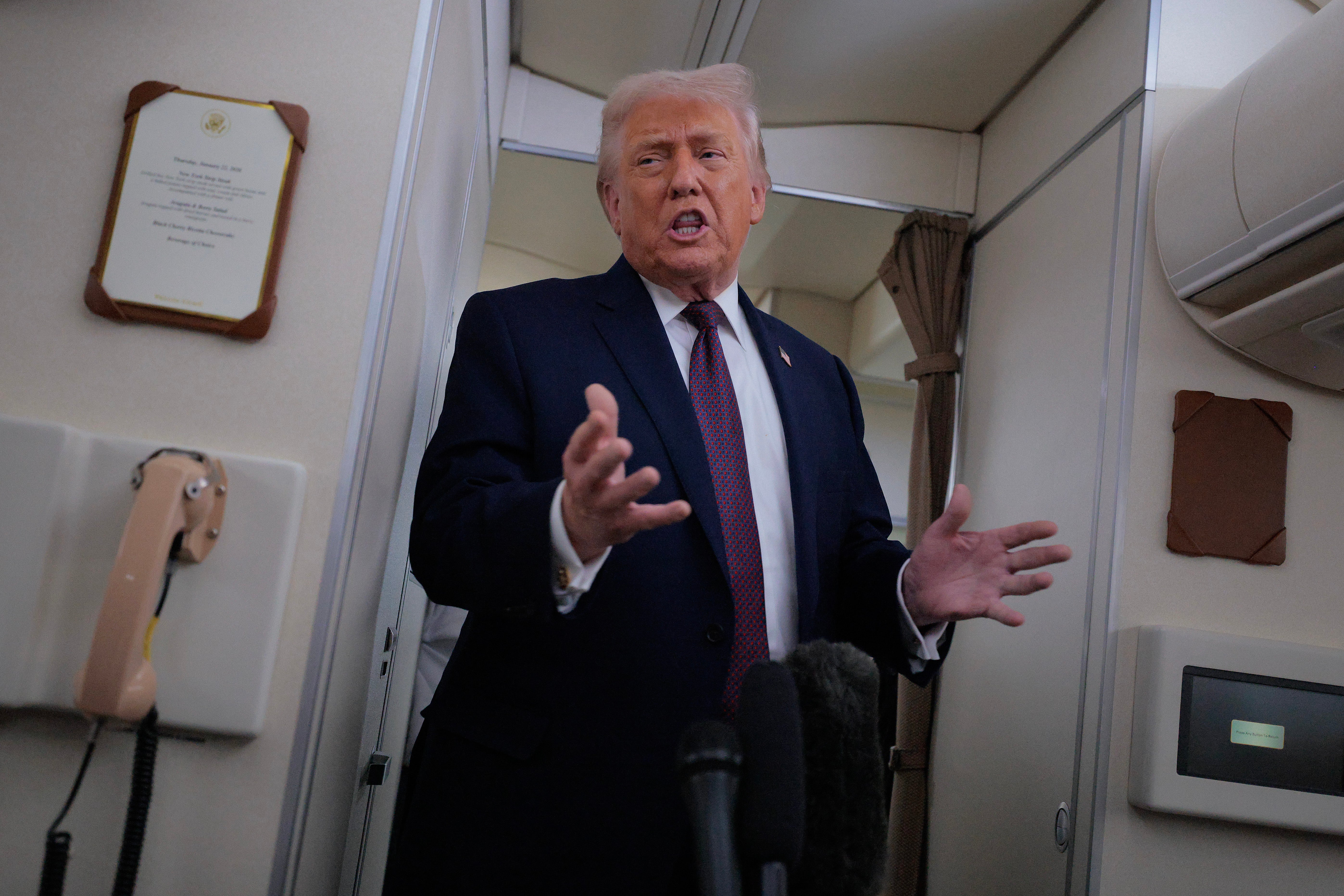
Trump has made his opposition to a new trade agreement between Ottawa and Beijing clear. On Saturday, he told reporters aboard Air Force One that the U.S. would mount a “very substantial response”, including potentially 100% tariffs on Canadian exports, if a deal was signed. Sylvestre and his group are heavily skeptical of broadening Canada’s relationship with China at the expense of the U.S.
“Like why would you not...use the opportunity with the biggest economy in the world, of a people that share your language, most of your values, and basically, you know, are as close to what Canadians are as any other country in the world? Why would you not have a partnership with those people as compared to dealing with communist China?” he asked.
For Trump’s team, the discussion with the APP was based on fact-finding, Sylvestre said. The State Department was interested in the legal pathway to secession, which Sylvestre says is continuing apace as the group approaches a May 6 deadline for referendum signatures. Those signatures will then go to Alberta’s premier, who will decide whether to hold a referendum once the signature threshold is reached.
If nothing else, the endeavor is likely an effort by the U.S. to press Mark Carney at a time when the president is trying to get his northern ally to back down on not just trade issues but also his desire to acquire Greenland, which has shaken up both the U.S.-Canada relationship as well as relations with NATO countries including Denmark, which owns Greenland.
The president’s second term continues to be characterized by his team’s total willingness to annihilate foreign policy norms and seek a rewriting of the global political landscape. With Canada’s proximity to the U.S. in location and culture, it’s living through the full brunt of Washington’s new outlook.
Join our commenting forum
Join thought-provoking conversations, follow other Independent readers and see their replies
Comments
Bookmark popover
Removed from bookmarks