JD Vance deleted his ‘Armenian genocide’ social media post. Here’s why
The Vice President recently visited the Armenian Genocide Memorial on a key diplomatic trip

A social media post from U.S Vice President JD Vance's team, referring to the early 20th-century killings of Armenians by the Ottoman Empire as 'Armenian genocide,' was swiftly deleted after publication.
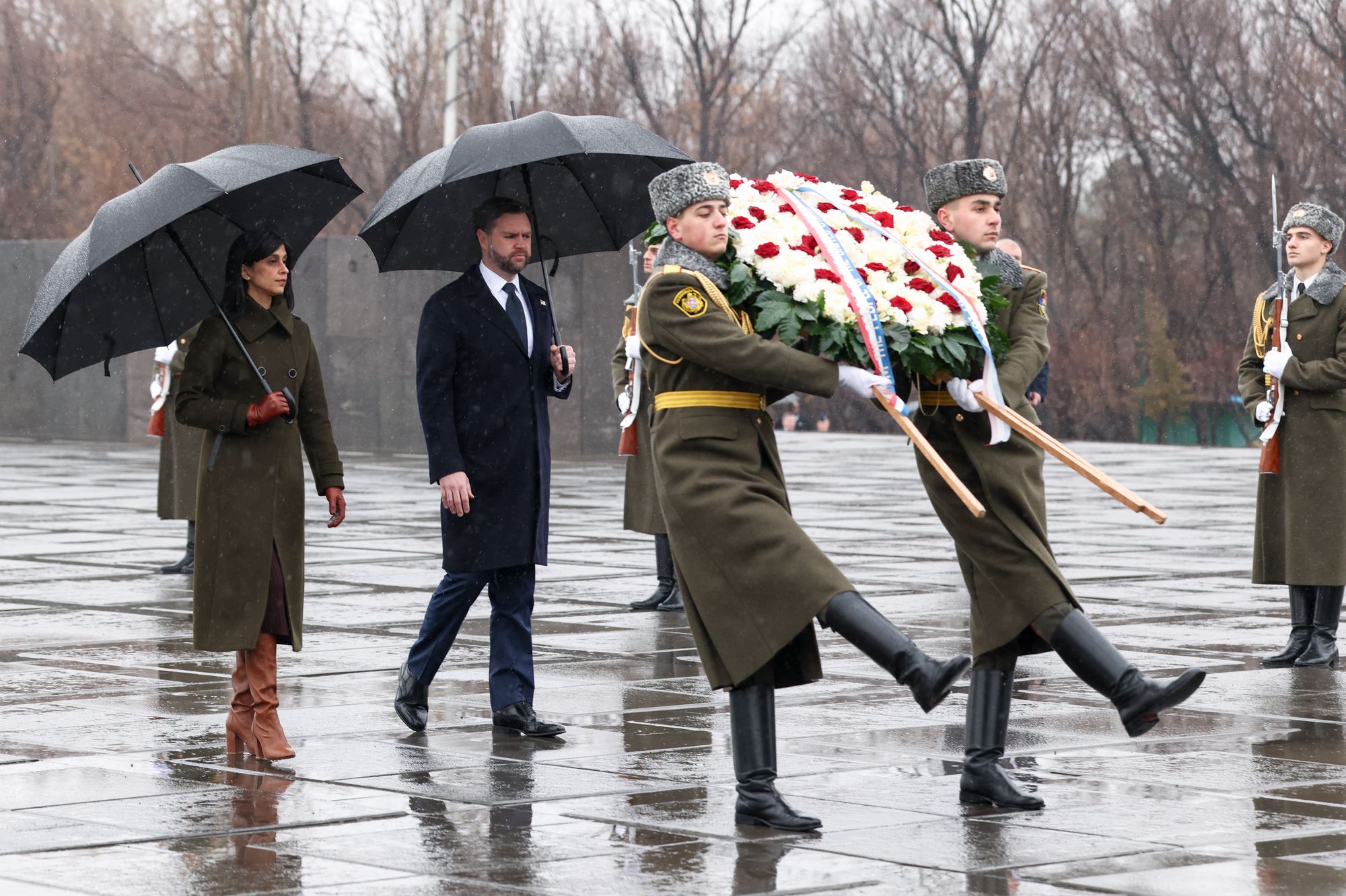
The message had been shared following Mr Vance's visit to the Armenian Genocide Memorial honouring the victims.
The term's use is highly sensitive, as the US government has historically refrained from officially designating the events as genocide.
While the Biden administration previously used the term, the White House later attributed this instance to a staff mistake.
Here are some questions and answers about what that means, what Vance himself did and didn’t say, and why it matters.
What did Vance go see in Armenia?
JD Vance visited the Armenian Genocide Memorial, Armenia’s national monument, honouring citizens who died under the Ottoman Empire’s brutal control during World War I.
An initial post on Mr Vance’s official X account, stating he was visiting “to honor the victims of the Armenian genocide”, was replaced.
A second post then showed his guest book entry and a clip of the vice president and Usha Vance laying flowers at the memorial.
Vance, the first U.S. vice president to visit Armenia, was in the country as part of the Trump administration's follow-up to a U.S.-brokered deal aimed at ending a decades-long conflict between Armenia and Azerbaijan, where Vance traveled later Tuesday.
Why does the word choice matter?
“Genocide” is a fraught and legally distinct term that national governments, international bodies and media organizations use carefully.
The United Nations in 1948 defined genocide “to mean certain acts, enumerated in Article II, committed with the intent to destroy, in whole or in part, a national, ethnical, racial or religious group, as such,” according to the U.S. State Department's long-held understanding.
It is not questioned that many thousands of Armenian citizens, most of them Christians, died at the direction of the Committee of Union and Progress that led the Muslim government in Constantinople, now the Turkish capital of Istanbul.
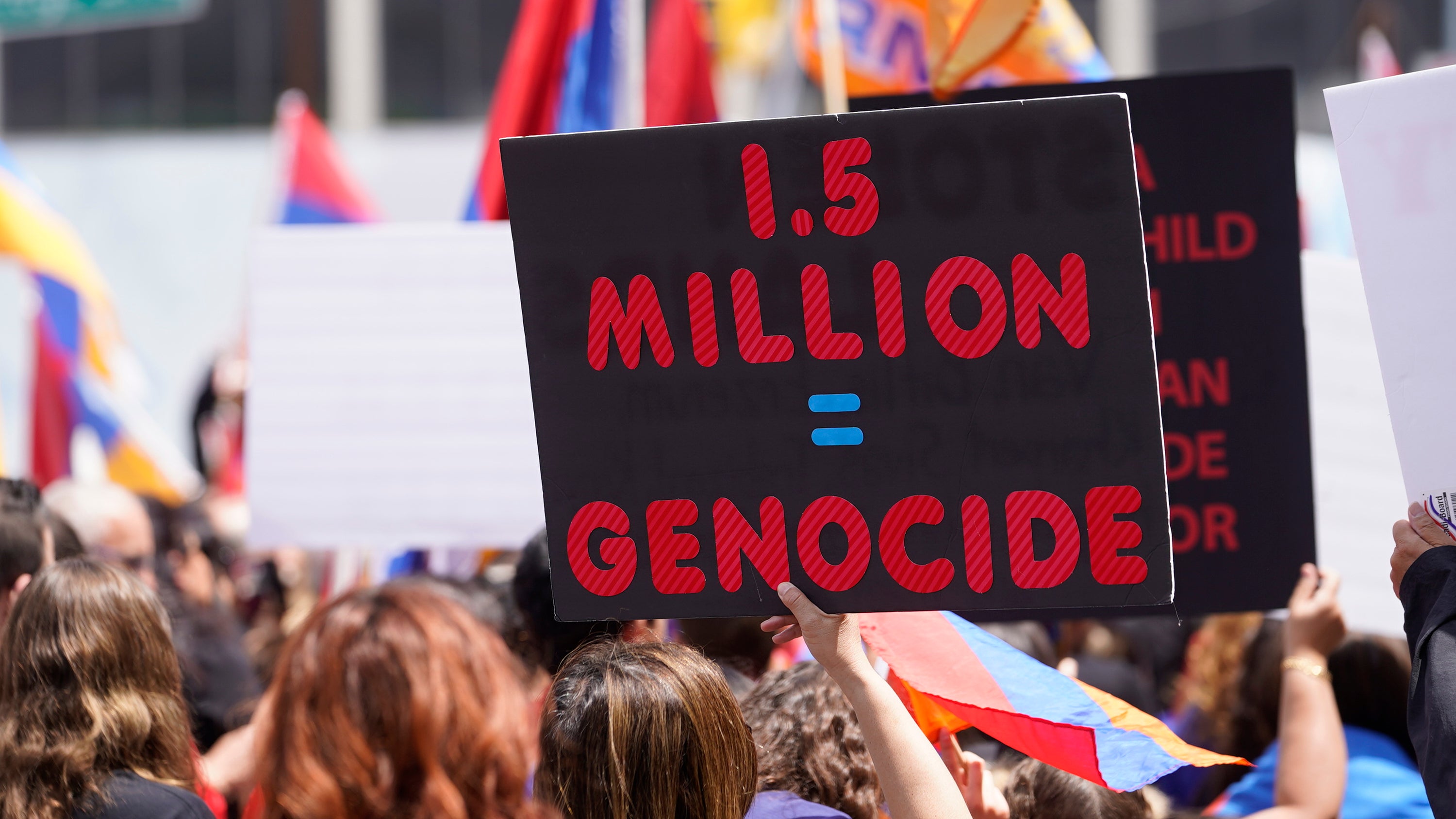
The U.S. Holocaust Memorial Museum estimates that “at least 664,000 and possibly as many as 1.2 million” died.
But the U.S. government has historically not recognized what happened as a “genocide” out of fear of alienating Turkey, a key U.S. ally in the region. In 2021, then-President Joe Biden formally recognized that the systematic killings and deportations of hundreds of thousands of Armenians by Ottoman Empire forces were a part of a “genocide.”
Turkey reacted with fury at the time. The foreign minister said his country “will not be given lessons on our history from anyone.”
People of Armenian descent recall the victims with memorials and an annual day of remembrance observed around the world, including in the U.S.
What did Vance himself say?
Vance was asked specifically on Tuesday about his visit to the memorial and whether he was “recognizing” genocide.
He avoided using the word and said he went to “pay my respects” at the invitation of his host, Armenian Prime Minister Nikol Pashinyan, and his government.
“They said this is a very important site for us, and obviously I’m the first (U.S.) vice president to ever visit Armenia,” Vance said. “They asked us to visit the site. Obviously, it’s a very terrible thing that happened a little over a hundred years ago and something that’s very, very important to them culturally.”
Vance added that it was “a sign of respect, both for the victims but also for the Armenian government that’s been a very important partner for us in the region.”
What did the White House say?
The White House blamed the original post on a staff member. It’s the second time in less than a week that the West Wing has blamed an unnamed aide for a controversy over a social media post. Last Friday, it was a racist video that Trump had shared on his Truth Social account that depicted former President Barack Obama and first lady Michelle Obama as jungle primates.
The White House defended that post initially before deleting it after a cascade of criticism.
What happens next?
It’s not yet clear whether there will be any diplomatic consequences. Vance, for his part, seemed determined to keep the focus on the original mission of his trip.
“I think the president struck a great peace deal. I think the administration is really making it stick,” Vance said.
Still, there is the political question of whether Armenian Americans react, with the rhetorical boomerang offering one more reminder of how reluctant the U.S. has been to use the word “genocide” to describe what Armenians remember that way.
Join our commenting forum
Join thought-provoking conversations, follow other Independent readers and see their replies
Comments
Bookmark popover
Removed from bookmarks