Most Canadians think asking US for help in Alberta separatist fight is ‘treason,’ poll shows
The Alberta Prosperity Project recently met with the Trump administration over its goal to separate the province from the rest of Canada
The majority of Canadians believe that an Alberta separatist group's negotiations with the United States are tantamount to “treason,” according to a new poll.
Pollsters asked people across Canada whether they agreed with British Columbia Premier David Eby’s remarks last week on the Alberta Prosperity Project, whose members recently met with the Trump administration over its goal to separate the province from the rest of the country.
"To go to a foreign country and to ask for assistance in breaking up Canada, there's an old-fashioned word for that, and that word is treason," Eby said last Thursday, during a trade meeting in Ottawa.
"It is completely inappropriate to seek to weaken Canada, to go and ask for assistance, to break up this country from a foreign power and — with respect — a president who has not been particularly respectful of Canada's sovereignty.”
Some 71 percent of respondents agreed with Eby that the action was “treason”, the poll from Canada Pulse Insights found.
Respondents in Saskatchewan and Manitoba were the most likely to agree with Eby — at 82 percent — followed by respondents from Atlantic Canada at 78 percent, Ontario at 77 percent, British Columbia at 75 percent, and Quebec at 63 percent. In Alberta, only 56 percent of respondents agreed, according to the poll.
“My sense was overall Canadians treat appeals to foreign governments for help in breaking up the country as beyond the pale. It’s effectively a red line that most are prepared to call treason,” John Wright, CEO of Canada Pulse Insights, told the National Post.
Canadians aged 65 and above were more likely to agree with Eby, with 79 percent supporting his statement.
Alberta Prosperity Project co-founder Jeffrey Rath called Eby's comments "defamatory."
"It's a childish temper tantrum on behalf of a spoiled NDP politician," Rath told CBC News last week. "We're thrilled with Premier Eby losing his little mind today and saying the nasty things he's saying and all the insults that he's levying. It's childish, it's defamatory, it detracts from his credibility."
U.S. officials have met with leaders of the Alberta Prosperity Project, a fringe right-wing group of separatists who want the oil-rich western province to become independent, three times in Washington since last April, the Financial Times reported in January.
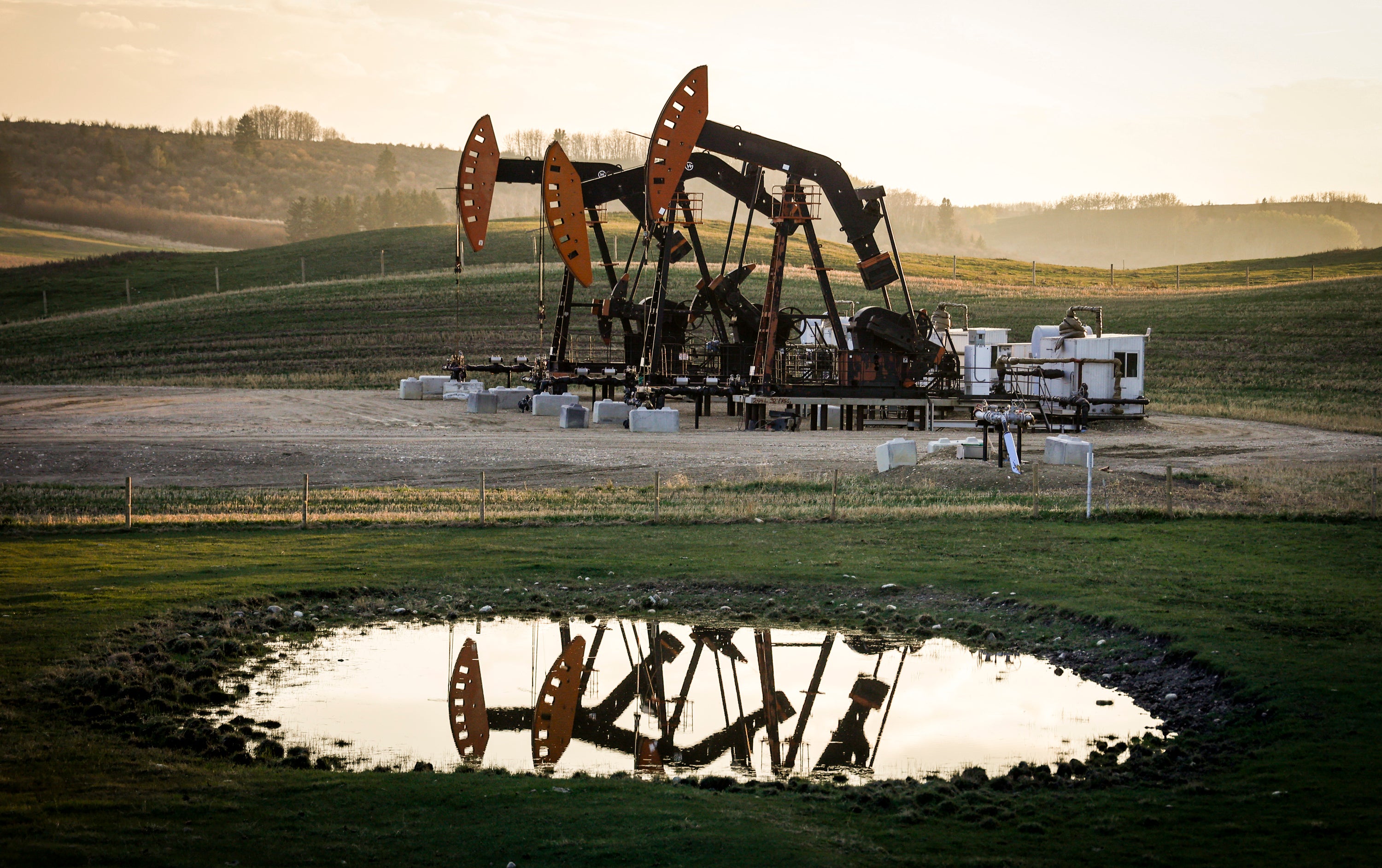
Alberta is the largest producer of crude oil in Canada, accounting for 84 percent of the country's oil production as of 2023, according to the Canadian Energy Regulator.
The Alberta Prosperity Project confirmed in a statement to the Financial Times that it is trying to secure a $500 billion line of credit from the U.S.
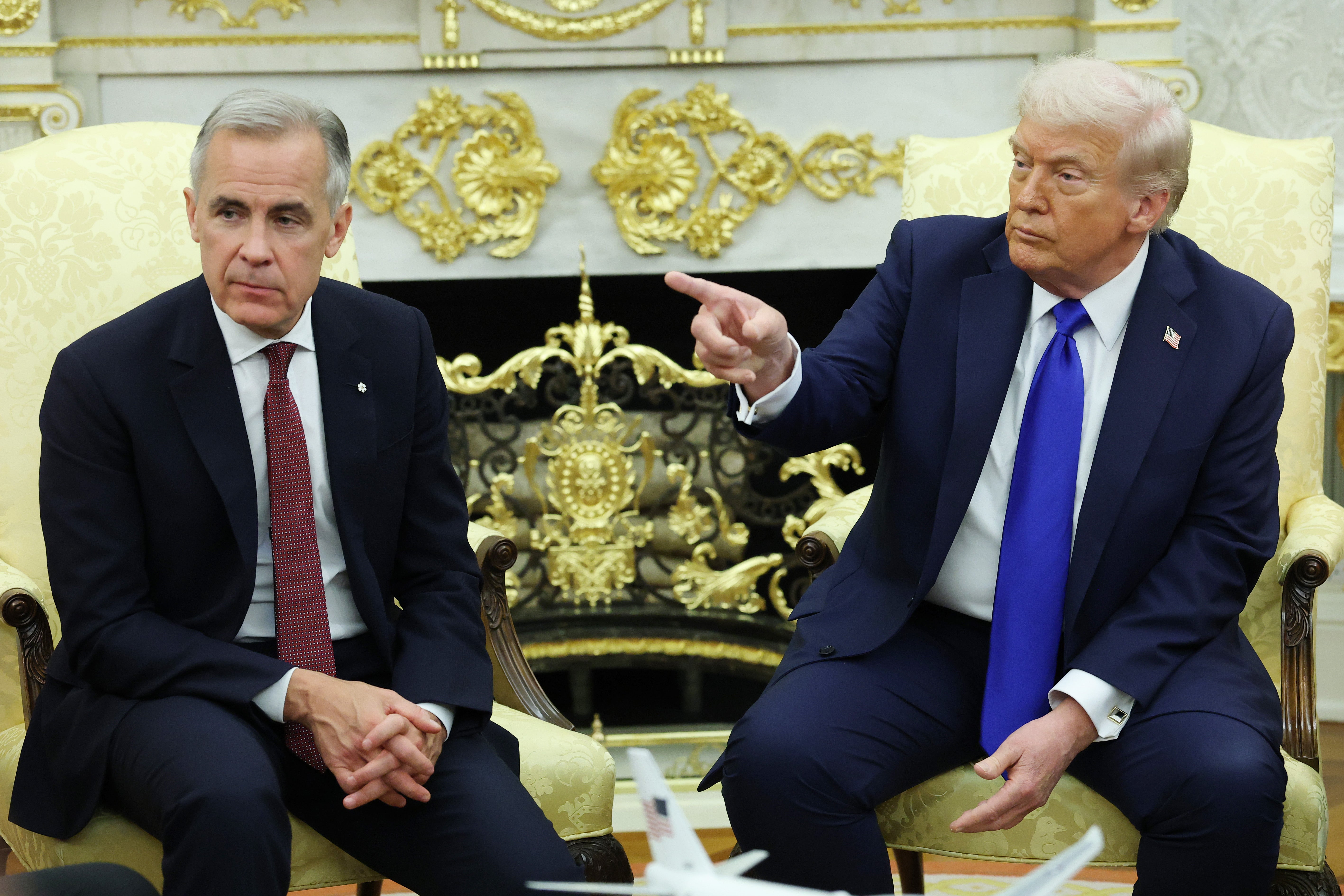
“The U.S. is extremely enthusiastic about a free and independent Alberta,” Rath told the Financial Times, noting that he had a "much stronger" relationship with the Trump administration than he does with Canadian Prime Minister Mark Carney.
A U.S. State Department official confirmed to the Financial Times that it regularly "meets with civil society types" but said that "no commitments were made."
The Alberta Prosperity Project is trying to gather 177,000 signatures to bring a referendum on provincial independence to the legislature by May. The group did not reveal how many signatures it has collected so far.
Alberta Premier Danielle Smith has publicly opposed the independence project but has passed legislation that has helped the project’s cause. Last year, Smith and United Conservative Party legislators lowered the threshold to force a constitutional referendum from 600,000 signatures to just 177,000, according to CBC News.
Despite making it far easier to force a vote, Smith said she does not think most Albertans want to be isolated and left to deal with the U.S. alone. “The overwhelming majority of Albertans are not interested in becoming a US state,” Smith told the Financial Times.
In Ottawa, Carney has seemingly resisted any temptation to take a strong hand against the secessionist movement brewing in Alberta or against its U.S. backers.
When asked about the situation during a January 29 press conference, Carney said that he expects "the U.S. administration to respect Canadian sovereignty."
"I'm always clear in my conversations with President Trump to that effect," he said.
Join our commenting forum
Join thought-provoking conversations, follow other Independent readers and see their replies
Comments
Bookmark popover
Removed from bookmarks