There are disturbing aspects to the Silicon Valley Trump whisperers that shouldn’t be ignored
From Elon Musk appearing at Tommy Robinson’s rally to billion-dollar tech deals being ushered into the UK amid warnings we are handing over control to US companies, Jonathan Margolis, who a decade ago warned of extreme tech personalities seizing political power, examines the dangers ahead


Six years ago, long before billions of us started consulting an all-knowing AI chatbot several times a day for everything from holiday ideas to legal advice to psychotherapy, the German-born, Trump-supporting Silicon Valley billionaire Peter Thiel appeared on a US podcast.
The host, Ross Douthat, a conservative thinker concerned that tech tycoons were beginning to assume a culturally dominant, almost quasi-religious role, asked Thiel: “You would prefer the human race to endure, right?”
Thiel hesitated for a full five seconds – an age in a conversation – before saying, “Uh… I don’t know. I, I would, I would… yes.”
Thiel’s apparent vacillation over whether human beings are even a viable species could reflect philosophical uncertainty about exactly what “endure” means in this context.
But it’s more often cited as an amber flag warning that tech bros – people, predominantly men, who in a more innocent age were called computer geeks – are more comfortable with the binary, predictable, controllable, engineering-based certainties of machines than they are with the fleshy, dithering, fickle, capricious, slow-witted creatures most of us actually are.


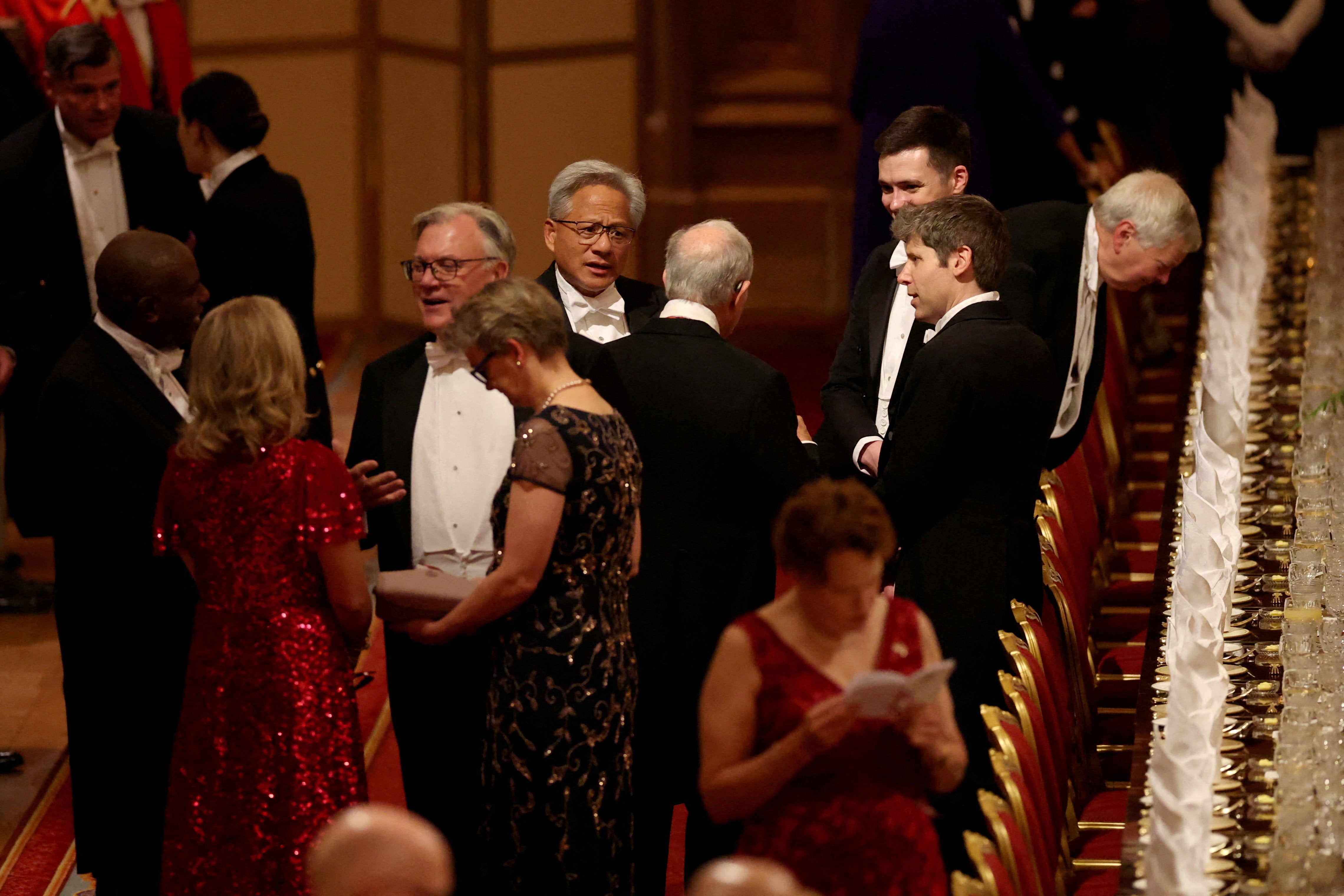
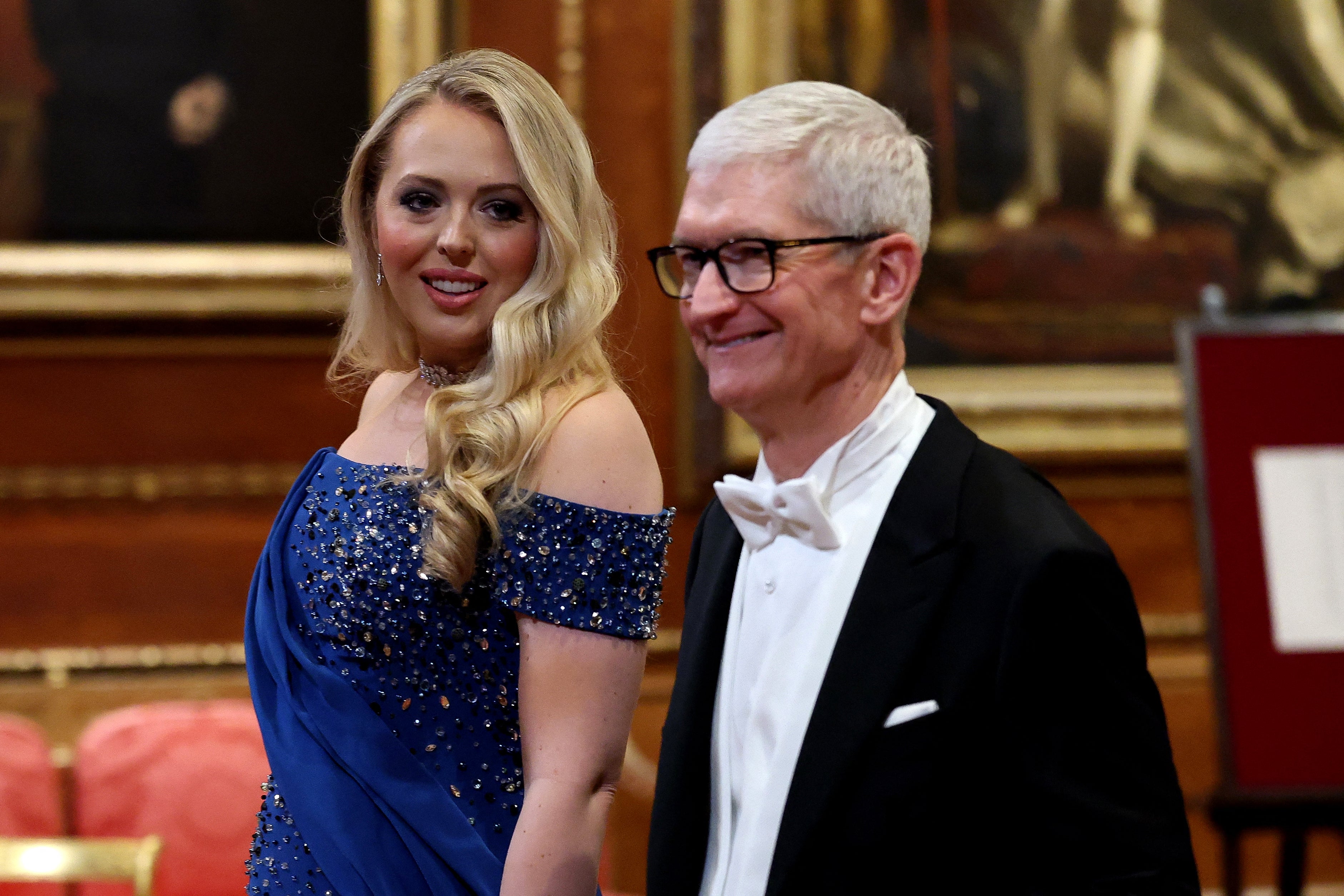
This week, the ultimate dithering, fickle, capricious human being, the current president of the USA, was feted in London at banquets and flypasts by our King and prime minister. Prominent in Donald Trump’s retinue was a group of courtiers from the tech world, who joined him at this week’s state banquet. Among them were Sam Altman of OpenAI, Jensen Huang of Nvidia, Tim Cook of Apple, Demis Hassabis of DeepMind, and Satya Nadella of Microsoft – who, on the morning of the royal banquet, told the BBC he was still trying to find out what to wear. You would think he’d have asked his company’s own rather irritating AI assistant, Copilot.
This band of tech bros has come bearing gifts of £31bn via a “Tech Prosperity Deal”, being lauded for securing investment and jobs in AI, quantum computing, and civil nuclear energy. They must have their reasons – maybe our low pay rates – for moving into Britain when industries like pharmaceuticals are moving out. Or perhaps they thought it might play in their favour as they lobby for better tax incentives.
Or maybe it was to please Trump, who likes the UK and insists he’s a “friend” of both King Charles and Sir Keir Starmer. The deals on offer, like a giant AI data centre in Loughton, Essex, are mostly pledges and commitments spanning a number of years, which means the Starmer government will have a strong incentive to tread carefully with Trump for the inevitable years until shovel hits earth.
For hundreds of generations, “men of action” – people who do stuff and make things rather than just reign – have buzzed around monarchs and politicians, seeking to influence policy both for their own benefit and for their vision of what is good for society. Priests, soldiers, businesspeople, and industrialists have attended every leader from Henry VIII to Hitler.
However, these people have often been disastrous when actually in power. There are exceptions, such as Mayor Bloomberg in New York, but the rest – from Berlusconi to the Greek colonels to, well, Trump – remind us that, moan as we do about rule by lawyers, they are rather good at it. Unlike wealthy tycoons, soldiers, religious figures, and so on, lawyers understand and empathise with the subtleties and frailties of people. Most have defended the frailest among us.
But there are two very new and extremely disturbing aspects to the Silicon Valley Trump-whisperers and their ever-closer relationship with the White House.
Firstly, the warning from Nick Clegg, who pointed out that while the sums being discussed sound big, in reality they are really “crumbs” from the Silicon Valley table – the equivalent of a Meta data centre in Louisiana. And this is especially concerning when you consider what is really at risk. Speaking on the Today programme, Clegg, who was president of global affairs at Meta until recently, warned that it means nothing if the tech ownership and AI expertise remain in the US.
He said: “I just think some sort of perspective needs to be applied to all the hype that comes from the government and the tech companies at times like this, especially when we are never going to compete with China and America on infrastructure. We’re never going to develop our own frontier foundation models – the base layer of the AI industry.”
Secondly, there is real concern over the technology being created, brilliant and life-enhancing as it mostly is, and how it affects the way we view the world and think. Arguably, the tech bros could be more influential than any previous power-adjacent elite. Priests once tried to control populations with superstition backed by violence; global traders became agents of cruel-beyond-belief colonialism; industrialists lent their might to the Nazis’ military and genocidal programmes; media owners unleashed newspapers and broadcasters to promote often rancid political ideas.
But what do teenage children, in their most formative years, use all day long, seeding and shaping the views they will have for the rest of their lives? What else is being fed into scrolling adult brains, but algorithm-driven information and viewpoints – many churned out automatically by bots – provided by President Trump’s most influential courtiers?
It’s alarming enough that the young are being inculcated with ideas from often dodgy sources, then immersed in customised silos where the views, entertainment, and content that appeal to them become the sole material to which they are exposed.
But what could be seen as more worrying is the ideological leaning of the tech creators who have built this environment. These tech giants are overwhelmingly ultra-conservative. They might not be gun-toting macho men, but those who are embody much of Silicon Valley’s libertarian elitism, who are overwhelmingly right-wing.
To find one with moderately progressive views is rare. Yes, Bill Gates is a prodigious philanthropist who does much good in the developing world (and became a hate figure for some as a result). Yes, Jack Dorsey, co-founder of Twitter, has given money to progressive causes, supported anti-racism work, and donated to mayors exploring guaranteed basic income programmes. And yes, Tim Cook, although reportedly part of the Trump party, is keen to ensure Apple is aligned with human rights, sustainability, and consumer privacy.
However, a large tranche of powerful tech leaders is advancing what historians may one day call the great darkening of the early 21st century. A significant financial backer of the recidivist known as Tommy Robinson, for example, is Robert Shillman, a 79-year-old MIT-trained engineer who made his money in machine vision and sensor systems. No, I hadn’t heard of him either.
I have been studying the greater spotted nerd since the start of the computer age, and for years I worried that someday, somehow, the techies would shove aside left-leaning, rule-of-law-loving liberals like me, and seize political power. That “somehow” turned out to be the internet, and the “someday” arrived about 10 years ago, when populism gained momentum worldwide.
In 2016, I wrote an article for the Financial Times on my fear of the personal psychology of tech billionaires and how it would make them disastrous players in the world of politics. This was long before Elon Musk began influencing the Oval Office and real-time policies, as well as the political mood.
I recounted in my article how my first brush with the extreme personality of tech entrepreneurs came when I referred to the late Clive Sinclair, father of the doomed 1985 C5 electric trike and Mensa luminary, as clever but a bit of a twit.
My phone rang the next day. “Sinclair here,” he yelled, unleashing a stream of expletives. He then paused and said: “Anyway, we must have lunch.”
We never did, but opinionated digital divas with odd-to-extreme traits have since become the norm. I wrote: “Think Steve Jobs (splenetic temper, walking round Palo Alto in bare feet), PayPal founder Thiel (helping bankrupt a website for outing him as gay), and Musk (believing reality could be a computer simulation created by superior beings).”
“The lords of Silicon are already chafing to reboot public policy,” I concluded. “So I fear the next president of the USA could spring from Silicon Valley, promising Politics v2.0. And, boy, will it be crashy.”
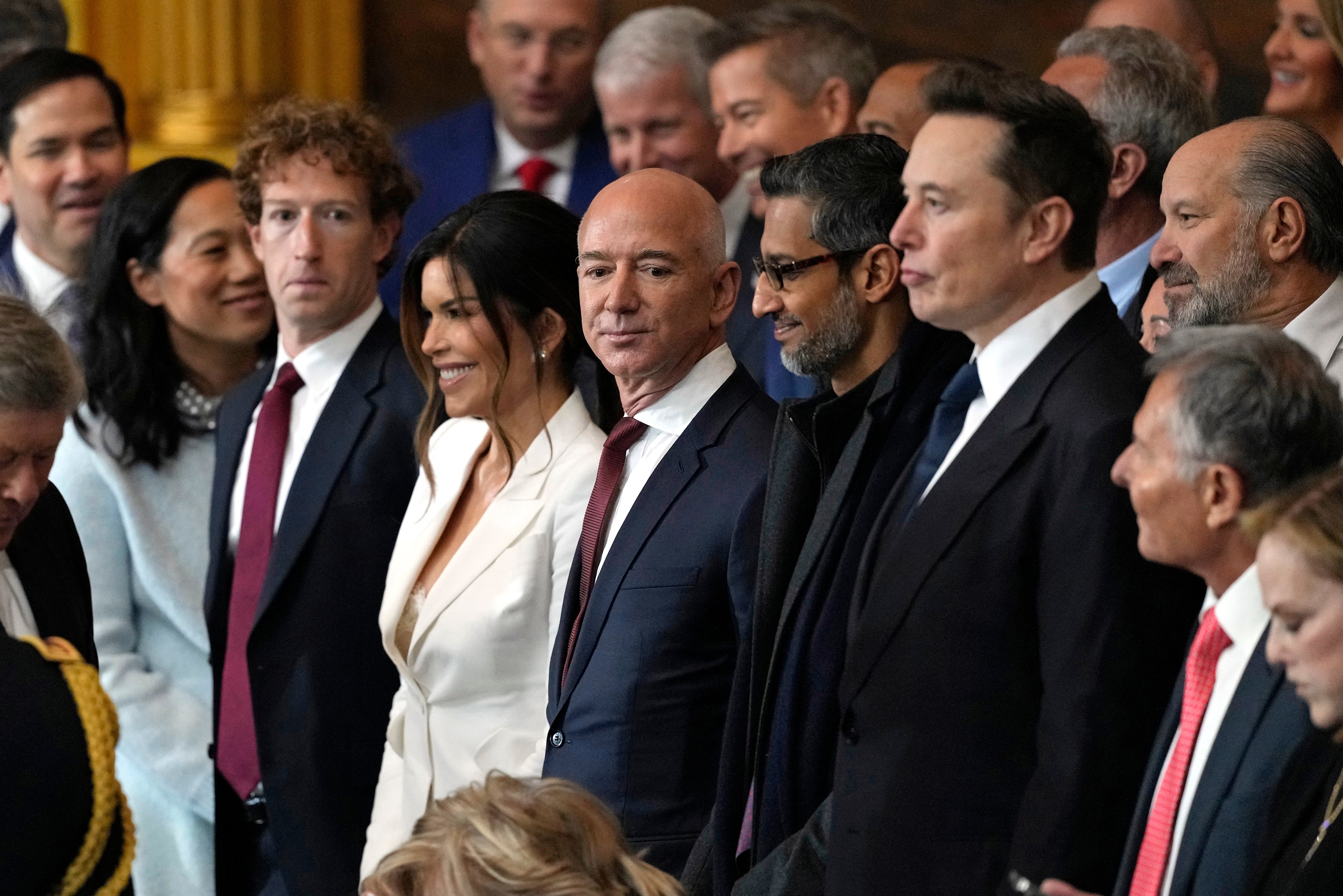
Nine years later, we have real-life examples of how techies are now driving the political landscape. This despite them being the last people equipped to understand that politics is not about imposing change on real humans by tantrum, but about magicking progress out of public policy conflict.
Technologists favour tidy, neat solutions, not the hot mess of democracy. The technology philosopher Evgeny Morozov, in his 2013 book To Save Everything, Click Here, coined the term “solutionism” to describe this belief that tech can solve anything. “Given Silicon Valley’s digital hammers, all problems start looking like nails, and all solutions like apps,” Morozov says. It shouldn’t be taken too seriously, but some in tech have advocated for “diminished reality” – wearing smart glasses to blank out and delete displeasing sights, like the homeless or poor housing.
While this might have been a joke, there is a serious side to how these tech titans are shaping our reality every day. One way this is being done is by influencing online discourse. While precise figures on bot activity on UK social media are scarce, existing research and global trends indicate that AI-driven bots play a significant role in propelling conversation, particularly in political influence and misinformation.
To test bot proliferation during the UK electoral period, international NGO Global Witness investigated 10 bot-like accounts on X (Twitter) and found they posted more than 60,000 times, sharing 200 to more than 500 posts daily. The watchdog estimated these posts have been seen a staggering 150 million times.
In an algorithm-controlled environment, misinformation can easily spread and be reinforced by those holding the tech levers. And that is before we consider the world of AI and deepfakes, where it becomes harder to discern what is real in a world where truth is increasingly losing its currency – or simply depends on who is delivering the message.
The tech industry is already loudly opposing robust regulatory frameworks that could help curb some of this misinformation. This often masquerades as defending free speech, but some core beliefs can directly oppose democratic norms.
To understand why Musk addressed Tommy Robinson’s Unite the Kingdom rally last weekend, we may need to look at his mother’s side of the family. Maye Musk swung from Democrat supporter to keen Trumper, while her Canadian father, Musk’s grandfather, was a fervent supporter of both apartheid and a movement called Technocracy, which advocated government by unelected technology experts.
The Technocrats wore grey uniforms and saluted each other. His grandfather’s beliefs may partly explain why Musk, a consummate technologist and advocate of electric cars, addressed the Robinson marchers, calling for a “dissolution of parliament” and a “change of government” in the UK.
While Musk has not directly stated that democracy is broken and that people would be better living in a technocracy, many of his recent controversial statements suggest a preference for governance models prioritising efficiency and technological expertise.
Earlier this year, two Durham University researchers speculated on such questions from a psychoanalytic perspective in their scholarly article, “Founder as Victim, Founder as God”, focusing on Thiel and Musk.
The academics argued that tech entrepreneurs like them see themselves both as heroic, visionary founders trying to save society, and as persecuted victims under threat from the status quo they are trying to overcome.
I genuinely fear that the power-seeking computer geeks of 20 or 30 years from now will be so dangerously powerful that they will make silly old Donald Trump look, in retrospect, like a beloved old stuffed toy.
Jonathan Margolis is author of the 2000 book ‘A Brief History of Tomorrow’
Join our commenting forum
Join thought-provoking conversations, follow other Independent readers and see their replies
Comments
Bookmark popover
Removed from bookmarks