An unwanted neighbor: Heavy rain drives venomous snakes to residential areas in Florida
Cottonmouths, also known as water moccasins, seek higher and drier land during extreme floods
A recent influx of heavy rain in Florida has forced venomous snakes to flee their natural habitats and retreat toward drier ground – encroaching on unsuspecting residents, according to a report.
Increased rain showers along Florida’s Space Coast, a stretch of the Sunshine State’s eastern coastline near the Kennedy Space Center, have disrupted the lives of many Brevard County residents who say they are seeing more of the scary serpents out and about than before, Fox 35 Orlando reported.
Residents have observed cottonmouths, also known as water moccasins, a species that is native to Florida and typically found in swampy or marshy areas, Florida Fish and Wildlife Conservation Commission said.
However, during extreme flooding, the snakes are known to end up in unusual places.
While the venomous reptiles typically prefer wetter terrain, Floridians have reported seeing them near their homes, places of work and even outside restaurants.
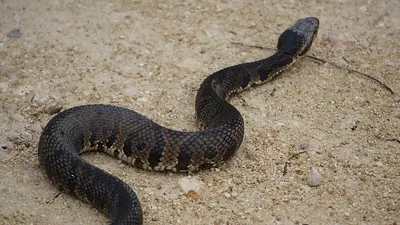
The owners of Camp Holly, an airboat ride business in Melbourne, a city southeast of Orlando, urged customers on social media to be vigilant as the dangerous snakes had been spotted on dry land at their business.
“This is your warning: What you’re seeing is a child-killing cottonmouth snake,” the business warned on Facebook, along with a photo of a snake.
“Right now, these snakes (and others) are occupying every inch of dry ground out in the marsh. If you think there’s a safe, dry patch of land — you’re wrong,” they wrote.
Owner Curt McKinney told Fox he was bitten by a cottonmouth snake when he was in his 20s. “It almost killed me. It took six months out of my life immediately because my legs were swollen up,” he said.
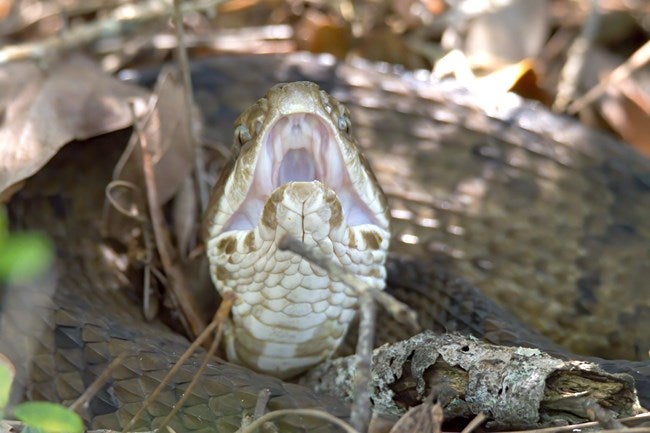
Cottonmouths are found in several southeastern states, including Florida and Georgia. They’re called cottonmouths because the inside of their mouths, which they display when threatened, are white, according to LiveScience.
They are often confused with a nonvenomous water snake species, that has similar coloring and patterns, and is often found near water. However, water snakes are skinnier and lighter than cottonmouths. Water snakes’ pupils are also round, not vertical like the more dangerous species.
Cottonmouths, which range from 30 to 48 inches in length, rarely bite humans and usually do only when they are provoked, according to the outlet.
Floridians are warned to remain cautious, as officials say any bite is an emergency that would require immediate medical treatment.
Join our commenting forum
Join thought-provoking conversations, follow other Independent readers and see their replies
Comments
Bookmark popover
Removed from bookmarks