Supreme Court hears arguments over Trump’s firing of Lisa Cook from the Federal Reserve
Trump’s action against Cook is widely regarded as the most significant challenge to the Fed’s independence since its inception in 1913
The U.S. Supreme Court has begun hearing arguments in a landmark case concerning Donald Trump’s unprecedented attempt to dismiss Federal Reserve Governor Lisa Cook, a dispute that will test the extent to which the justices are willing to safeguard the central bank’s independence.
This case marks the latest in a series of challenges brought before the nation’s highest judicial body, reflecting Trump’s expansive interpretation of presidential powers since his return to office 12 months ago.
Trump’s administration has petitioned the Supreme Court, which holds a 6-3 conservative majority, to overturn a lower court’s decision that currently prevents him from firing Cook while her legal challenge unfolds. When the justices agreed to hear the case in October, Cook was permitted to remain in her position.
The basis for Trump’s move to remove Cook stems from unproven mortgage fraud allegations, which she has vehemently denied.
D. John Sauer, the US solicitor general representing Trump’s administration, told the justices that the allegations against Cook impugn her "conduct, fitness, ability or competence to serve as a governor of the Federal Reserve."
"The American people should not have their interest rates determined by someone who was, at best, grossly negligent in obtaining favorable interest rates for herself," Sauer asserted.
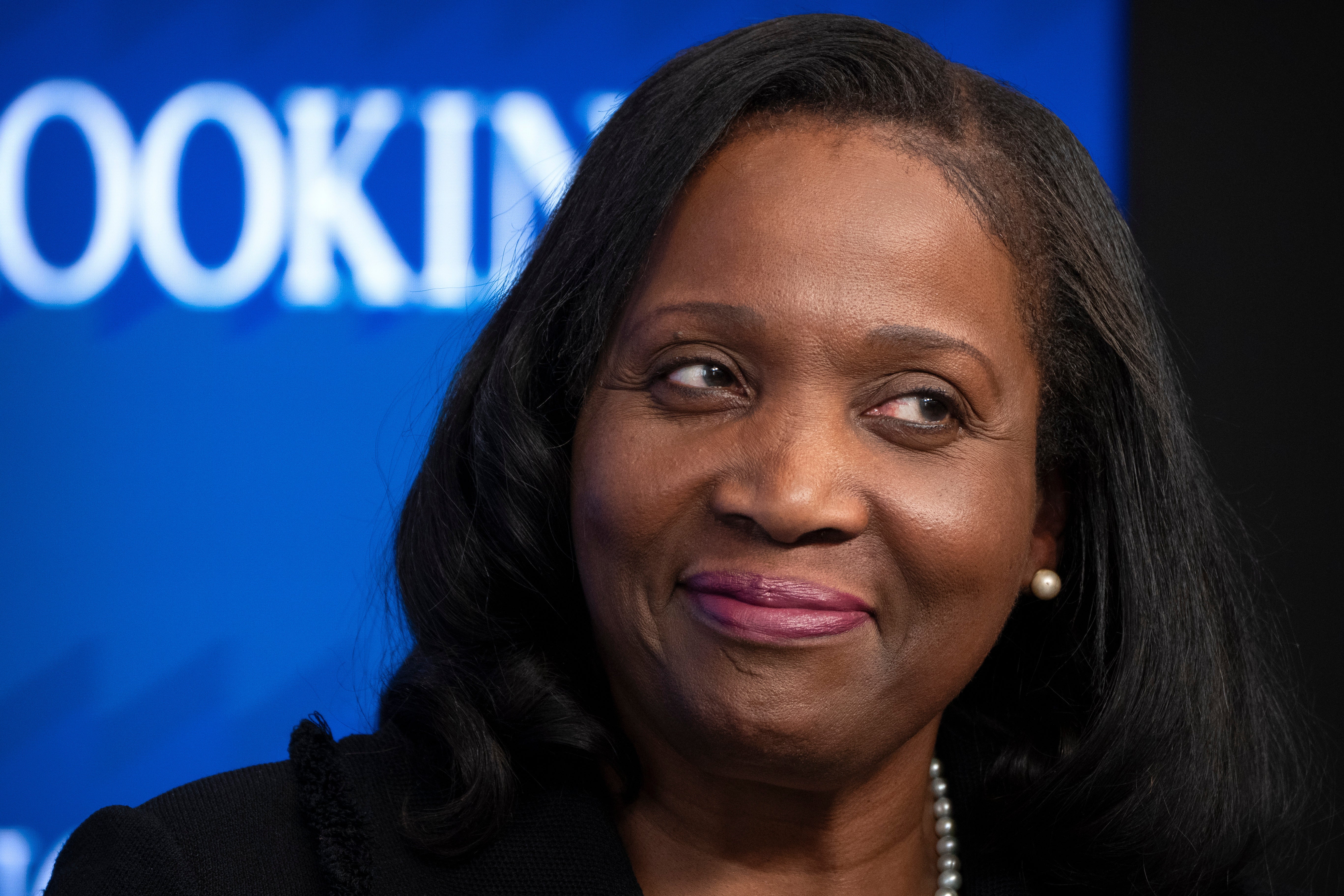
Paul Clement, a seasoned Washington lawyer who previously served as US solicitor general under President George W. Bush, is set to argue on behalf of Cook.
The Federal Reserve Act, enacted by Congress to establish the Fed, includes provisions designed to shield the central bank from political interference. It stipulates that governors can only be removed by a president "for cause," though the law does not explicitly define this term or outline removal procedures.
Trump’s action against Cook is widely regarded as the most significant challenge to the Fed’s independence since its inception in 1913. Historically, no president has ever sought to oust a Fed official.
In September, US District Judge Jia Cobb ruled that Trump’s attempt to remove Cook without prior notice or a hearing likely violated her right to due process under the Fifth Amendment of the US Constitution. Judge Cobb also concluded that the mortgage fraud allegations were probably not a legally sufficient cause for removal under the law, noting that the alleged conduct predated Ms Cook’s tenure at the Fed.
The US Court of Appeals for the District of Columbia Circuit subsequently rejected Trump’s request to suspend Judge Cobb’s order.
Cook has characterised the allegations against her as a pretext to remove her over differences in monetary policy, as Trump continues to pressure the central bank to cut interest rates and criticises Fed Chair Jerome Powell for not acting more swiftly.

Cook and Powell were expected to attend the arguments, and former Fed chair Ben Bernanke was seen entering the building for the proceedings.
As a Fed governor, Cook plays a crucial role in shaping US monetary policy alongside the central bank’s seven-member board and the heads of the 12 regional Fed banks. Her term is set to run until 2038. Appointed in 2022 by President Joe Biden, Ms Cook made history as the first Black woman to serve in the post.
In previous cases, the Supreme Court has incrementally eroded the independence of various federal agencies from presidential control, and it may soon overturn a key precedent that has protected the heads of independent agencies from removal since 1935.
However, the court last year indicated it might view the central bank as an exception, noting in a May ruling that allowed Trump to remove two Democratic members of federal labour boards that the Fed possesses a unique structure and historical tradition.
The Supreme Court has consistently sided with Trump in a series of emergency rulings since he returned to the presidency, addressing issues such as immigration, mass federal layoffs, cuts to foreign aid, and the dismantling of the Education Department, among others.
The Cook case carries significant ramifications for the Fed’s ability to set interest rates independently of political influence, a capacity widely considered vital for any central bank to effectively manage tasks like controlling inflation.
The president sought to terminate Cook on 25 August by posting a termination letter on social media, citing the mortgage fraud allegations disclosed by Federal Housing Finance Agency Director Bill Pulte, a Trump appointee.
The administration this month initiated a criminal investigation into Powell over remarks he made to Congress last year concerning a Fed building project, a move he similarly described as a pretext aimed at gaining influence over monetary policy.
Prior to the arguments, several congressional Democrats held a rally outside the Supreme Court building in support of Ms Cook. Democratic Representative Maxine Waters stated that Trump has targeted Cook because he desires a central bank that answers solely to him.
"Make no mistake, this is about power and control," Waters declared.
Join our commenting forum
Join thought-provoking conversations, follow other Independent readers and see their replies
Comments
Bookmark popover
Removed from bookmarks