Mystery solved after woman killed in Laguna Beach hit-and-run is identified after 40 years
‘Laguna Beach Jane Doe’ has been identified as Virginia ‘Ginny’ Irene Nelson
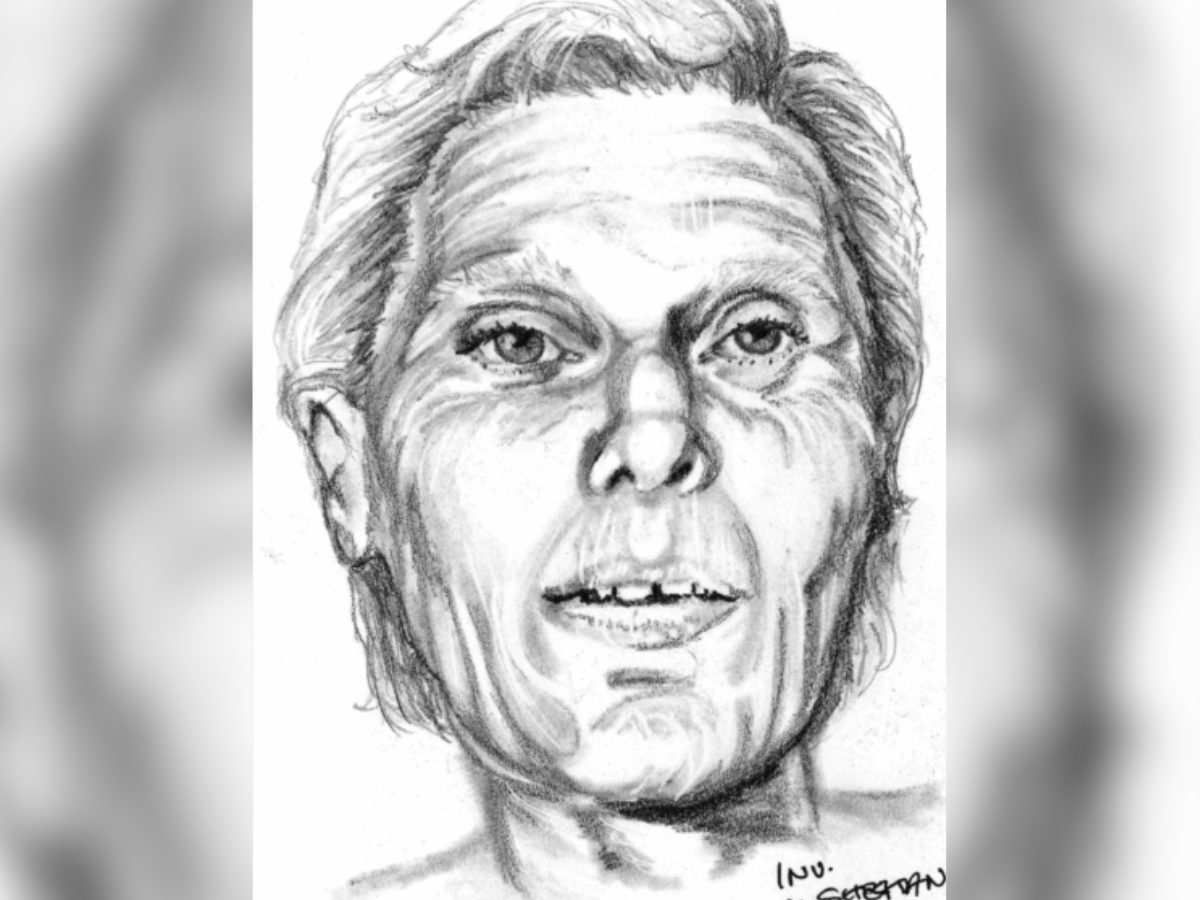
For more than four decades, a woman killed in a hit-and-run was known only as “Laguna Beach Jane Doe.” Now, advances in DNA technology have finally given her back her name.
Authorities have identified the woman as Virginia Irene Nelson, known as “Ginny” to her family. She was 46 years old when she was struck and killed along Pacific Coast Highway in January 1982.
On January 30, 1982, a passing driver discovered a woman’s body along the side of Pacific Coast Highway in Laguna Beach. Investigators determined she had died only hours earlier and had been struck in a hit-and-run.
She wore a t-shirt with the phrase “Go Climb a Hill – San Francisco” on it, but had no identification. Despite having a “recognizable face, dental work, fingerprints and surgical scars,” investigators were unable to identify her, and the case went cold for more than 40 years.
In November 2023, the Orange County Sheriff’s Office turned the case over to the DNA Doe Project, a nonprofit that specializes in identifying unidentified remains through genetic genealogy. In just one weekend, volunteer investigative genealogists working the case were able to identify the Jane Doe as Nelson.
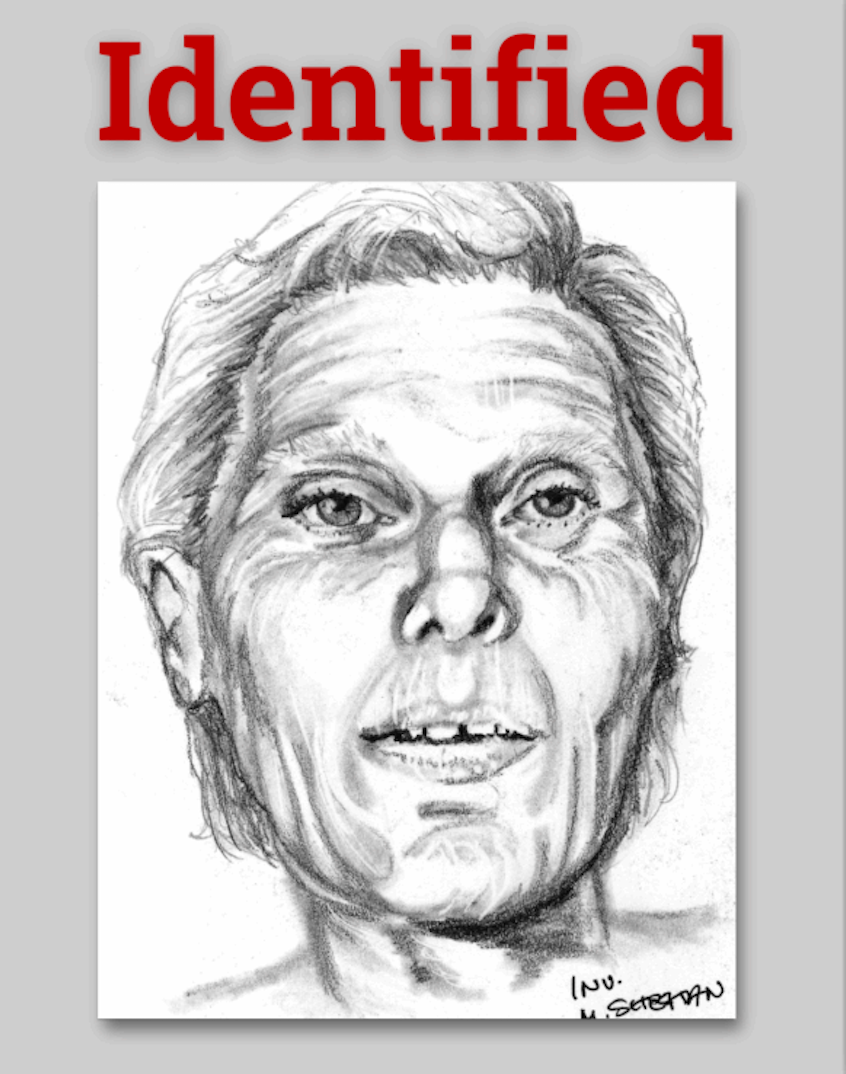
“A relative of the unidentified woman had uploaded his DNA profile to a database that permits the upload of law enforcement cases,” the organization said. “His profile, along with other DNA matches, led DNA Doe Project researchers straight to the correct family, where the team first came across Virginia Irene Nelson.”
With multiple DNA matches tied to the Nelson family, investigators with the the Orange County Sheriff’s Department contacted a living relative and confirmed her identity.
“Close matches do not always guarantee a quick or easy resolution,” said Jeana Feehery, a team co-leader at DNA Doe Project. “But in this case, we were fortunate to not only have high matches on both sides of her family, but family members who also publicly shared family trees that helped us make those connections.”
Nelson was born in Jacksonville, Florida, but grew up in Yonkers, just outside New York City. She later moved to California and was living in Fresno by 1967. Investigators said that detail was uncovered through a newspaper article reporting that she had been mugged while living there, KTLA reported.
Margaret Press, co-founder and acting executive director of DNA Doe Project, told the Los Angeles Times that preserved tissue samples played a critical role in solving the case.
“There were actually pieces of [human] tissue that had been retained in what we call histology blocks,” Press said. “Those are little paraffin-embedded blocks that contain the tissue. In fact, that’s all that was left of her, if I recall. Those blocks were sent to a lab we work with, Genologue in Atlanta, Georgia.”
“They then extracted her DNA from those little bits of tissue,” she continued. “We only need a few cells, actually, and then that DNA was put through a sequencer. It was sequenced, so that the entire genome was extracted from those cells, so a big digital file, three billion base pairs in your DNA. That digital file was then processed down to a more manageable size that contains the information we need to compare with other people.”
Press said the DNA profile was uploaded to GEDmatch and FamilyTreeDNA, where researchers identified individuals who shared DNA with Nelson.
“Those people could have been separate cousins, third cousins, whatever,” Press said. “We then figured out who they were and built out their family trees, knowing that Virginia would be somewhere in their trees. We just had to go back far enough to find common ancestors and then build forward generation by generation, looking for some female in that tree that was not accounted for, whose death was never recorded.”
Bookmark popover
Removed from bookmarks