Why did this TikTok influencer kill her husband and two children?
Online, she was known as the ‘brain cancer wife’, but Emily Long’s followers could see that she was starting to fall apart. As her neighbours and followers woke up to the shocking news that the young mother had taken the life of her family in a suspected murder-suicide, Zoë Beaty looks at the events that led to the tragedy


In the days and weeks before the tragedy, Emily Long’s updates had been posted regularly on TikTok – a space on the internet that she had dedicated to talking about and overcoming her depression. Things had been difficult: online, she was a young mother trying to stay strong through her husband Ryan’s terminal brain tumour diagnosis.
In one clip, Emily admits that she felt as though she was “withering away”, in another, she told her followers that she was “determined to create normalcy” for her family, despite “struggling so much”. Just three days later, she would take the lives of Ryan, their two eldest children and herself, leaving only their three-year-old alive.
It’s an unfathomable sequence of events that has left neighbours in their tranquil New Hampshire town of Madbury – home to just 2,000 residents – drenched in grief. Emily, who was 34, Ryan, 48, and eight-year-old Parker and six-year-old Ryan were found with gunshot wounds inside their four-bedroom home on Moharimet Drive. The couple’s three-year-old was found by police unharmed. An autopsy confirmed murder-suicide carried out by Emily on Wednesday.
Word spread quickly and on TikTok and in comments sections, locals expressed their disbelief. The Longs’ neighbour, Bevy Ketel, described Ryan Long as a pillar of Madbury, the small community an hour and a half north of Boston. “He certainly touched a lot of lives. He was part of the fabric of the community and his family goes along with it,” she said.
What compounded the shock was the image the Longs projected: a bright, seemingly happy family who were involved in their community and admired for how they were handling the devastating cards they’d been dealt.


They were the “perfect family”, they said; some remembered the kids recently setting up a lemonade stand, while others described them as “incredible people and parents”.
“I’ve known Emily for many years,” one friend of the family commented on TikTok, “and no one that knows her or Ryan could EVER have suspected this would have happened to this beautiful family. They were incredible people and parents, which I know will be difficult for people to understand right now. They were both smart, kind and loving.”
She continued: “Emily advocated on behalf of other people’s children in 2021 when she reported a daycare centre to the state of [New Hampshire] for abuse of power and corporal punishment. Our communities are heartbroken for so many reasons this week.”
Ryan, a respected psychologist working at a local school, had been diagnosed with glioblastoma – one of the most aggressive and devastating brain cancers – earlier this year. It’s likely that the family had been told what thousands of others in similar positions hear: that there was little chance of survival. Time was short – only 5 per cent of patients with this diagnosis live five years or longer; the median survival time with treatments like chemotherapy and radiotherapy is 12-15 months.

In her regular vlogs, Emily, who worked as an operations director at US food chain Wing-Itz, spoke about breaking the news to her children – about the impossible task of explaining to an eight-year-old and a six-year-old that their father was dying.
She appeared vulnerable, often, sometimes tearful in now-deleted videos. Still, she seemed to be determined. The young mother stated she wanted to make a “change” – “Today I decided I need to make a conscious effort to shift my mindset,” she told her followers in one recent post. “I’m getting out of this depression whether I want to or not.” Two weeks before her death, she’d spoken about seeing a therapist. “I know that I need to ask for help,” she said, “but I’m not ready to acknowledge that, I think.”
Emily had said that she noticed that her children’s behaviour was changing under the stress of their dad’s illness. Behind the camera, her efforts to give them a normal life while in the throes of anticipatory grief and all its heartbreak, along with being a full-time mum and carer, was clearly taking its toll. She admitted she’d been feeling anxious and lonely.
“I’m mourning my husband, I’m mourning my marriage and it’s still there,” she admitted. “It’s very confusing and it’s very overwhelming.”
In the days that followed the discovery of the family’s deaths, questions of why and how reared with few answers. As news spread around the world – and as is the case with many of these tragic, thankfully rare cases – speculation began to follow.
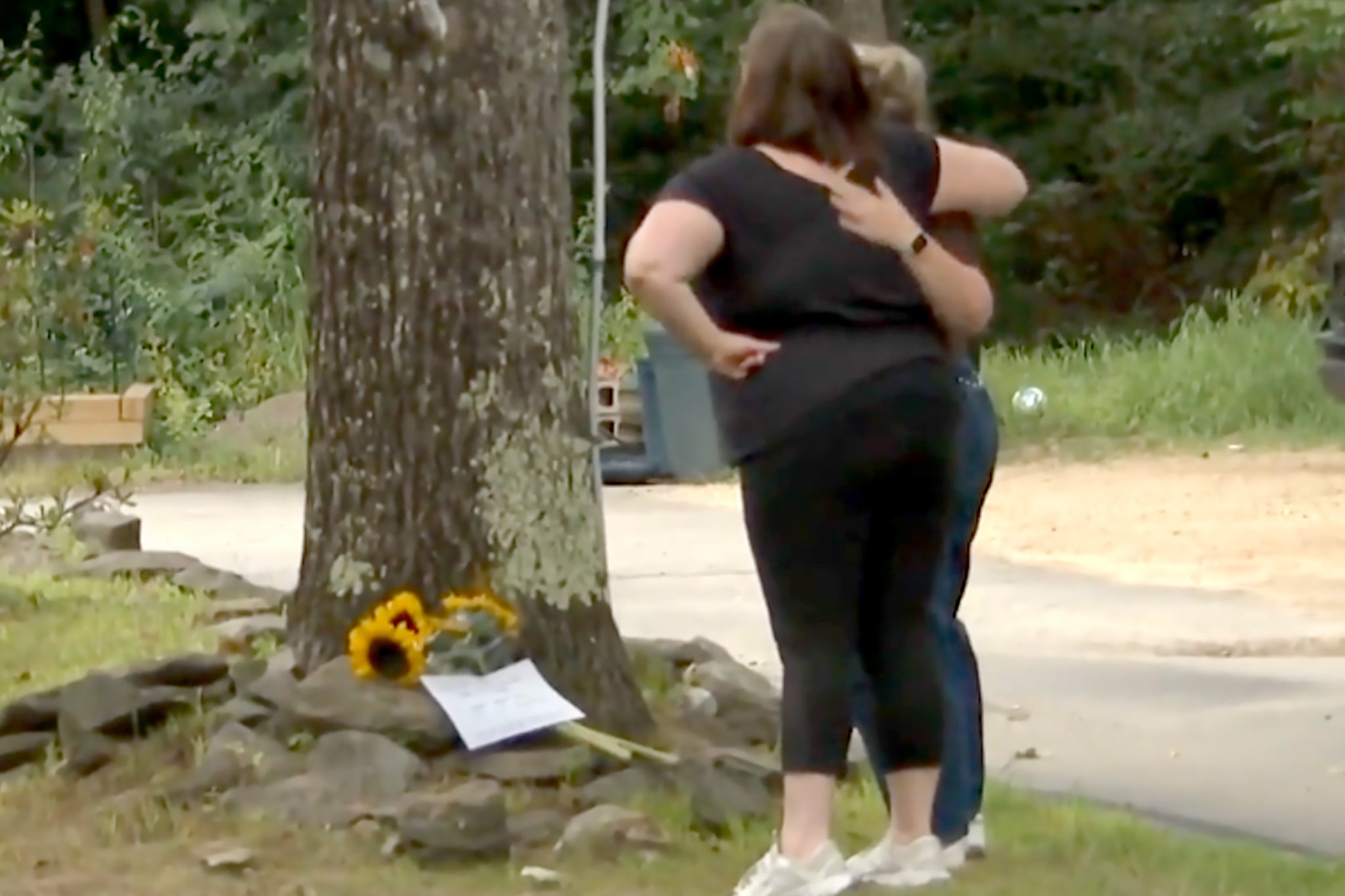
Police, however, haven’t yet given any indication of motives beyond Emily’s well-documented struggles with depression and the crushing weight of her husband’s diagnosis. What most could agree on was the toll that terminal diagnosis takes on families like the Longs – and how little it’s spoken about.
In fact, the anguish that Emily revealed to her followers online was not unusual for those caring for loved ones with terminal cancer. The emotional burdens that caregivers can face are extreme and deeply fixed. While research is limited, one meta-analysis of peer-reviewed studies found that 42.3 per cent of caregivers experience depression and 46.55 per cent suffer with clinical anxiety – rates that far exceed any in the general population.
Of course, it doesn’t ease in the aftermath of loss, either: another study found that 30.4 per cent of people became significantly clinically depressed after losing a loved one, and 43.4 per cent suffered significant anxiety in the three to six months after their loss. Researchers discovered a direct correlation between how distressed they perceived their loved one to be at the end of their life and their own psychological distress. According to the Caregivers Trust in the UK, 71 per cent of carers have poor physical or mental health, yet the needs of carers are often neglected.

“Want to watch someone actually fall apart before your very eyes? I swear, this cancer will be the thing that breaks me,” Emily Long said in a harrowing post on 11 May this year.
What happened inside their home on Moharimet Drive might never be fully understood – but for the grieving communities left behind, on and offline, it won’t be forgotten. The tragic death of Long’s innocent family has left a small town and countless strangers who followed their journey grappling with unanswered questions. For now, the burden will be on them – and on supporting a young child, now left to deal with life alone.
If you are experiencing feelings of distress, or are struggling to cope, you can speak to the Samaritans, in confidence, on 116 123 (UK and ROI), email jo@samaritans.org, or visit the Samaritans website to find details of your nearest branch
If you are based in the USA, and you or someone you know needs mental health assistance right now, call or text 988, or visit 988lifeline.org to access online chat from the 988 Suicide and Crisis Lifeline. This is a free, confidential crisis hotline that is available to everyone 24 hours a day, seven days a week. If you are in another country, you can go to www.befrienders.org to find a helpline near you
Bookmark popover
Removed from bookmarks