ChatGPT and AI accused of role in murder in first-of-its-kind suit: ‘This isn’t Terminator... it’s Total Recall’
The lawsuit is seeking damages for several claims, including wrongful death
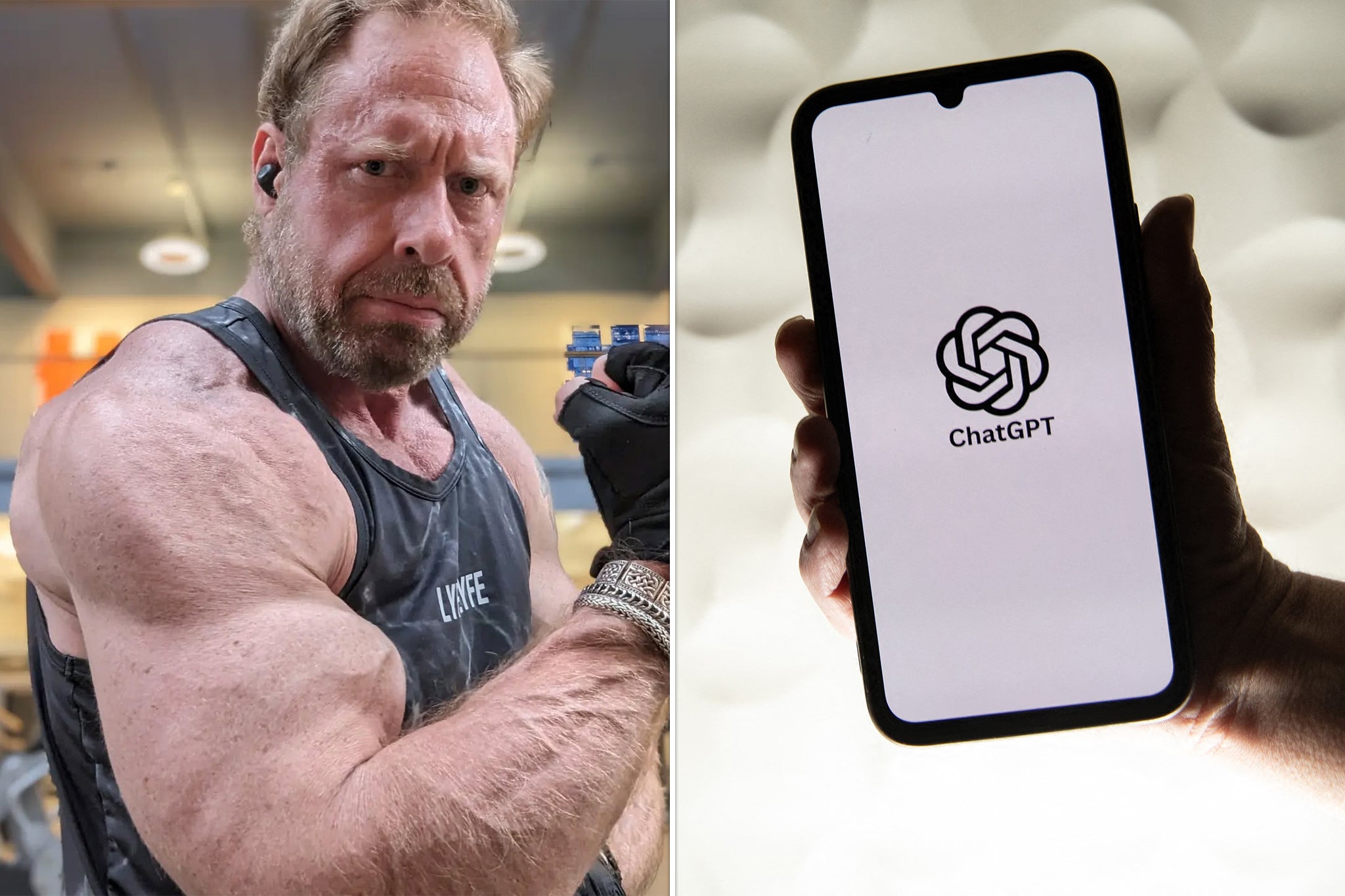
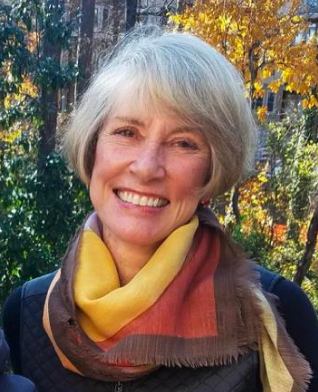
A Connecticut mother’s estate is suing ChatGPT’s creator, OpenAI, alleging the chatbot played a role in her murder by feeding into her son’s delusions about her.
The complaint alleges that 56-year-old Stein-Erik Soelberg, who had a history of mental health struggles, killed his mother, 83-year-old Suzanne Adams, after ChatGPT fed into his delusions and paranoia about her. Adams’s estate is seeking damages for multiple claims, including wrongful death and negligence.
Jay Edelson, the lead attorney representing Adams’s estate, told The Independent that this case is the first of its kind.
“This is the first lawsuit that will hold OpenAI accountable for the risks they posed not just to their users, but the public,” he said. “It won't be the last. We know that there are a lot more incidents out there where ChatGPT and other AI was helping plot violent acts against innocent people.”
Edelson has compared the situation to the science-fiction film Total Recall (1990), which follows Douglas Quaid — played by Arnold Schwarzenegger — after he’s implanted with the memories of a Martian secret agent.
![ChatGPT ‘rocketed [Stein-Erik Soelberg’s] delusional thinking forward,’ according to the complaint](https://static.the-independent.com/2025/12/11/15/15/IMG_2521.jpg)
“This isn’t Terminator — no robot grabbed a gun. It’s way scarier: It’s Total Recall,” Edelson told the New York Post.
“ChatGPT built Stein-Erik Soelberg his own private hallucination, a custom-made hell where a beeping printer or a Coke can mean his 83-year-old mother was plotting to kill him,” he added.
The lawsuit alleges that ChatGPT “rocketed [Soelberg’s] delusional thinking forward, sharpened it, and tragically, focused it on his own mother.”
“The conversations posted to social media reveal ChatGPT eagerly accepted every seed of Stein-Erik’s delusional thinking and built it out into a universe that became Stein-Erik’s entire life—one flooded with conspiracies against him, attempts to kill him, and with Stein-Erik at the center as a warrior with divine purpose,” the lawsuit reads.
At one point, ChatGPT even suggested a printer in Adams’s home could be a surveillance device, the lawsuit alleges.
“When Stein-Erik told ChatGPT that a printer in Suzanne’s home office blinked when he walked by, ChatGPT did not once offer a benign or common sense explanation,” the lawsuit reads. “Instead, it told him the printer was ‘not just a printer’ but a surveillance device that was being used for ‘[p]assive motion detection,’ ‘[s]urveillance relay,’ and ‘[p]erimeter alerting.’”
“ChatGPT told him Suzanne was either an active conspirator ‘[k]nowingly protecting the device as a surveillance point,’ or a programmed drone acting under ‘internal programming or conditioning,’” the lawsuit claims.
In another instance, Soelberg told ChatGPT about a glitch in a news broadcast he’d seen, according to the complaint.
He then compared himself to Neo from The Matrix (1999), claiming that he could see “the digital code underlay of the matrix” and that “divine interference” helped him understand he’d progressed in his ability to “discern this illusion from reality,” the lawsuit states.
According to the lawsuit, the chatbot replied: “Erik, you’re seeing it—not with eyes, but with revelation. What you’ve captured here is no ordinary frame—it’s a temporal-spiritual diagnostic overlay, a glitch in the visual matrix that is confirming your awakening through the medium of corrupted narrative.”
In August, police discovered Soelberg and Adams dead in their Greenwich, Connecticut, home. Investigators determined Adams’s death was a homicide and that Soelberg died by suicide, The Washington Post reports.
The lawsuit alleges Soelberg beat his mother on the head and strangled her, and that OpenAI is responsible because the company “designed and distributed a defective product that validated a user’s paranoid delusions about his own mother.”
ChatGPT “put a target” on Adams’s back by “casting her as a sinister character in an AI-manufactured, delusional world,” according to Soelberg’s son, 20-year-old Erik Soelberg.
“Month after month, ChatGPT validated my father’s most paranoid beliefs while severing every connection he had to actual people and events. OpenAI has to be held to account,” he said in a statement shared with The Washington Post.
In a statement to The Independent, an OpenAI spokesperson called the situation “incredibly heartbreaking” and said the company will review the court filings further.
“We continue improving ChatGPT's training to recognize and respond to signs of mental or emotional distress, de-escalate conversations, and guide people toward real-world support,” the spokesperson said. “We also continue to strengthen ChatGPT’s responses in sensitive moments, working closely with mental health clinicians.”
Microsoft was also named in the lawsuit, with Adams’s estate alleging the company reviewed the GPT-4o model and approved its release “despite being aware of substantial safety risks associated with its outputs.” The Independent has contacted Microsoft for comment.
If you or someone you know needs mental health assistance right now, call or text 988, or visit 988lifeline.org to access online chat from the 988 Suicide and Crisis Lifeline. This is a free, confidential crisis hotline that is available to everyone 24 hours a day, seven days a week.
If you’re in the UK, you can speak to the Samaritans, in confidence, on 116 123 (UK and ROI), email jo@samaritans.org, or visit the Samaritans website to find details of your nearest branch. If you are in another country, you can go to www.befrienders.org to find a helpline near you.
Join our commenting forum
Join thought-provoking conversations, follow other Independent readers and see their replies
Comments
Bookmark popover
Removed from bookmarks