Stunning aurora lights up US skies with green and red display
The intense displays came amid intense geomagnetic and solar radiation storms
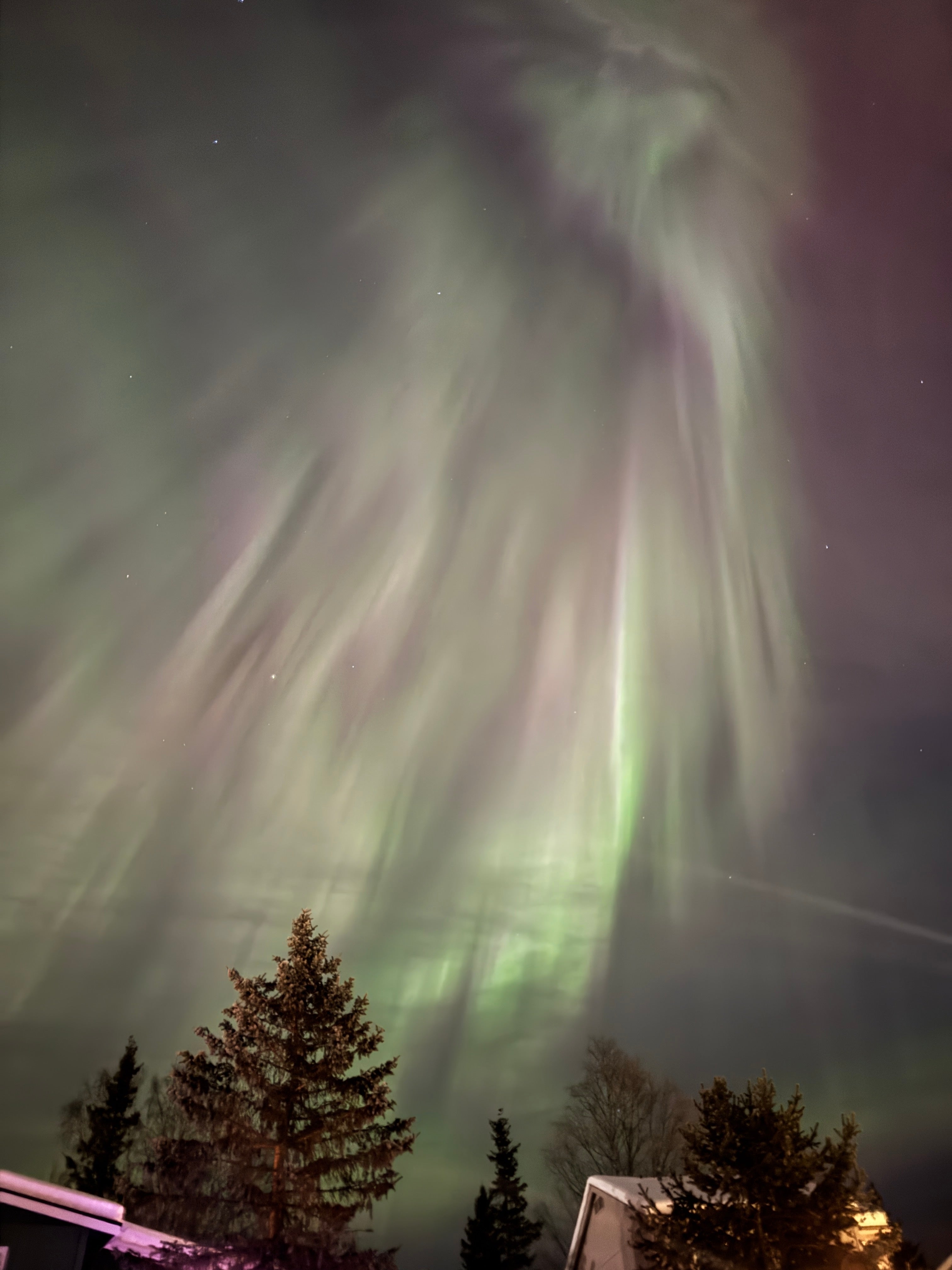
Streaks of shimmering green and red bands exploded in the dark skies above Alaska’s largest city Tuesday.
The stunning aurora provided a light show for early morning dog walkers, joggers and commuters.
Anchorage was not alone in seeing vivid displays following a major disturbance in the Earth’s magnetic field.
The aurora didn’t disappoint, and its reach overnight Monday and into Tuesday was wide.
Social media was lit up with stunning aurora photos from places including Alaska, San Francisco, Chicago, Canada and across Europe.
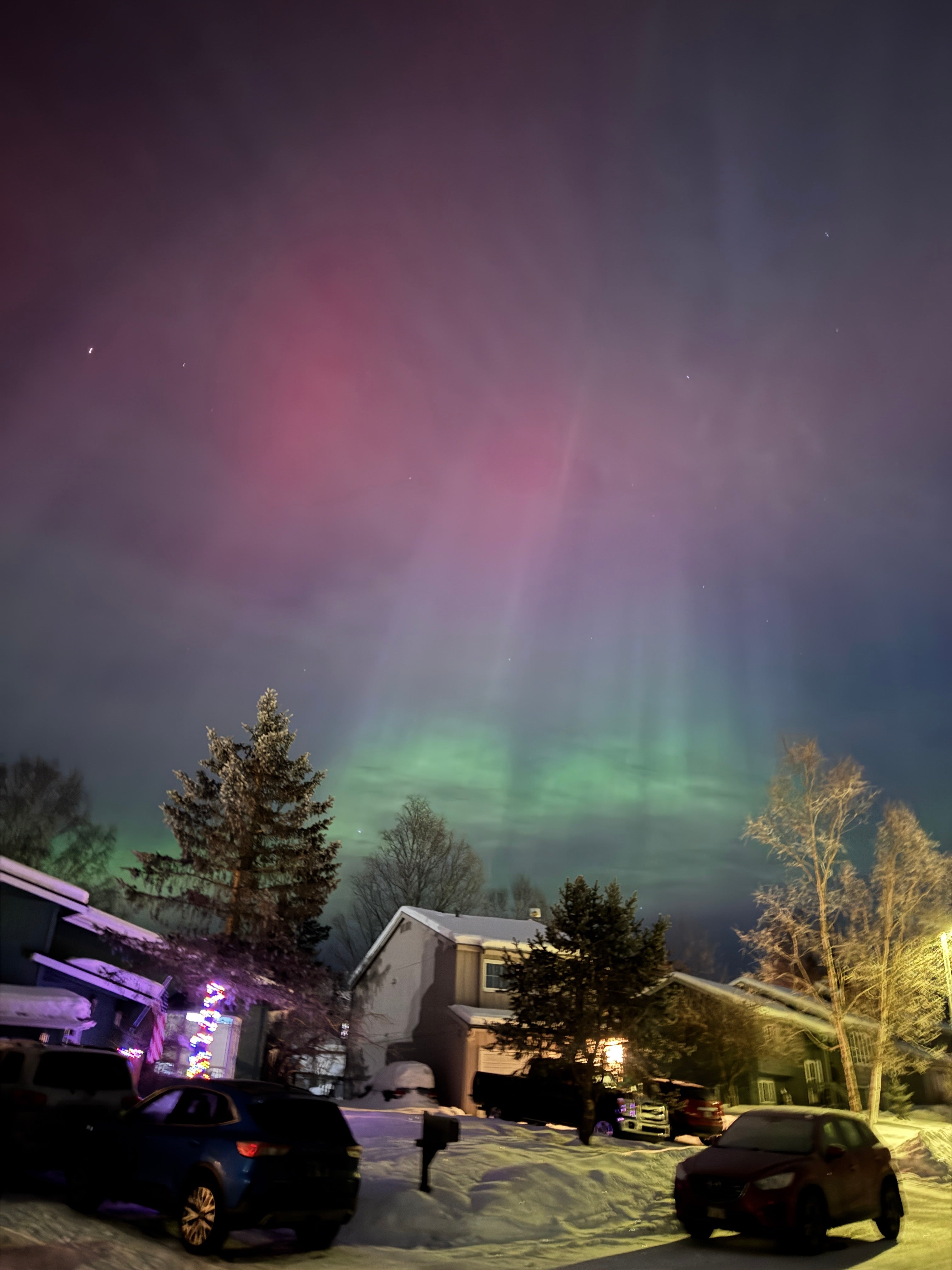
The intense displays came amid intense geomagnetic and solar radiation storms, according to the National Oceanic and Atmospheric Administration’s Space Weather Prediction Center.
Monday night’s solar radiation storm was the largest seen since October 2003, according to the NOAA.
The agency said it notified FEMA, power grid operators and aviation interests about both storms and had been in contact with NASA about the health of astronauts on the International Space Station.
In November, solar storms brought vibrant auroras to parts of Europe including Hungary and the United Kingdom, and as far south in the United States as Texas.
The best way to see auroras is to get away from areas with light pollution and allow time for your eyes to adjust to the darkness.
Bookmark popover
Removed from bookmarks