Why a wealth tax won’t fix the black hole in this year’s Budget
Labour’s Socialist Campaign Group MPs – and the Green Party – advocate a wealth tax as the fairest solution to the chancellor’s Budget problem. They are mistaken, writes John Rentoul

Dan Neidle ought to be a hero to Labour MPs. It was his well-informed persistence in the face of bluster that finally established that Nadhim Zahawi, who was briefly chancellor of the Exchequer in the turbulent later stages of the last Conservative government, had been forced to agree a settlement with HM Revenue and Customs and pay a penalty.
Zahawi was sacked for a “serious breach of the ministerial code”. Neidle, a former tax lawyer, was accused by the Tories of being a Labour stooge and indeed he did sit on one of the party’s national committees. But he has always been scrupulous about evidence and pragmatic about policy.
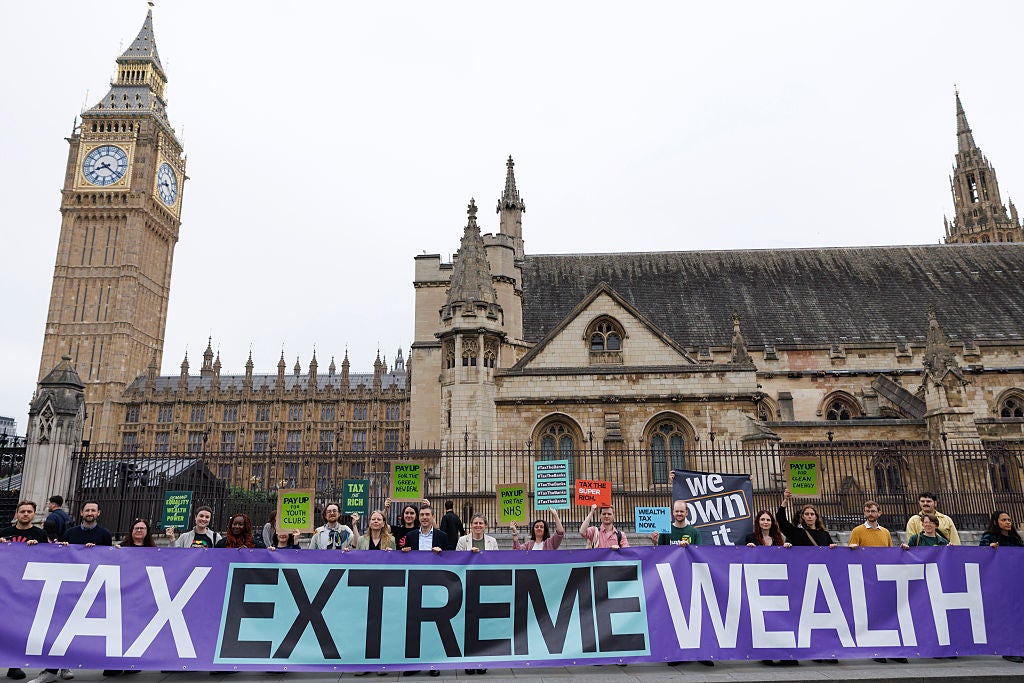
So when he and his advisory group say a wealth tax is a bad idea, you might expect Labour MPs to listen. But Richard Burgon, a leading light of the Socialist Campaign Group, continues to press the idea in the final days before Rachel Reeves’s second Budget.
What does Neidle say about a wealth tax?
When Burgon welcomed Reeves’s retreat from a rise in income tax, saying that a wealth tax was a “fairer alternative”, Neidle responded on X, saying: “The idea a wealth tax is any answer to this year’s fiscal gap is just bonkers. Utter claptrap.”
He said: “I can see why some people support a wealth tax. But nobody who’s spent even five minutes looking at it would think it’s an answer to Ms Reeves’s problems. So Mr Burgon either hasn’t spent five minutes looking at it, or doesn’t care.”
Neidle produced a study of the idea of a wealth tax in June. This was its conclusion: “A UK wealth tax is often promoted as an easy revenue-raiser that would only affect the very rich. Our analysis finds the opposite: the revenue is highly uncertain, and would arrive only after years of complex implementation. Most importantly, the tax would lower long‑run growth and employment, thanks to a decline in foreign and domestic investment. It would make UK businesses more fragile and less competitive, and create strong incentives for capital reallocation and migration.”
But don’t 50 families own half the wealth in Britain?
This is one of those pseudo-statistics that is often deployed instead of research. The consensus of academic studies is that the richest 10 per cent of the UK population owns about half of all net wealth, so unless they are all related to each other, the claim is wrong.
Even if the “50 families” figure were correct, it would be as much an argument against a wealth tax as for it, because it would be more likely these few individuals would leave the country.
The reality is that rich people do not have as much taxable money as most advocates for a wealth tax assume, and it is harder to tax it than it looks. All wealth taxes that have been introduced around the world have raised less than expected, with negative effects on the economy and, usually, on the political fortunes of the government imposing them.
So what should Labour do instead?
The first point to recognise is that, surprising though it may seem, the Conservative-led government of 2010-24 did make the tax system more progressive – in that the tax burden on the better-off became heavier, while those on middle and lower incomes got off lightly, even if it may not have felt like it.
It therefore becomes more and more difficult to raise large additional sums from the better-off. Rachel Reeves suggested last month Office for Budget Responsibility estimates would show that VAT on private school fees, for example, has raised money and that non-doms in general have not responded to heavier taxes by leaving. “The OBR will publish updated numbers on all of those things,” she said. “And that scaremongering didn’t pay off, because this is a brilliant country and people want to live here.”
But Neidle’s research shows that there are limits to how much the rich can be squeezed before they leave or find ways round the new taxes. Reeves may have avoided putting up income tax in this Budget, thanks to a better-than-expected forecast from the OBR, but in the end wealth taxes are not the answer: the only way to raise significant sums is to raise the main taxes that Labour ruled out in its manifesto – the fairest of which is income tax.
Join our commenting forum
Join thought-provoking conversations, follow other Independent readers and see their replies
Comments
Bookmark popover
Removed from bookmarks