Ancient oak tree felled by Toby Carvery owner was still alive, investigation finds
Felling prompted widespread public anger with restaurant chain now facing eviction from site
A centuries-old tree that was chopped down outside a Toby Carvery restaurant by the chain’s owners was still alive at the time, a Forestry Commission investigation has found.
The oak tree in north London, believed to be 450 to 500 years old, was cut down on 3 April last year without permission from the council landlord, prompting widespread public anger and leaving Toby Carvery facing eviction.
Pub company Mitchells & Butlers (M&B), which operates the Whitewebbs House Toby Carvery in Enfield, said it was advised by experts that the ancient Whitewebbs Oak was dying and a risk to the public.
But a Forestry Commission inspection, which took place in late 2025, identified green shoots in the cut wood remaining on the site and concluded that the tree remained alive.
Enfield Council said it believes the tree – thought to be in the top 100 of London’s 600,000 oak trees in terms of its size, and believed to have “more ecological value than the Sycamore Gap” – had around 80 more years to live.
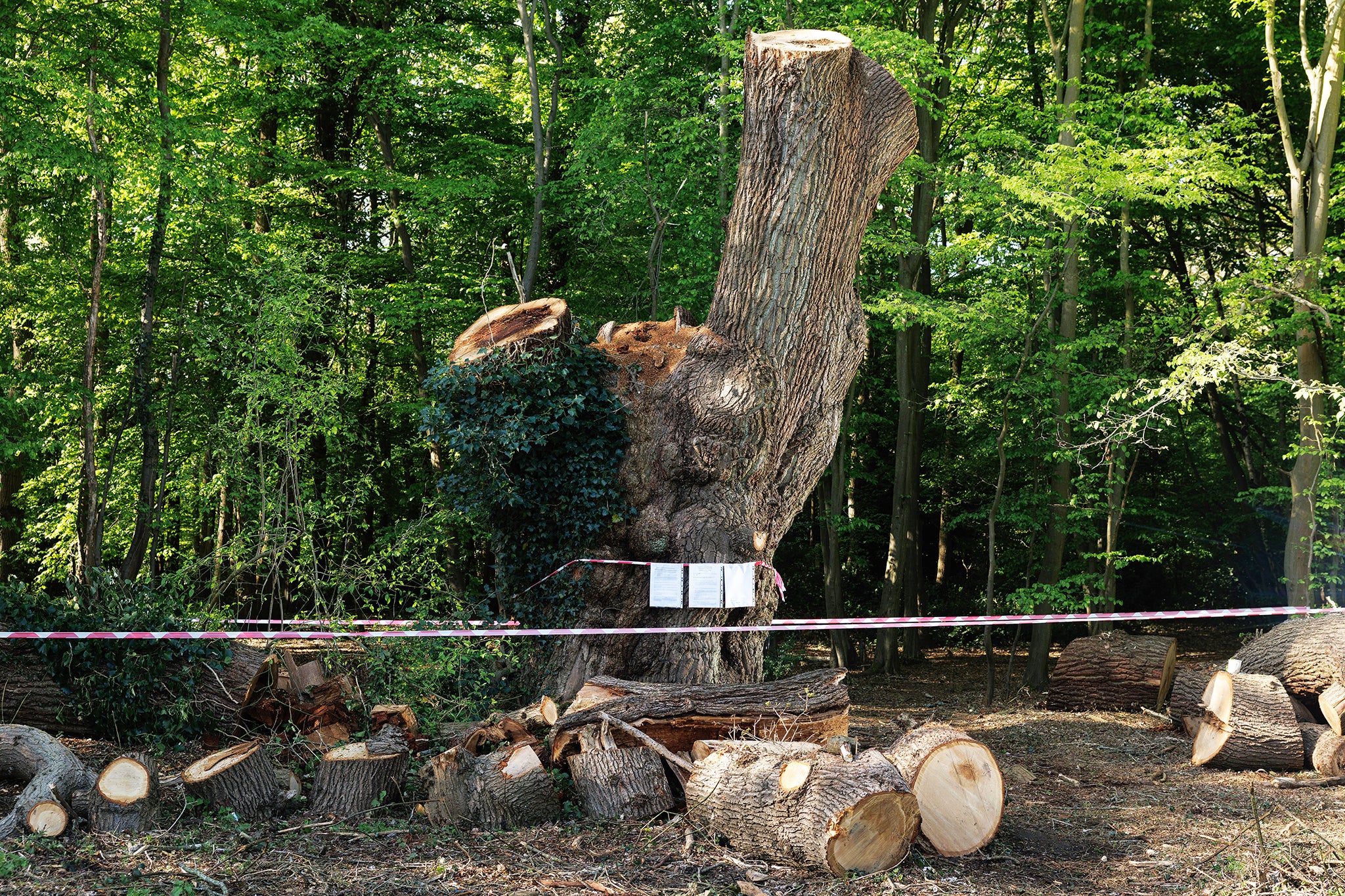
Dr Ed Pyne, a senior conservation adviser at the Woodland Trust, told The Independent: “Confirmation that the Whitewebbs Oak was alive at the time of its felling felt inevitable. I visited the tree in the aftermath and there was no absolutely no doubt in my mind the tree was very much alive.
“There were still green shoots and healthy buds and, in fact, just before the felling, VET-cert [certified veteran tree] consultants found the tree was in good health with a full crown.
“It’s tragic that under ‘lopping and topping’ exceptions an irreplaceable tree was mutilated, because lopping and topping is outdated and no longer considered an appropriate management technique for trees.”
He highlighted the tree had been standing for so long, it was even around at the time of the Gunpowder Plot, more than 400 years ago. The oak earned its nickname from its proximity to Whitewebbs House, a known conspirator haunt during the plot in 1605.
Dr Pyne added: “Beyond that, the habitat this tree provided took centuries to develop and cannot be instantly replaced by planting younger trees. Any tree that has stood for centuries brings incredible value for biodiversity and a wealth of other benefits. These ancient trees are living legends, amazing heritage monuments.
“Our most valuable trees must get the legal protection they deserve.”
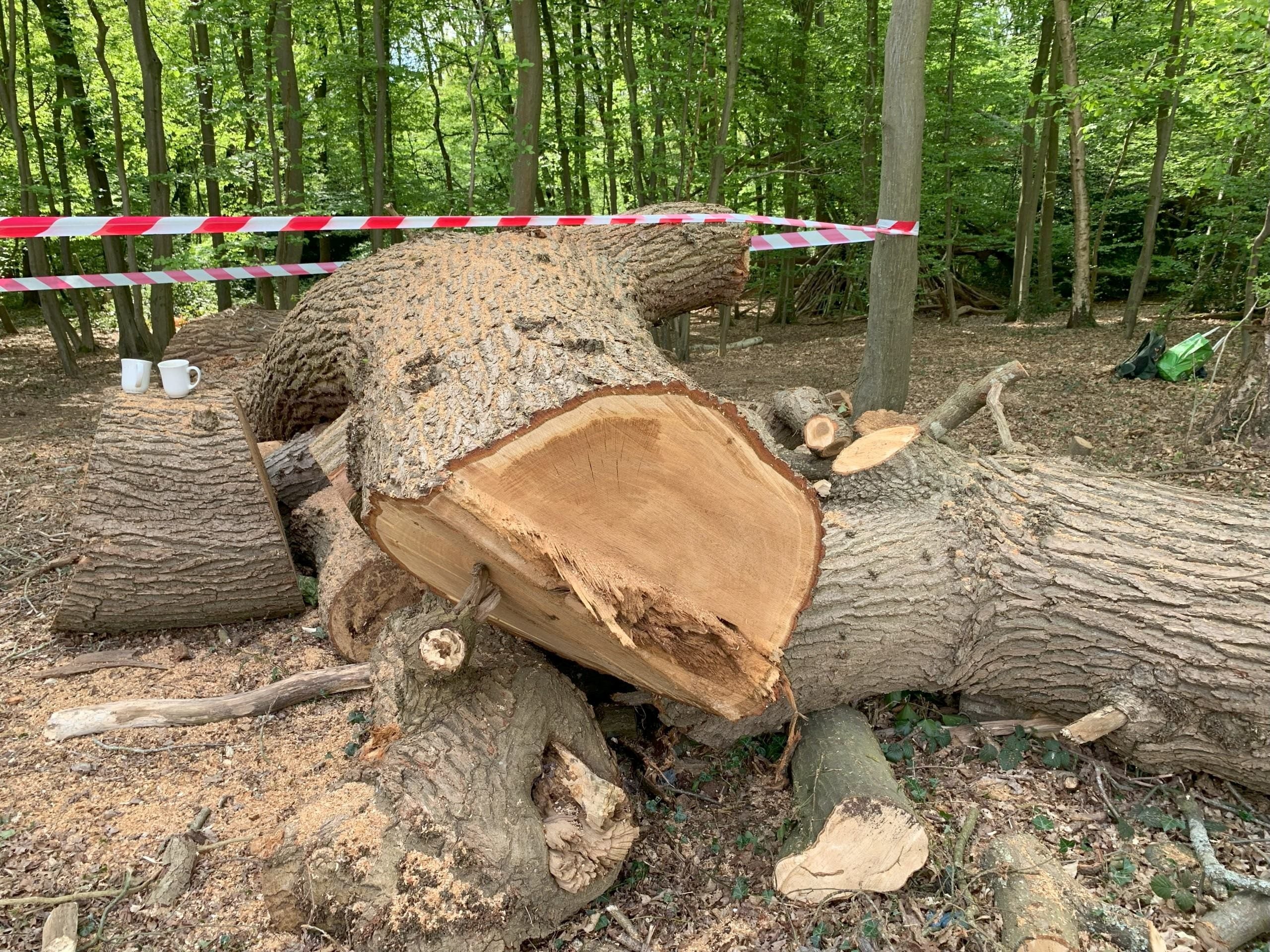
Enfield Council, the owner of the land, reported the matter to the Metropolitan Police, which investigated and found “no evidence of criminality in relation to the circumstances behind the felling of the tree”.
But M&B is facing eviction from the site in Whitewebbs Park after the council issued a Section 146 notice to the pub firm “for serious breaches of their lease”. The council served the notice on 6 October and issued proceedings in Edmonton County Court seeking forfeiture of the lease of the restaurant on 4 November. Enfield Council said a trial should take place later this year or early in 2027.
In an update issued last month, which the council said is still their latest position, Cllr Tim Leaver, deputy leader of the council, said: “The destruction of the ancient Whitewebbs Oak was a reckless act, which caused huge damage to the tree and cut its expected lifespan. It shocked and angered our entire community.
“This centuries-old tree, sometimes known as the Guy Fawkes Oak, was an irreplaceable part of Enfield’s natural heritage and was felled without the council’s knowledge or consent, in clear breach of the lease governing the site.”
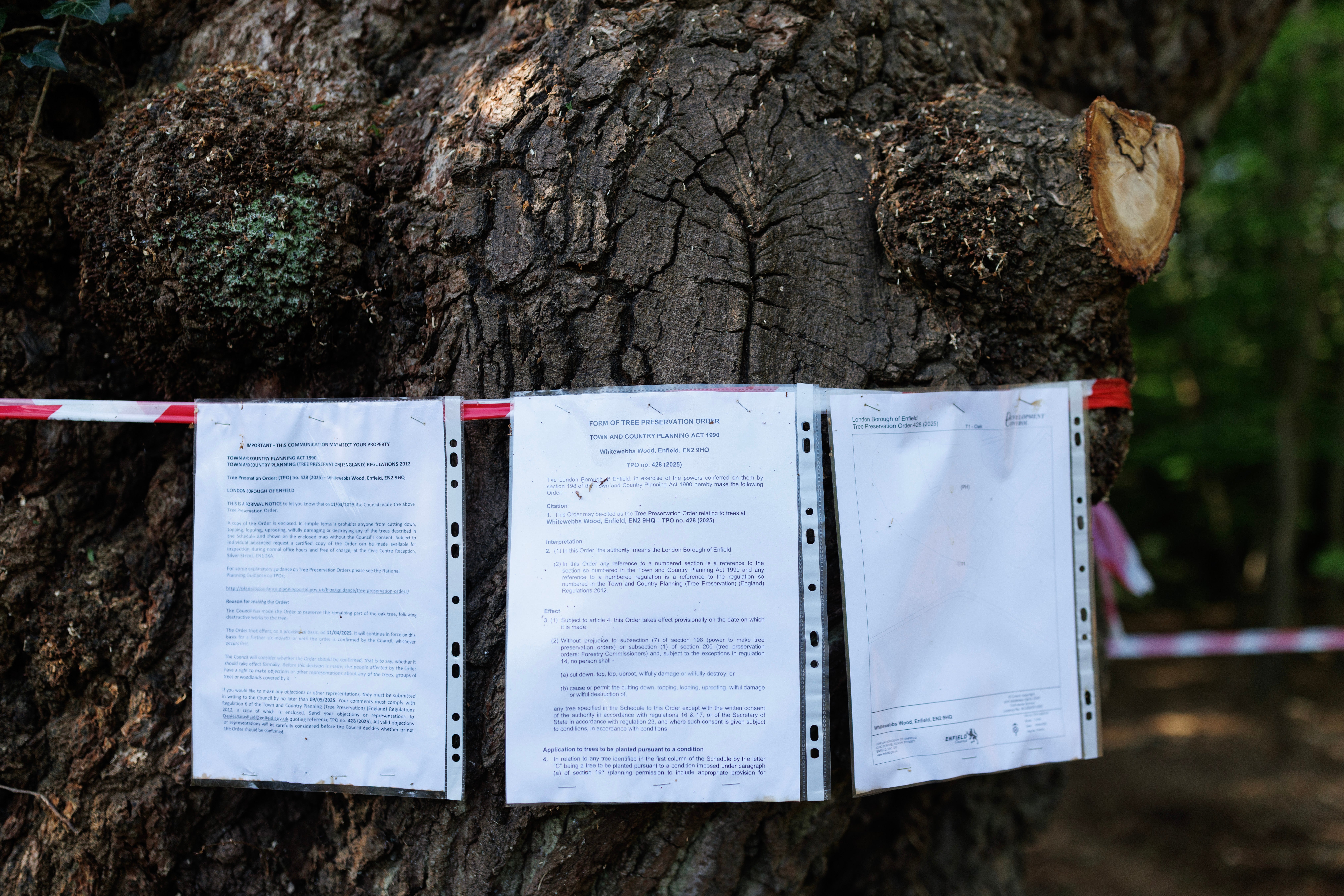
Speaking about M&B, he added: “They have failed to engage meaningfully with the council or to make reparations. We have therefore started forfeiture proceedings for serious breaches of their lease.
“We ask that M&B issues a public apology and provides financial reparations for the irreversible damage they have caused, as well as compensate the council for the significant costs incurred.”
Two weeks after the tree was felled, Toby Carvery chief executive Phil Urban said the company had “acted in good faith” when it authorised the work, adding: “Clearly, the felling of a beautiful old tree is a very emotive subject and is not something that any of us would undertake lightly. I can only apologise for all the upset that it has caused.”
A Toby Carvery spokesperson said: “We are unable to comment due to ongoing legal proceedings.”
The Forestry Commission told The Independent: “We understand public concern at the loss of this ancient oak. The Forestry Commission has conducted a thorough site inspection and review of the works carried out.”
It added its assessment was “there have been no breaches of the relevant legislation”, as the tree was not protected by a preservation order.
Join our commenting forum
Join thought-provoking conversations, follow other Independent readers and see their replies
Comments
Bookmark popover
Removed from bookmarks