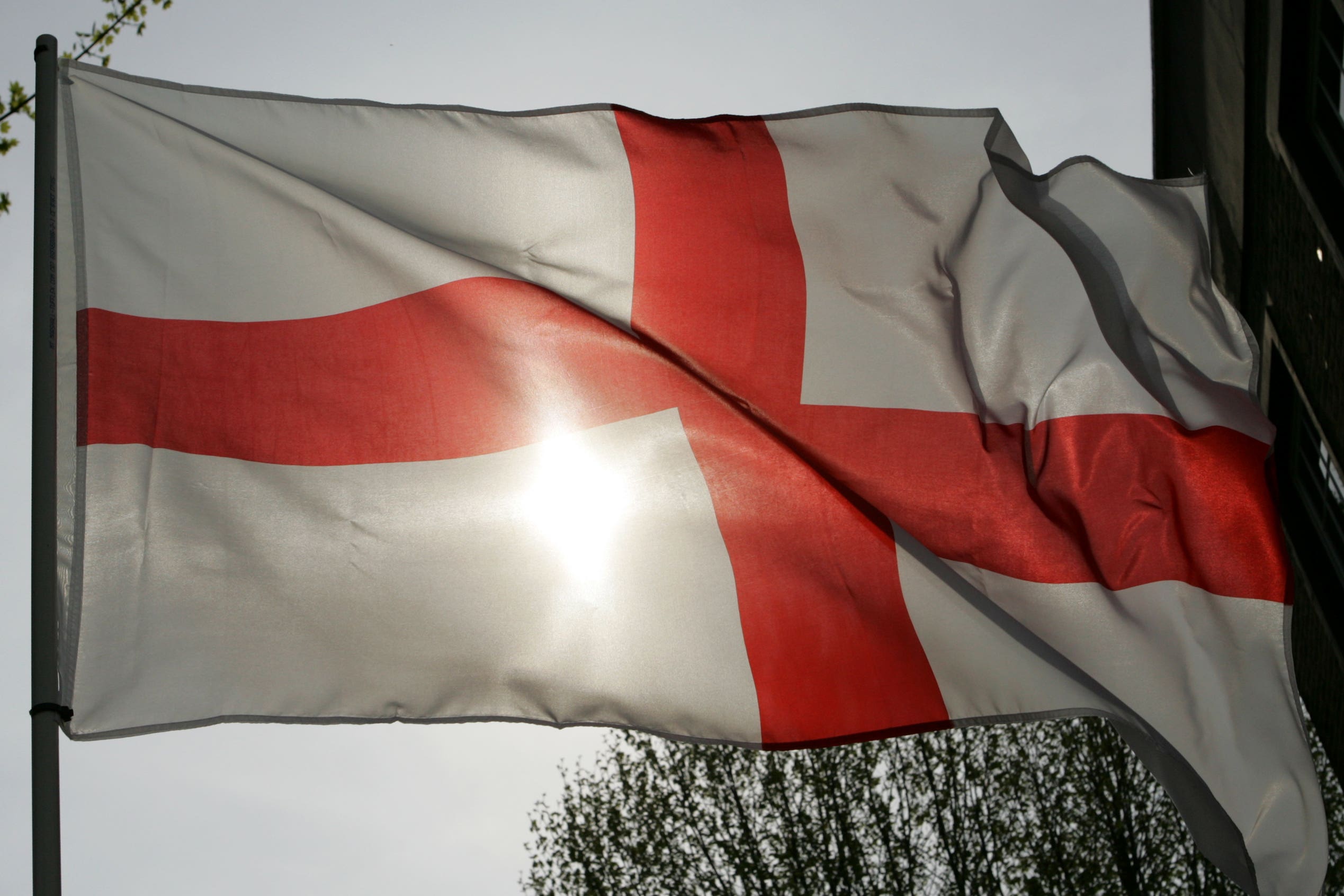
St George’s flags create ‘no go zones’ for NHS staff, health leaders warn
NHS staff have felt ‘deliberately intimidated’ by St George’s flags, warned one trust leader
St George’s flags are creating “no go zones” for NHS staff, with some facing frequent abuse, health leaders have warned.
Several NHS trust chief executives and leaders have said that staff feel intimidated by the presence of the flags across the country, including when they are visiting people in their own homes to give them treatment.
It comes as a poll of senior managers found 45 per cent were extremely concerned about discrimination towards NHS staff from patients and the public, while a further 33 per cent were moderately concerned.
One trust leader spoke anonymously and they said there were particular issues with nurses entering people’s homes alone when they work in the community. When St George’s flags went up, staff members of minority ethnicities felt “deliberately intimidated”.
“You’re going in on your own, you’re locking the door behind you,” he said. “I have been into homes with people who have been convicted of sex offences, and we go in and provide care to them.

“It can be a really precarious situation, and they (the nurses) handle that absolutely brilliantly”, he added. “We saw during the time when the flags went up – our staff, who are a large minority of black and Asian staff, feeling deliberately intimidated.
“It felt like the flags were up creating no go zones. That’s what it felt like to them.”
The trust leader added he thought that this was “designed to feel” intimidating and exclusionary for the staff, who had seen “individual instances of aggression”.
Another NHS trust leader said one member of their staff, who is white and has mixed-race children, had asked some people putting up flags to move so she could park her car.
“The individuals filmed what was happening, and then followed her, and she continued to receive abuse over a series of several days, not because she objected to the flags, but because she disturbed them,” they said.
They added that this was one of many stories of staff facing abuse as a result of the flag-raising operation.
Daniel Elkes, chief executive of NHS Providers, which represents trusts, said that the NHS relied on overseas recruitment and couldn’t deliver without a diverse workforce.
“We have a really diverse workforce, and without that, you can’t deliver the NHS,” he said. “We are trying to recruit from the very places where we provide healthcare, so the intake into the NHS is representative of British people from more diverse backgrounds.”
A large number of St George’s Flags were raised across the UK over the summer as part of a controversial movement called “Operation Raise the Colours”, backed by far-right figures. In the midst of the movement, a Chinese takeaway in York was covered in racist graffiti and St George’s crosses.
It comes as NHS Providers said the resident doctor strike, scheduled to start next Friday, could wipe out a “once-in-a-generation” chance to fix the NHS. Industrial action, which will last five days, could badly affect NHS recovery, it said.
The NHS Providers’ annual survey of health leaders and managers found that while a growing proportion report high or very high quality care for patients, concerns remain over industrial action, finances and winter pressures.
Regarding strikes, one NHS leader said: “When people take industrial action, you have to then spend a huge amount of time covering their shifts, which means that you don’t have the staffing that you would have had had they not been on industrial action – and your focus is all about how to keep the most people safe.
“You’re not as focused on treating everybody as well as you could… There is a risk that people will die who wouldn’t otherwise have come to harm.”
Bookmark popover
Removed from bookmarks