Will we see more security at schools after the Brent double stabbing?
Over the last few years, there have been a number of stabbings at secondary schools across the country
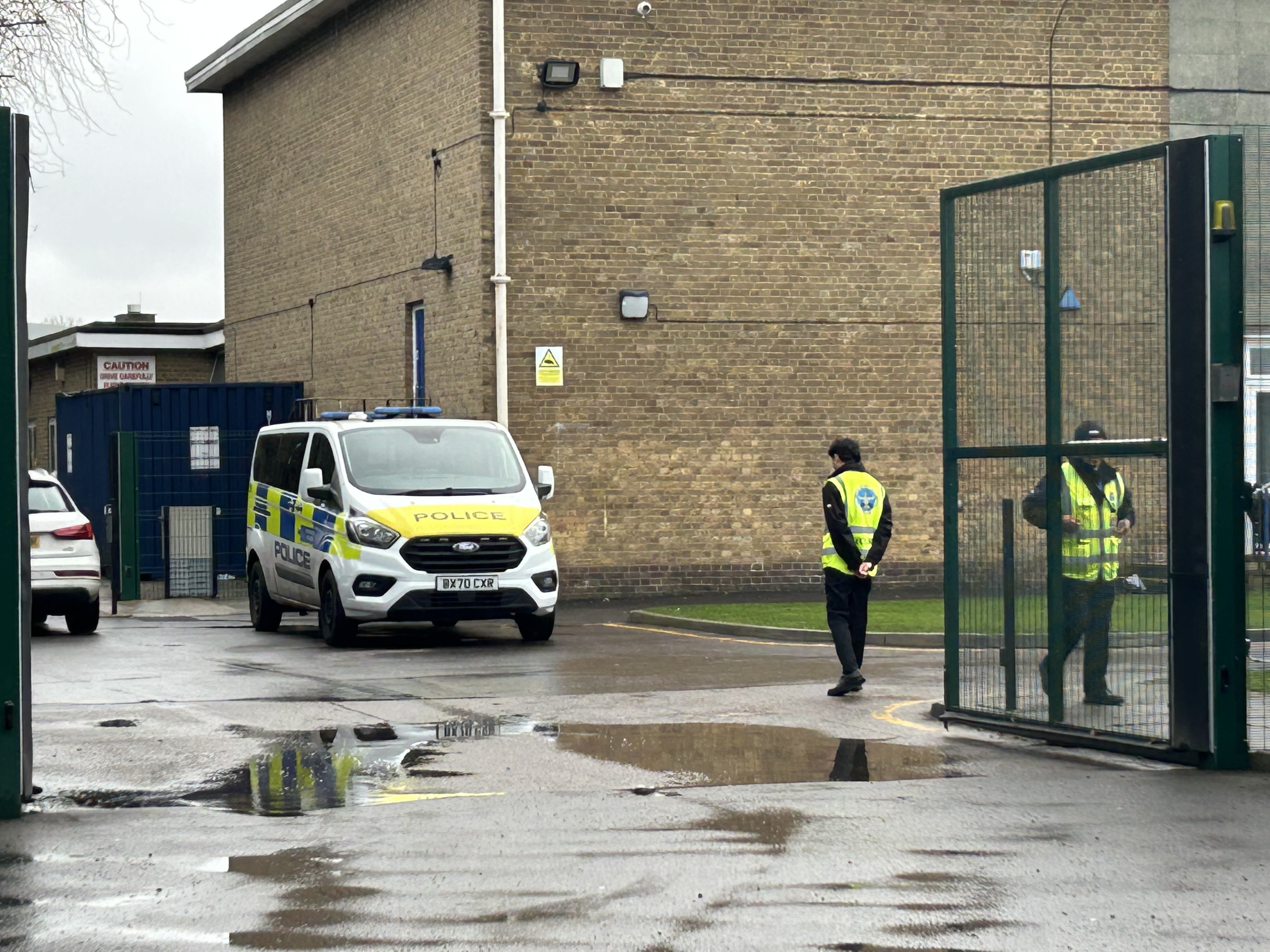
A debate around increasing security around schools has resurfaced after two pupils were stabbed at a school in Brent this week.
Two boys aged 12 and 13 were left seriously injured after being stabbed at lunchtime on Tuesday at Kingsbury High School in north-west London.
A 13-year-old boy has been arrested on suspicion of attempted murder, and Counter Terrorism Police said he remained in custody earlier this afternoon.
But any increased security around schools would need additional funding and staff, a headteachers’ union has said.
Issues in wider society mean that education settings are facing a higher level of threat than they have in the past, the Association of School and College Leaders (ASCL) added.
Pepe Di’Iasio, general secretary of ASCL, said: “We are shocked and saddened by this terrible incident, and our thoughts are with everybody affected.
“Schools are predominately safe places and they go to great lengths to protect their students and staff, including lockdown procedures, educating students about the dangers of knife crime, site security, and weapons searches. However, they are not fortresses but part of the wider community, and teachers are teachers, not security staff.
Education minister Georgia Gould told Sky News that the government could look at bolstering security in schools in the wake of the stabbing, but ruled out installing metal detectors.
“Everybody in the education community is fully aware that there are significant issues in wider society which mean the level of threat is higher than it has been in the past,” Mr Di’Iasio said.
“As we have seen from a number of incidents in the recent past, no setting is immune from these risks and school leaders would welcome the opportunity to work with other partners – such as government, police and local authorities – to contribute to a strategic response to this issue.
“Schools have extremely limited resources and stepping up security further around school sites would require additional investment and staffing.”
Over the last few years, there have been a number of stabbings at secondary schools across the country.
Harvey Willgoose, 15, was stabbed to death by fellow pupil Mohammed Umar Khan during his lunch break at All Saints Catholic High School in February 2025.

A 13-year-old girl was found guilty of three charges of attempted murder last year after attacking two teachers and a pupil at her school in Ammanford in 2024.
And in 2023, two teenagers, Jakele Pusey and Jovani Harriott, were detained for life after being found guilty of stabbing 15-year-old Khayri Mclean to death outside his Huddersfield school in 2022.
Last year, an investigation by the BBC found 1,304 offences involving knives or sharp objects were recorded at schools and sixth form colleges across England and Wales in 2024.
Guidance from the Department for Education (DfE) says it is important for schools to have policies in place to manage and respond to security-related incidents.
Potential preventative measures for crime on school sites, including pupils bringing in knives, could include CCTV, DfE guidance says, or access systems that allow schools to “control, monitor and deny access when necessary”.
Preventative measures schools could take could also include systems that detect intrusion, such as alarm systems, strong perimeter fencing, and security lighting.
Home Office advice to schools states it is unclear whether routinely searching students for weapons on their entry into school has an impact on violence levels. However, knife arches may have a part to play in creating a safer school environment, it adds.
DfE-commissioned research published last year found schools often viewed knife crime as part of a wider system of safeguarding concerns, and school leaders felt in general safeguarding issues at schools were increasing and they were not always equipped to address this. Some staff who took part in the research did feel concerns that onsite knife crime incidents were increasing.
Funding constraints and limited staff sometimes meant that schools were unable to offer all the knife crime prevention activities they wanted to, the research found, and therefore had to make decisions about what prevention to focus on depending on how they perceived the level of risk at the school.
Bookmark popover
Removed from bookmarks