Oxford reveals Children’s Word of the Year for 2025
Almost 5,000 children aged six to 14 were surveyed by Oxford University Press
Oxford University Press (OUP) has announced that peace is the children’s word of the year for 2025.
According to the research, which was carried out in 2025 and included opinions from almost 5,000 children aged six to 14, 35 per cent of children chose peace, followed by 33 per cent choosing AI and 21 per cent opting for resilience.
One in 10 children then mentioned “war” when asked why they chose peace and highlighted specific conflicts such as Ukraine and Gaza.
A study of the Oxford Children’s Corpus, a database of writing by and for children in the English language containing over half a billion words, reveals mentions of peace in children’s stories submitted to the BBC 500 Words competition have increased by 60 per cent since 2015, OUP said.
For the second-year running, AI was selected as runner-up, and when asked why they chose the word 20 per cent mentioned “hearing” and “talking” about AI.
Similar to last year, when asked how the word made them feel, children gave positive responses, with more than one in 10 using “excited” or “exciting”.

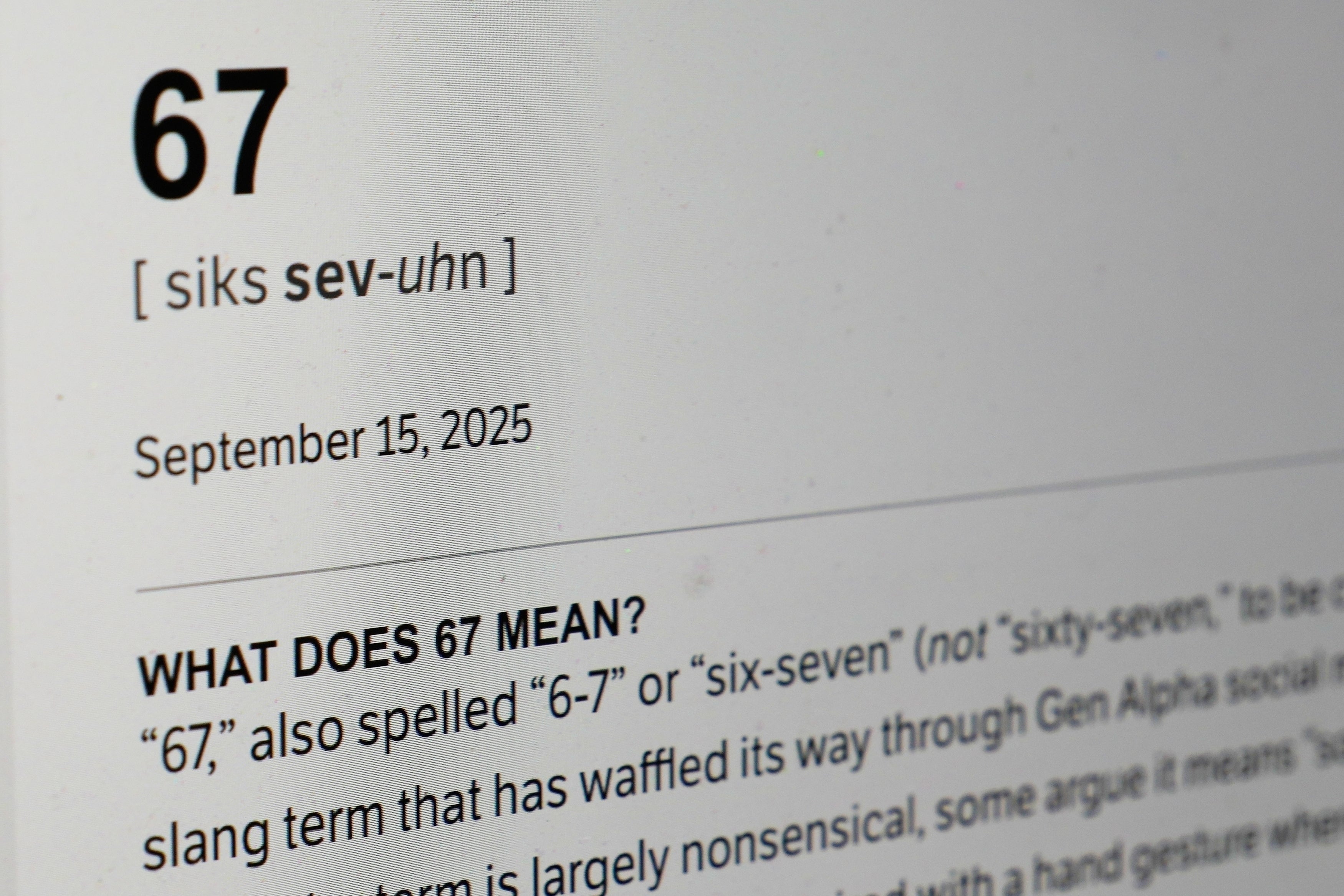
Almost half (47 per cent) of children chose six-seven as their slang word of the year, followed by aura (24 per cent) and delulu (7 per cent).
Research revealed that the use of six-seven among children fosters inclusivity and social currency, with almost one in 10 mentioning “friends” when asked how they use the term and “popular” was frequently mentioned in reference to what six-seven meant to them along with more than one in four (28 per cent) citing “fun” and “laugh”, OUP said.
Andrea Quincey, director of early years and primary publishing, Oxford University Press, said: “A key theme we see from our Oxford Children’s Word of the Year research is just how attuned children are to current affairs.
“This year is no different; whether that’s calling for peace in response to current conflicts or highlighting how AI has permeated daily life.
“Perhaps it’s no surprise that ‘six-seven’ is voted, overwhelmingly, as their slang word of the year. A word which brings them laughter and joy and connection with friends. We see how important it is for children to have agency over their language away from the grown-up world and share words that adults can’t understand.
“For this reason, we are calling for schools to get involved with our Oxford Children’s Word of the Year research for 2026. Not only do we want to hear from more children, but we also want to hear about colloquial words and capture regional voices. This year’s research demonstrates just how important it is that we continue to research children’s language and support their vocabulary development as it plays a vital role in their self-expression.”
Jonathan Douglas, chief executive of the National Literacy Trust, said: “Language plays a profound role in shaping our society, culture and identity.
“Understanding how children and young people make sense of the words they encounter in their daily lives, take ownership of them and play with their meaning, demonstrates the power of language for helping us comprehend the world around us and our place in it.
“The National Year of Reading will enable us to give more children and young people new opportunities to experience language in ways that are fun, relevant and help them connect with others.
“Throughout the year, we will work with Oxford University Press and a number of incredible authors to bring the magic of reading and words to life for children and young people across the UK.”
Join our commenting forum
Join thought-provoking conversations, follow other Independent readers and see their replies
Comments
Bookmark popover
Removed from bookmarks