Cold War nuclear bunker just ‘days away’ from falling into sea as it teeters on the edge of a cliff
The structure is clinging to the cliff, with little of it left to support it
People have been asked to avoid an area of coastline where a Cold War-era nuclear bunker clinging onto the edge of a cliff could be “days away” from falling into the sea.
The building, found above Tunstall Beach in East Yorkshire, is believed to have been built in 1959 as a lookout post in the event of nuclear war. It is thought to have been decommissioned in the 1990s.
Now, coastal erosion between Withernsea and Hornsea – an area that the Environment Agency has said is among the UK’s fastest eroding coastlines – has left the structure teetering on the cliff, around 25 feet above the beach below.
Amateur historian Davey Robinson is filming the final days of the bunker and told the BBC: “We live on one of the most eroded coastlines in Europe and this bunker hasn’t got long left, perhaps just a few days.”
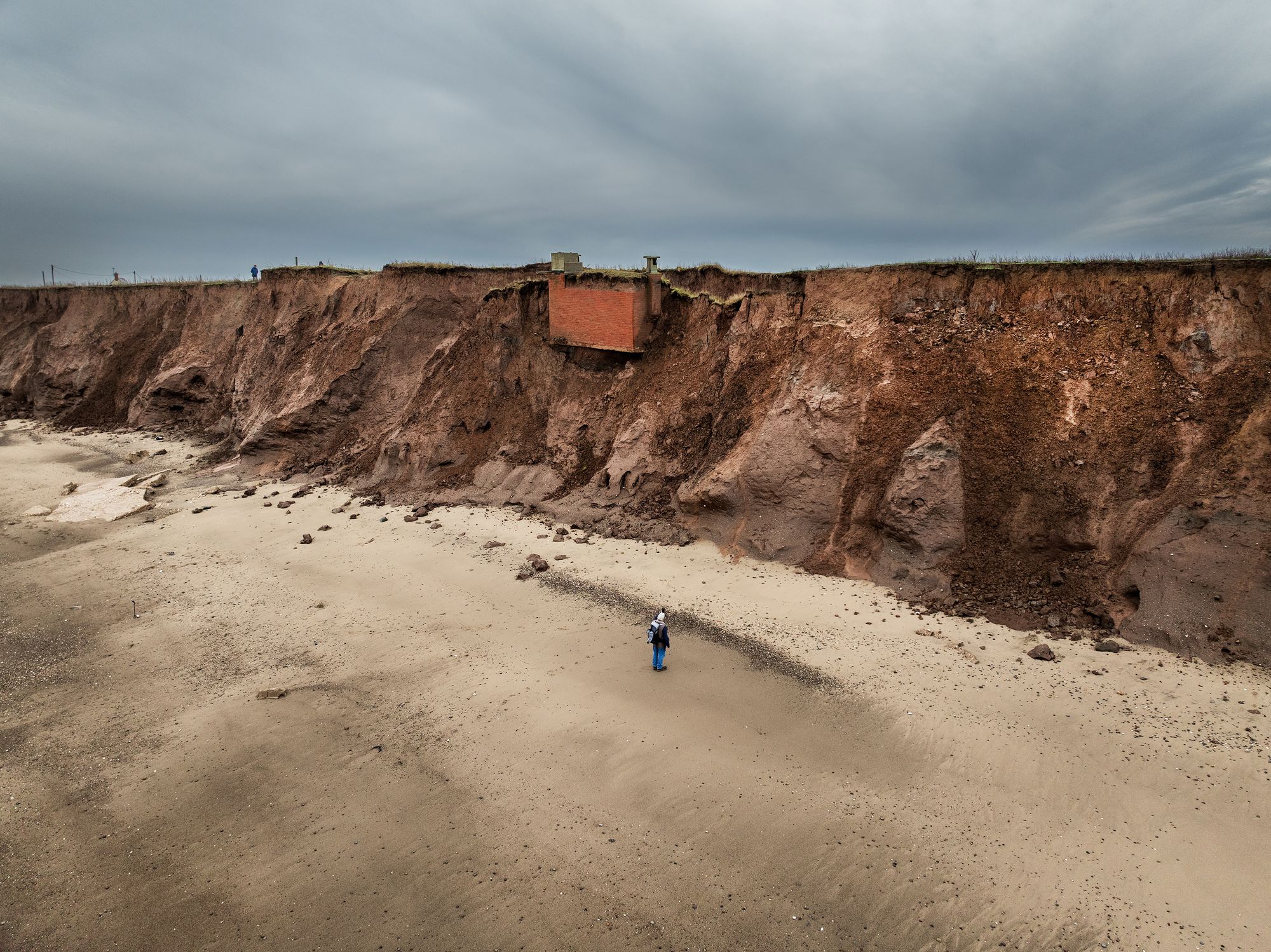
Photographs from recent days show the bunker in a precarious position, clinging to the eroded cliff, with little of the bank remaining to support it.
An East Riding of Yorkshire Council spokesperson said the local authority has no statutory responsibilities to the building as it is on private land, but advised people to avoid the area around it.
A council spokesperson told The Independent: “East Riding of Yorkshire council does not have any statutory responsibilities connected to the structure. The structure sits on an area of privately owned land.
“This location lies within Policy Unit E (Rolston to Waxholme) of the Shoreline Management Plan; the management approach for this location remains ‘no active intervention. Therefore, the coast is undefended in this area, which allows coastal processes to continue.
“Recognising the risk posed by the structure, the council would ask that people avoid the area, both at the cliff top and at the beach as it descends the cliff.
“The council would also remind visitors and residents to always maintain a safe distance to the base of eroding cliffs due to the risks associated.”
According to the Yorkshire Marine Nature Partnership, the cliff-line on the east of the region is retreating by approximately four metres per year. This means that significant quantities of material are released into the sea annually.
Though the coastline has been changing for thousands of years, the changes have been accelerated by climate change. Rising sea levels, frequent and severe storms, as well as the warmer sea surface temperature, all increase the likelihood of land-slips, erosion and flooding.
Join our commenting forum
Join thought-provoking conversations, follow other Independent readers and see their replies
Comments
Bookmark popover
Removed from bookmarks