Ancient brass instrument used to interpret the heavens turns 1,000 years old
National Museums Scotland said it was one of the rarest scientific instruments in its collection.
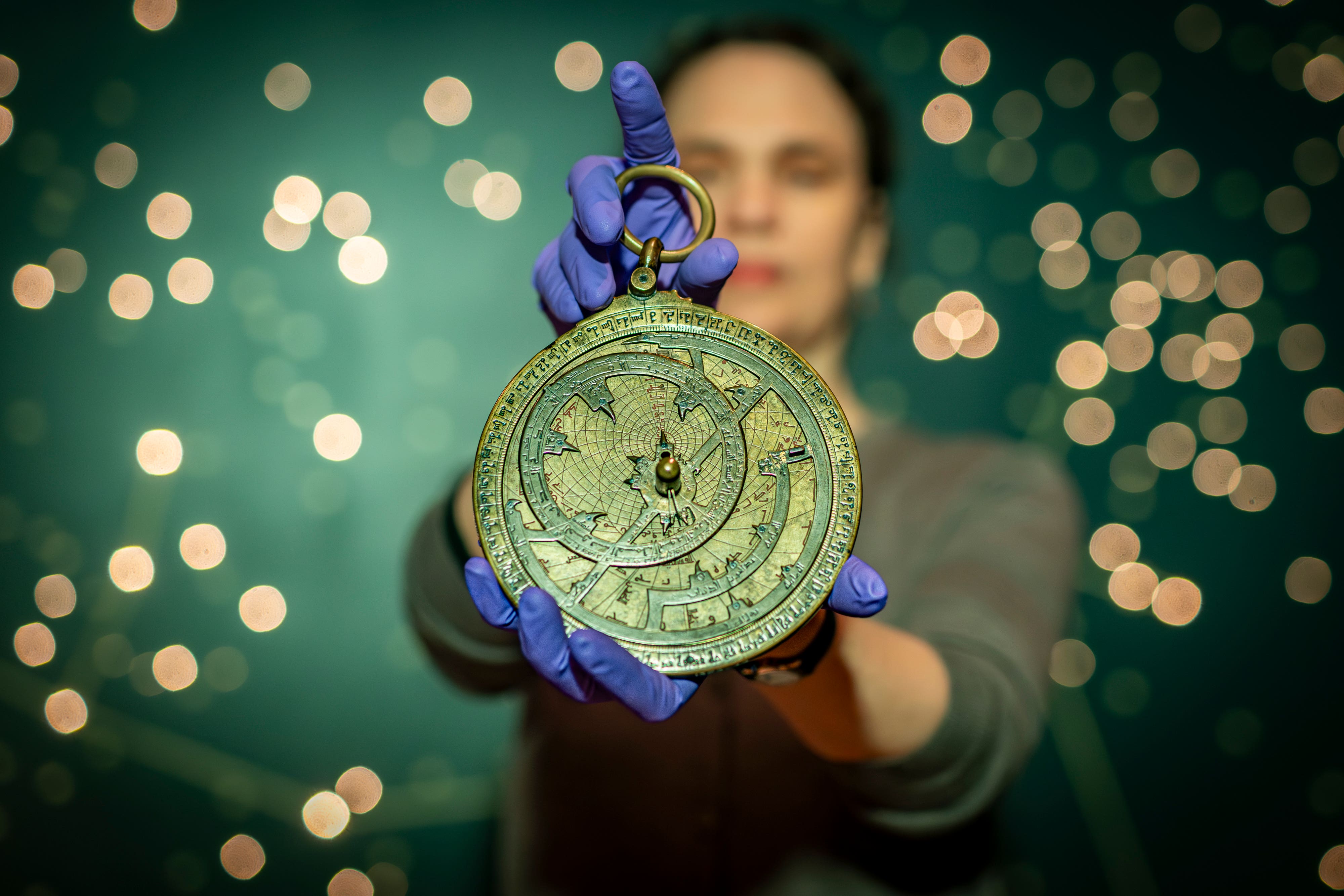
One of the rarest scientific instruments held by National Museums Scotland (NMS) has turned 1,000 years old.
The astrolabe, an intricate brass instrument made in 11th century Spain, was used for charting the position of the stars.
NMS said the object is one of Europe’s oldest surviving signed and dated astrolabes.
It was made in Cordoba by Muhammad ibn al-Saffar, and is dated 417 AH (the Islamic calendar), which equates to 1026-1027 AD.
The two-dimensional model, representing the apparent motions of celestial bodies, is used to observe, calculate and predict the position of the sun and the stars and can be applied to purposes such as time keeping, wayfinding and astrology.
The astrolabe, which is on permanent display at the National Museum of Scotland, was gifted to the museum in 1959 by James H Farr, who ran Wardie Garage on Ferry Road in Edinburgh.
NMS said that in a newspaper interview from 1960, he was quoted as saying that he purchased it in a second-hand shop in Edinburgh’s Lawnmarket.
Principal curator of science Dr Rebekah Higgitt said: “As this incredible object turns 1,000 years old, we reflect on how a single object can connect science, history and culture.
“It reveals to us how early scholars observed the stars and helps us understand how past learning has helped shape the modern world.
“We are privileged to share this story with our visitors as we mark this remarkable milestone.”
Bookmark popover
Removed from bookmarks