Warning over rise in exploding laughing gas canisters at waste centres
One operator said a canister rupturing is ‘akin to a small explosive going off’
A surge in discarded laughing gas canisters at waste sites has seen a rise in explosions endangering workers’ lives, authorities warn.
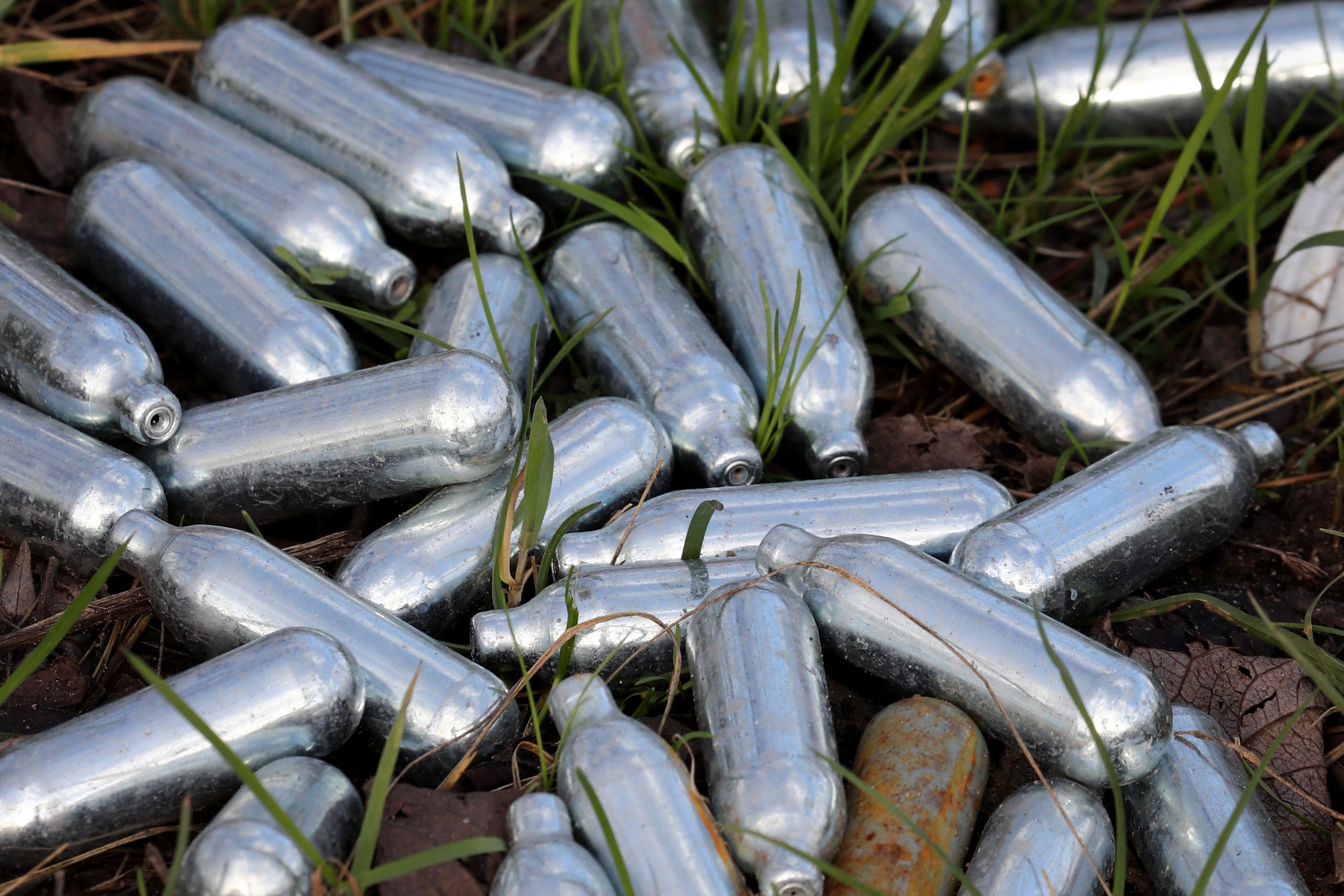
Operators say there has been an increase in large nitrous oxide cylinders arriving at plants in recent years, despite “laughing gas” being reclassified as a Class C drug in November 2023, making possession illegal without a legitimate reason.
The Environmental Services Association (ESA), which operates many of the UK’s energy-from-waste power plants on behalf of councils, which burn non-recyclable waste to create energy, believes the reclassification has had an “unintended consequence” which “did little to curb substance abuse”.
It argues it has instead driven drug dealers and recreational users away from small, single-use cartridges and shifted them towards much larger and more dangerous cylinders, with explosions causing over £1.5 million in damage at a single plant in a year.
David Crawford, plant manager for Cory’s riverside facility in London, said: “A canister rupturing is akin to a small explosive going off, causing damage to machinery and making it challenging for us to process waste safely.
Last year alone, the facility identified around 670,000 canisters in the waste processed, with 4,000 having exploded.

Enforcement is also made harder because those found in possession can attempt to claim legitimate use. Nitrous oxide has a limited number of lawful uses, such as in medicinal settings, manufacturing and catering, where it is used as a propellant of whipped cream. It can also be used for hobbies such as motor racing and model rocketry. But outside these niche uses, legitimate demand is low.
Yet consumer sales of commercial cylinders appear to be on the rise, and the most dangerous are the large pressurised cylinders, which weigh more than 2kg and can contain 600g-700g of highly explosive gas.
Once emptied, large cylinders remain pressurised and are classed as hazardous waste. They should be disposed of via specialist commercial collections, but instead, many are dumped in parks and roadsides or placed in general rubbish and recycling bins, where they pose a serious threat.
Charlotte Rule, ESA’s climate and energy policy head, said: “Our industry has invested in AI detection systems and additional safeguards, but it is like searching for a needle in a haystack and some cylinders inevitably get through.
“To protect workers and infrastructure, and ensure the law is properly enforced, the government should ban retail sales of large pressurised nitrous oxide cylinders and restrict their use to legitimate commercial purposes.”
The ESA is also calling for urgent action, such as mandatory on-cylinder warnings, clearer point-of-sale information and instructions for safe disposal. The waste sector is also exploring the use of “amnesty containers” at major events alongside secure drop-off points at household waste recycling centres (HWRCs).
In the longer term, the ESA has proposed a deposit-return scheme to ensure cylinders are tracked, collected safely and returned for recycling, with the support of enforcement.
A government spokesperson said: “The abuse of nitrous oxide is dangerous to people’s health and suppliers have a clear legal duty to ensure products are not sold for recreational use.
“It’s an offence to illegally dispose of cannisters and local councils have legal powers to take enforcement action against offenders.”
Join our commenting forum
Join thought-provoking conversations, follow other Independent readers and see their replies
Comments
Bookmark popover
Removed from bookmarks