In Jilly Super land, almost all sex was ‘fun, fun, fun’
As the former editor of the ‘Erotic Review’, Rowan Pelling explains why Jilly Cooper’s champagne-fuelled, hedonistic spirit and unabashed emphasis on flirtation was her generation’s presiding spirit. Few could surpass the mischievous wit of a woman whose genius was often underestimated


The “Queen of the Bonkbusters” is dead. Let the bells toll and the organ of every British cathedral thunder out “Galloping Home”. Jilly Cooper wasn’t just a writer to the millions who adored her; she was a symbol of something profoundly British and endlessly comforting. Cooper’s fictional county of Rutshire, based on her own beloved Gloucestershire, conjured up rolling hills, fetlocks, labradors, Agas, cocktail hour, rogues called Rupert, sweet girls called Tiggy, al fresco orgasms and laughing in bed. Or what the writer Caitlin Moran once described as “sex Narnia”.
True, there were no talking animals in Cooper Land, but her lurchers, labs and thoroughbreds were easily on a par with the human characters and their deaths are often more tear-jerking. For readers raised on The Lion, the Witch and the Wardrobe and Black Beauty, it was an easy transition to take your crush on Aslan or a beautiful horse, then move it up a notch to animal-loving Rupert Campbell-Black.
As one giggling female character says in Riders, after glimpsing a stallion in a state of arousal: “Aren’t horses rude?” Cooper could certainly be rude, but in a delectable fashion like a Mrs Kipling of sex. What’s more naughty but nice than to describe waxed pudenda as a “shaven haven”, as she does in Jump.
It was this blend of humour and disarming humanity that set Cooper’s writing far apart from the crushed-under-my-stiletto operatics of a Shirley Conran or Jackie Collins novel. Her female characters were often insecure, naive, carrying a bit of extra weight, chaotic and travelling more in hope than certainty – much like the rest of us. In short, Cooper was whom women of my generation relied upon to learn about adult life in all its joyous mystery.

Take the glorious episode in Riders where Rupert Campbell-Black’s uptight, American first wife Helen asks the more uninhibited Janey Lloyd-Foxe if she really likes giving oral pleasure to men, only to be told: “Well, it’s an acquired taste. Whisky and dry martinis don’t taste very nice the first time.”
So, when my phone reverberated with two dozen incoming messages from women friends, I wasn’t surprised to see that they were all sharing news of Jilly’s death. As with all the greats – Cher, Kylie and Dame Judi – we all felt on first-name terms with our literary heroine.
A former colleague wrote on behalf of us all: “Jilly made me the woman I am today: a smoker, a boozer and unrepentant slattern, who still longs to have sex with a showjumper.” Over on Mumsnet, the mourning was in full swing, with devotees “in tears” and one woman posting: “Her books are like eating chocolate in a hot bath on a cold night.” Another confessed she’d been hooked on Cooper “ever since pinching [the books] off Mum’s bookshelf when I was about 12”.
Cooper’s novels were the ultimate contraband at girls’ schools in the 1970s and 80s; I remember passing a well-thumbed copy of smoochy Octavia (one of a series of six romances titled for Sloaney women) under the desks during a geography lesson circa 1982. Although, looking back, it’s very much a book of its era, with the happy ending now reading like it’s been put through an Andrew Tate filter, as swaggering Welsh Gareth tells Octavia: “I’m going to wear the trousers... if you start upstaging me, I’ll put you down. The boys in the valley are like that. We keep our women in the background, and we beat them if they give us any trouble, but we know how to love them.”
Unsurprisingly, these lines were edited for the modern reprint – although, in fairness, it has echoes of Burton and Taylor at their most tempestuous.
It was the publication of Riders in 1985, swiftly followed by Rivals three years later, that launched Cooper into the stratosphere. Both books sold more than a million copies, with their intoxicating blend of Lotharios, sirens, country estates, ambition (Campbell-Black wins Olympic gold), backstabbing and ceaseless horizontal passion. The women in the Rutshire Chronicles were less passive than Cooper’s earlier heroines. The 1980s, thankfully, was an age of shoulder-pads, shattered glass ceilings and women in charge of their own sexual destiny. There was nothing not to like for those of us standing on the precipices of our own adult sex lives, about to dive in and needing reassurance. In Jilly Super land, almost all sex was fun, fun, fun.
I was 17 when Riders hit the bestsellers’ list and borrowed a well-thumbed copy from a Sevenoaks schoolfriend, who had nicked it from her housewife mother. It practically fell open at the infamous bucolic tryst, which ends with a “snail trail” on an inner thigh. Cooper later said her editor was more worried about the scene than she was, saying: “Darling, do you think you should have this bit about sperm trickling down the thigh? I mean, it’s not nice. But we were in this little pocket – from the Sixties to the mid-Eighties – where people weren’t worried about sex. We had contraception, it was before Aids, it was joyful and exploratory.”
The mischievous wit of that sex scene has been seared on my imagination for 40 years now and was almost certainly, in part, responsible for a career that encompassed editorship of the Erotic Review in the mid-1990s. The magazine’s wine-fuelled, hedonistic spirit and unabashed emphasis on flirtation certainly owed much to Cooper’s Rutshire and we always acknowledged her as a presiding spirit. I still think the world’s best description of an orgy comes from Cooper: “From then on it was a heaving anthill of legs and arms.”
When Riders was reissued for its 30th birthday in 2015, I reread the novel and wrote a full-throttled appreciation of its many virtues. To my surprise, the characters, dialogue and social observation had largely withstood the test of time. It was still a thumping good read and, as ever, posed the tricky question of whether you’d rather cavort with blond, caddish toff Campbell-Black, or more saturnine, lowborn show-jumping rival Jake Lovell.
Probably the former, due to his unmatchable riffs on rumpy-pumpy: “’Hunting’s like adultery,’ [Campbell-Black] said. ‘Endless hanging about, interspersed with frenzied moments of excitement, very expensive and morally indefensible.’” And if you want a nipple “strafed”, Rupert’s the man for it. But I also relished the juxtaposition of ice-queen Helen with funny, sexy journalist Janey, a patron saint for unrepentant hussies everywhere. Not only does she wear “black and scarlet crotchless knickers”, she pees in bedroom sinks in big country houses if the lav is a bit of a hike.

Shortly after my tribute appeared, I got an unexpected parcel in the post. When I untwisted the copious bubble-wrap, I found a bottle of champagne with a hand-crafted label: “To darling Rowan, love Jilly.” I was so overcome by the fabulousness of this gift that a decade later, it’s still standing untouched on my sideboard – now a Cooper shrine, complete with model horses. Every woman journalist I know who had dealings with Cooper has a similar tale of largesse: joie de vivre poured out of the writer like a fountain. My old friend, the novelist and screenplay writer Claire Naylor, worked on the screenplay for the 2024 Disney adaptation of Rivals and recalled “she likened champagne to ‘Snow White’s orgasm’”.
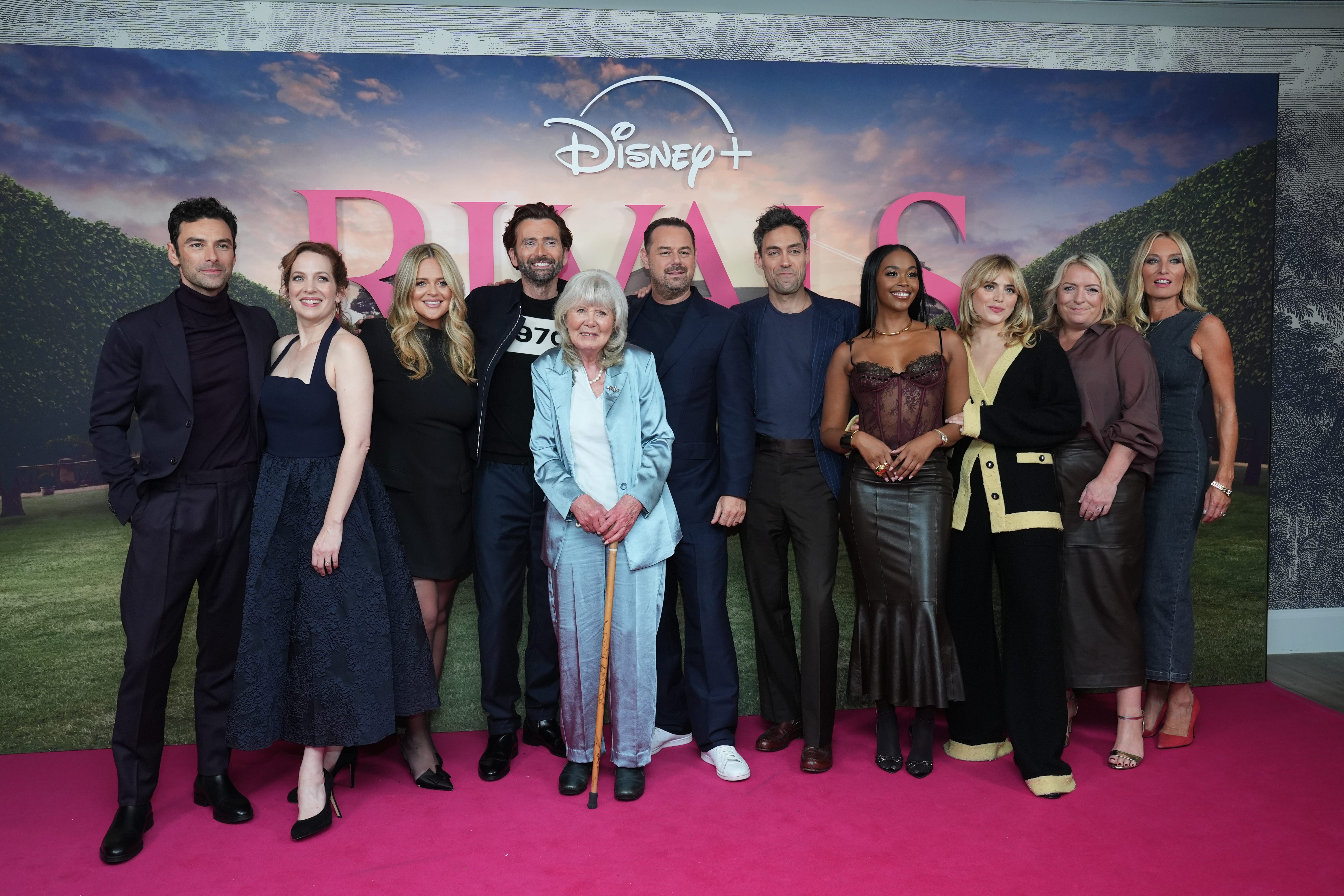
A host of women in their fifties cheered when they heard Rivals was being dramatised, with mum favourites David Tennant and Aidan Turner in the cast. The producers had cleverly recognised that dark times call for immensely cheering television and what can be more pleasurably escapist than Jilly Cooper’s Rutshire? Four decades on from the 1980s, we celebrated the optimism and sexual certainty of a lost age – a time when men and women were busy trying to comprehend one another, rather than 72 gender categories. When smoking, boozing, then nipping off in a sports car weren’t grade-A crimes. Best of all, Queen Jilly had a cameo in the series, trod the red carpet and was discovered by a new generation of devoted fans (go look at the five-star reviews on Amazon). A friend who interviewed her last year said she was frail but “still funny as f***”.
It's almost impossible to imagine that a woman as spirited and naughty can have left the home paddock. Britain’s horse lovers, Rupert fanciers and romp-adoring readers will miss her forever.
Join our commenting forum
Join thought-provoking conversations, follow other Independent readers and see their replies
Comments
Bookmark popover
Removed from bookmarks