David Walliams’s dark side and the warning that allegations were the ‘tip of the iceberg’
After he was dropped as a judge from ‘Britain’s Got talent’ three years ago there were warnings that there was more to come. What is most interesting is that so many have stood by the comedian for so long. Richard Price reports

David Walliams’s biography on the Candy Foundation website has not aged well. Illustrated with a brooding black-and-white photograph, it is unstinting in its praise. “David Walliams is one of Britain’s best-loved comedians,” it begins, before nodding to his OBE (“for services to charity and the arts”) and the 37 million books he has sold. The résumé concludes that Walliams is not only a serial charity fundraiser and three-time Bafta winner, but also “a judge on Britain’s Got Talent for the last nine consecutive years”.
If the suspiciously chiselled-jawed photograph errs on the side of flattery, so does the suggestion that he is still on BGT. He was eased out of the judge’s chair in 2022 after a scandal involving off-camera comments about contestants. As for being “one of Britain’s best-loved comedians”, the latest news that he has been dropped from his publishing contract with HarperCollins, following alleged inappropriate behaviour towards young female staff, appears to have tarnished his reputation.
While Walliams has denied wrongdoing and is taking legal advice, the allegations reported in The Telegraph that former employees were advised to work in pairs when meeting him and not to visit his home have come barely just a few years after Walliams was caught making misogynistic and dismissive comments about contestants, which ended his BGT career. Those comments were actually made off-camera in 2020, when a “hot mic” caught him calling one contestant, a pensioner, a “c***” three times, before he compared a woman who had just left the stage to “a slightly boring girl you meet in the pub who thinks you want to f*** them, but you don’t”.
Many have said the only surprise with the latest allegations is that, with so much scandal building over recent years, Walliams has held up as a “national treasure” for so long. His darker side has always been visible if one looked hard enough.


Indeed, search “David Walliams” on X (Twitter), and the results are anything but flattering. Among them is a video clip of Walliams on the Little Britain live tour, in which he portrayed a washed-up children’s entertainer called Des Kaye. The punchline? Des is a predatory paedophile. The clip shows young men being plucked from the audience, whereupon Walliams kisses them on the lips, then attempts to remove their trousers – sometimes revealing their genitals – and kiss their bare buttocks. The clip is 16 years old and, as the litany of disgusted comments on social media attests, it has not aged well.
It is all so far from the man who seemed to have the world at his feet just a few short years ago. In 2015, he was happily married to supermodel Lara Stone, with a young son, Alfred, and living in a splendid London townhouse – Supernova Heights – that boasted a recording studio built by its former owner, Noel Gallagher.
Today, he is a man out of time. All the outrageousness that made him a star, such as stereotypical characters portraying Black, disabled, working-class, transgender, and gay people, now appears culturally insensitive. In 2020, the BBC removed Little Britain from iPlayer, citing that “times have changed” since it was first broadcast.
Nevertheless, Walliams is hardly a man on his uppers, with an estimated worth of £17-20m. It was therefore unsurprising that he sought legal advice when his private conversations as a BGT judge were leaked. He sued Fremantle, the producer of the show, for misuse of private information and breach of data protection laws. High Court documents revealed that he accused the company of causing him psychiatric harm and financial loss. Fremantle eventually agreed to an amicable resolution, apologising for the leak, settling out of court.
“Like a lot of celebrities and ‘funny men,’ David appears to thrive on adulation but struggles when it is taken away,” a longtime colleague told me. “That BGT gig was absolutely his dream job. He won ‘Judge of the Year’ four times at the National Television Awards and did so well on the show that they shipped him halfway around the world and paid him a big chunk of change to appear on Australia’s Got Talent. He got to dress up, play the clown, and generally ham it up for adoring audiences. It was like oxygen for him. Losing that job was a real kick in the gut.”
The end of his stint as Britain’s favourite TV judge was just the latest in a series of setbacks that have dented the once unshakeable confidence of the 54-year-old comic. How and if he will recover from the latest allegations, which led to his publisher dropping him, remains to be seen.
Raised in Banstead, Surrey, by engineer father Peter and devoted mother Kathleen, a lab technician, Walliams enjoyed a relatively mundane childhood. His older sister, Julie, sometimes dressed him in girls’ clothes, and a love of performing was instilled early. During school holidays, he performed with the National Youth Theatre, where he met future comedy partner Matt Lucas. At 18, he moved to Bristol, studied for a BA in drama, and joined the actors’ union Equity, adopting the stage name Walliams because there was already a member named David Williams.
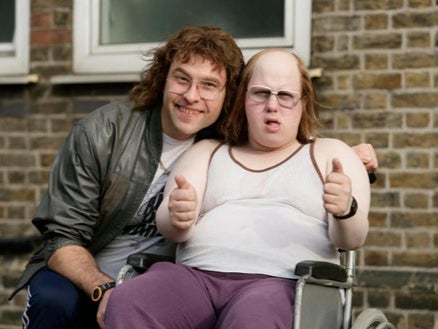
A slow start in his twenties exploded into fame with Little Britain, which made him a household name. He positively revelled in making people uncomfortable by pushing boundaries. In 2011, Ofcom and Channel 4 received complaints about remarks he made on Chris Moyles’ Quiz Night regarding Harry Styles, then 17. A year earlier, Come Fly With Me had been the most-watched comedy of 2010.
During these heady days, he dated significantly younger women, including Lauren Budd, 18 at the time (he was 37). Later, he met Lara Stone, marrying her at Claridge’s Hotel. The money and fame were rolling in, alongside a carefully curated shift into “national treasure” territory through his charitable pursuits. He hosted telethons, swam the English Channel for Sport Relief, and then followed that up by swimming the Straits of Gibraltar. Then, in 2011, he swam the length of the River Thames – all 140 miles of it – which raised more than £2m in donations.
It came at a price, with Walliams suffering giardiasis and ultimately requiring surgery to repair a back injury suffered during the swim. It was at this point that he moved into the armchair role of TV talent show judge. Lara gave birth to a son, Alfred, in 2013, and Walliams settled down to life as a renowned author. His children’s books – illustrated by Roald Dahl’s legendary collaborator Quentin Blake – were a roaring success, routinely adapted for television.
Behind closed doors, however, all was not going quite so swimmingly. Prone to bouts of depression, when interviewed for Desert Island Discs, he admitted to persistent suicidal thoughts. He opened up about surviving a suicide attempt as a teenager in The Times. “It was the first Christmas home from university in Bristol, in 1989, that I tried to kill myself,” he said, explaining that the “weight” of his depression had “become unbearable”.
“I’d known something was wrong from an early age,” he continued. “A feeling of unbearable loneliness I could never escape.”
Of artistic temperament, he developed a reputation for taking criticism badly – from sulks and tantrums on set to a tendency to belittle women who rejected his advances (on one occasion he allegedly told a reluctant target of his affections: “I can’t understand your accent anyway!”). His first marriage collapsed, and he filed for divorce in 2015, citing Lara’s “unreasonable behaviour”. Then his publisher, HarperCollins, permanently deleted one of Walliams’ short stories – Brian Wong Who Was Never, Ever Wrong – from its catalogue following complaints that it was racist and offensive.
Both Williams and Lucas have apologised for the way they used Blackface for laughs – Walliam’s once famously playing Desiree DeVere, a Black health-spa guest in a fat suit. Lucas would go on to tell The Big Issue, “Basically, I wouldn’t make that show now. It would upset people. We made a more cruel kind of comedy than I’d do now.”
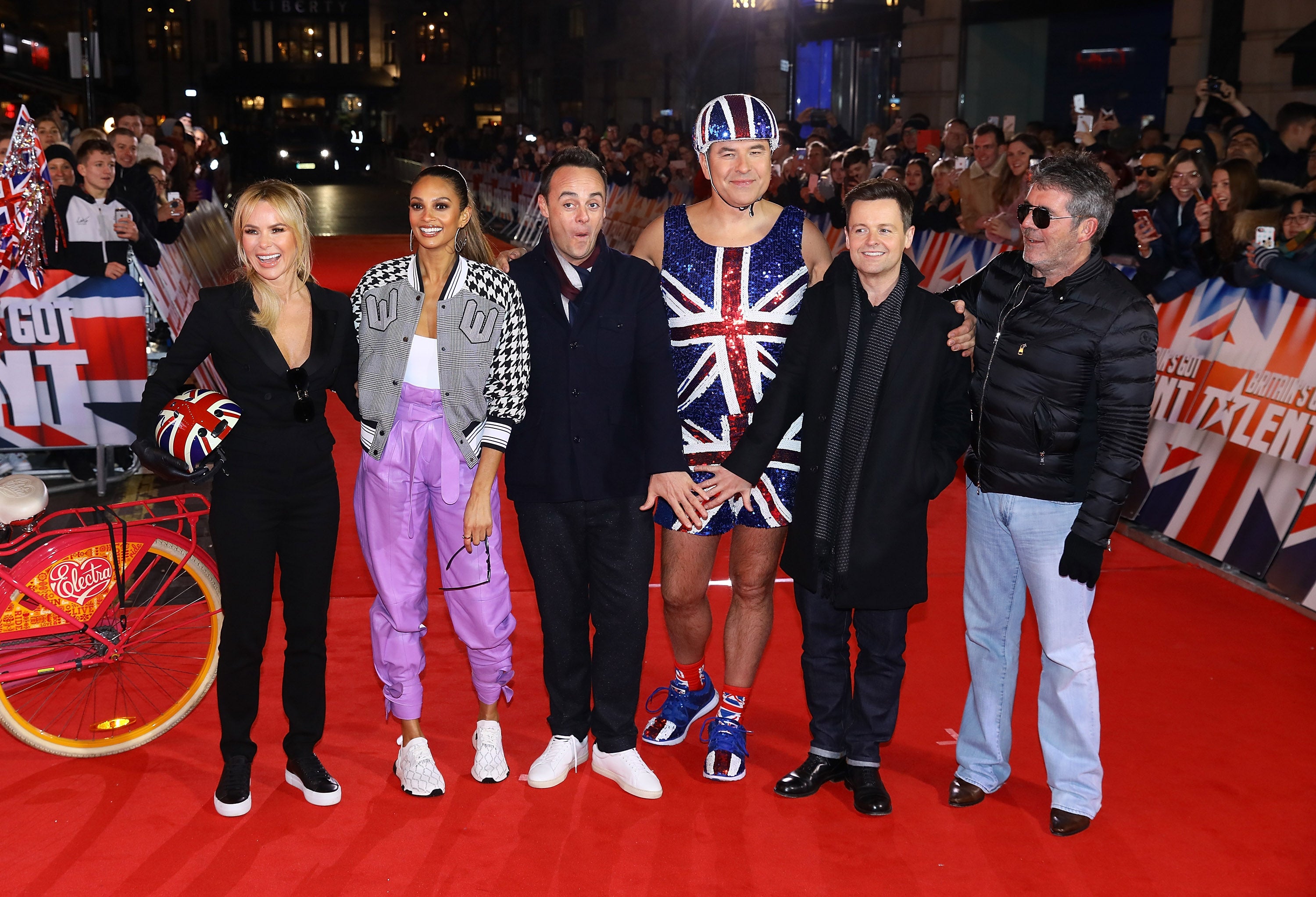
As the tide began to turn, Britain’s Got Talent became Walliams’s salvation, not least because of the seven-figure salary that accompanied the cushy role. But that was always a secondary motivation to his insatiable need to be liked and admired. Walliams threw himself into the job with gusto, declaring his endless adoration for the show’s head judge and overlord, Simon Cowell. Never short of showbiz friendships, Walliams portrayed himself as a close friend of Cowell, though in truth the pair have little in common and rarely socialised away from the set. Theirs was a marriage of convenience – and this one was also to end in tears, when Walliams was caught in his “hot mic” moment.
For those who have worked closely with him down the years, it was an accident waiting to happen, given Walliams’s love of pushing the boundaries of good taste with his “banter”. Not for nothing did Piers Morgan publicly describe him as “one of the nastiest frauds in TV” three years ago.
Walliams’s man-of-the-people mask had finally slipped for all to see. As the storm raged around him, following the revelation of the comments he’d made about contestants, he issued a half-hearted apology, saying: “These were private conversations and – like most conversations with friends – were never intended to be shared. Nevertheless, I am sorry.”
It was to no avail. His lucrative contract was not renewed. Bruno Tonioli replaced him in the judge’s chair, and Walliams returned home to scribble more books in his study with Alfred and beloved border terriers Bert and Ernie for company.
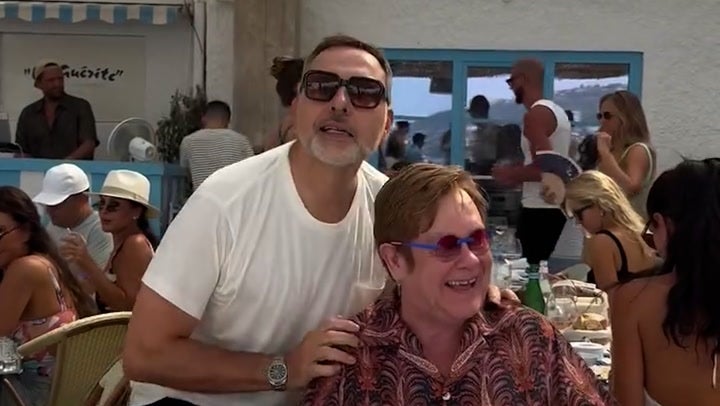
Until recently, it looked like the dust had settled. Indeed, the past few years appear to have been rather enjoyable. A celebrity lunch in Cannes with Elton John, a jaunt to Malta where he appeared on the red carpet alongside Russell Crowe. His beloved mother Kathleen often pops up on his social media, as well as accompanying him to awards ceremonies and showbiz parties.
If it was hard to see his hard to see how there can be a clear way back for Walliams before, today it feels incomprehensible.
But let us be clear: David Walliams is not down to his last bucket of diamonds just yet. He has a beautiful townhouse in London and a seaside retreat in Brighton. Materially, he has the kind of good life that most of us can only imagine, but the idea that will translate into a good Christmas after being dropped by his publisher feels very unlikely indeed.
Join our commenting forum
Join thought-provoking conversations, follow other Independent readers and see their replies
Comments
Bookmark popover
Removed from bookmarks