Cruise ship boss sues P&O for massive £9.7m over claims slip in toilet ended career
Kerry Middleton went on to be diagnosed with functional neurological disorder (FND)
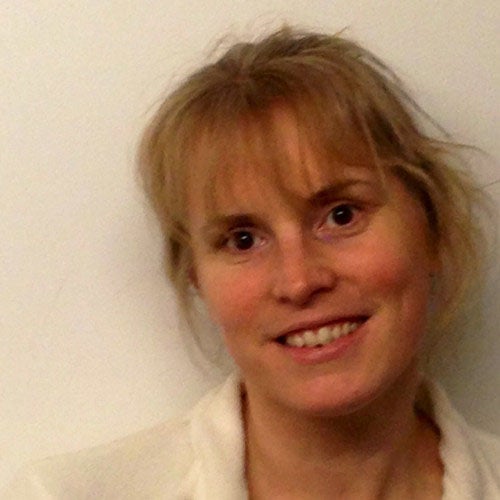
A cruise company boss who says she will never work again after a slip in an onboard toilet is suing holiday giants P&O for £9.7million compensation.
HR chief Kerry Middleton, 52, cracked a bone in her neck when she slipped while on the company's giant liner, the MV Britannia, for a management meeting while in port in Cadiz in 2019.
The mum went on to be diagnosed with a rare neurological disorder, which she says has left her needing a wheelchair and ended her working life and is now suing for £9.7m.
But she faces accusations that she is not as disabled as she has claimed, having been filmed through her kitchen window, walking with "completely normal mobility and looking pretty chirpy on top of it" while preparing a New Year's Eve meal for her family.
Lawyers for P&O's parent company, Carnival Plc, which contests the size of her claim, say the secretly shot surveillance footage undermines Mrs Middleton's credibility in the huge compensation case.
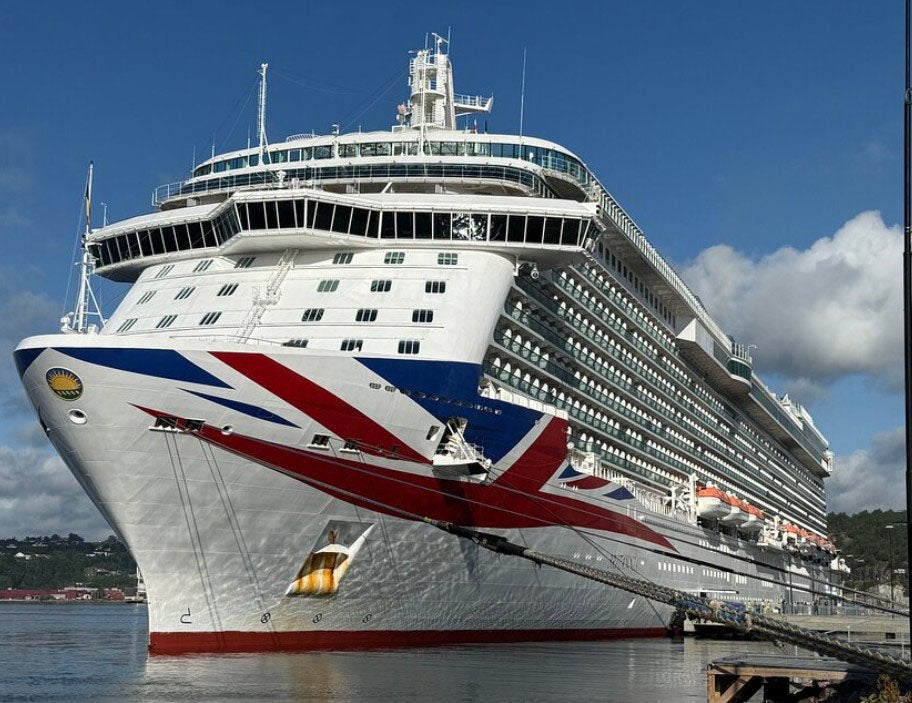
During a hearing at the High Court last week, Judge Tim Moloney heard that Mrs Middleton was an HR boss and on P&O's enormous MV Britannia cruise liner when she was injured in October 2019.
The 330m long Britannia is the flagship of P&O's fleet, featuring almost 2,000 cabins over 15 passenger decks, with multiple, bars, theatres, nightclubs and swimming pools.
She had visited the ship for a management meeting, but suffered a nasty fall when she slipped on a wet floor in one of the liner's toilets.
Mrs Middleton sustained a fracture to the spinous process, part of a bone in her neck, leaving her with acute neck pain, which doctors said should have resolved within six months.
However, she went on to be diagnosed with functional neurological disorder (FND), a condition which causes problems with how the brain receives and sends information to the rest of the body.
Symptoms can include limb weakness and paralysis, tremors, speech problems, seizures, blackouts, fatigue, anxiety and depression, among others.
Little is currently known about the causes of the mysterious condition, although it is thought that it can be brought on by injury, trauma or severe stress.
Mrs Middleton's barrister, Eliot Woolf KC, told the judge that her symptoms included the onset of hemiplegia - paralysis to one side of the body - in December 2019, initially thought to be a stroke, and seizures from December 2024.
"The severity of her FND symptoms have progressed such that she is now primarily a wheelchair user when mobilising," he told the judge.
"The pain experts are agreed that her complaints of pain are subsumed within the diagnoses of FND. The neurologists are pessimistic over long-term prognosis.
"They anticipate some improvement once she has undergone treatment in a multi-disciplinary unit, but not sufficient for her to return to any form of employment."
Judgment has already been entered for Mrs Middleton against the company on liability for the fall, but it is now fighting the amount she is claiming.
For Carnival Plc, barrister James Todd KC said the company's main defence to the £9.7m claim is that, although it is liable for the injury she suffered in the toilet accident, her FND had nothing to do with it.
They say a more probable cause was the stress of her being told that she had received a work performance grading equivalent to "below standard," something they would not be liable to pay damages for, he told the judge.
"We say that the triggering episode for this condition of FND was the claimant learning from her manager that she had received a 2.5 performance grading," he said.
"That provides a causative severance between the accident and the FND."
He also said surveillance footage cast doubt on the severity of Mrs Middleton's ongoing disabilities - and therefore on her credibility as a witness on other matters in the case.
It included footage secretly shot through the window of her home on New Year's Eve 2024 while she prepared food for her family, he told the judge.
"We see her moving freely," he said. "She is cheerful and happy with her family.
"Towards the end of the clip, we see her walking around the kitchen island, doing so freely, without any sign of disability.
"It shows a woman apparently with completely normal mobility and looking pretty chirpy on top of it."
He said the footage contrasted with the report she made to a doctor four months later when she described being able to stand, but not walk.
He claimed the video could cast doubt on her credibility in evidence, adding: "She is making an assertion she is a wheelchair user and she isn't on the film."
The barrister did not accuse Mrs Middleton of fraud, but said one expert had noted a tendency in Mrs Middleton to "catastrophise and to play up her symptoms," although the doctor did not find it dishonest.
"I can't say until the experts have seen it that it's a fraud case," he told the judge.
"It may be she honestly believes as part of her FND condition that she is paraplegic, when at times she plainly isn't."
The case, which was due for trial later this month, reached court last week after Carnival Plc lodged an application for the surveillance footage to be included.
Mr Todd said it was essential to ensure a fair trial, but Mrs Middleton's barrister Mr Woolf accused the company of an "ambush" and said it should be excluded.
Criticising the surveillance operatives' methods, he said there had been unreported surveillance days, missing footage and selective filming.
"Of greatest concern is that the footage on 24 December 2024 and 31 December 2004 involved the use of a zoom lens to film Mrs Middleton through her kitchen window from beyond the boundary of her property, invading her privacy and that of her children who are captured in the footage," he said.
He also said Mrs Middleton would deny at the trial that her performance grading had anything to do with the onset of her condition.
"The claimant contends that she was not told of the performance grading until January 2020," he said.
"In any event, the performance grading did not cause her distress. Her FND symptoms were already manifesting prior to her first hemiplegic episode and before she was told of her grading even on the defendant's case.
"The performance grading was not a trigger for the first hemiplegic episode in any event."
After a day in court, Judge Moloney granted permission for Carnival Plc to include the surveillance footage in the evidence for the trial.
With the new evidence now to be analysed, the trial later this month was cancelled and will now take place at a later date, yet to be confirmed.
Join our commenting forum
Join thought-provoking conversations, follow other Independent readers and see their replies
Comments
Bookmark popover
Removed from bookmarks