Judge rules that baldness is a disability in tax row with wig makers
The groundbreaking judgement found that severe hair loss can ‘adversely affect’ the ability to carry out everyday activities
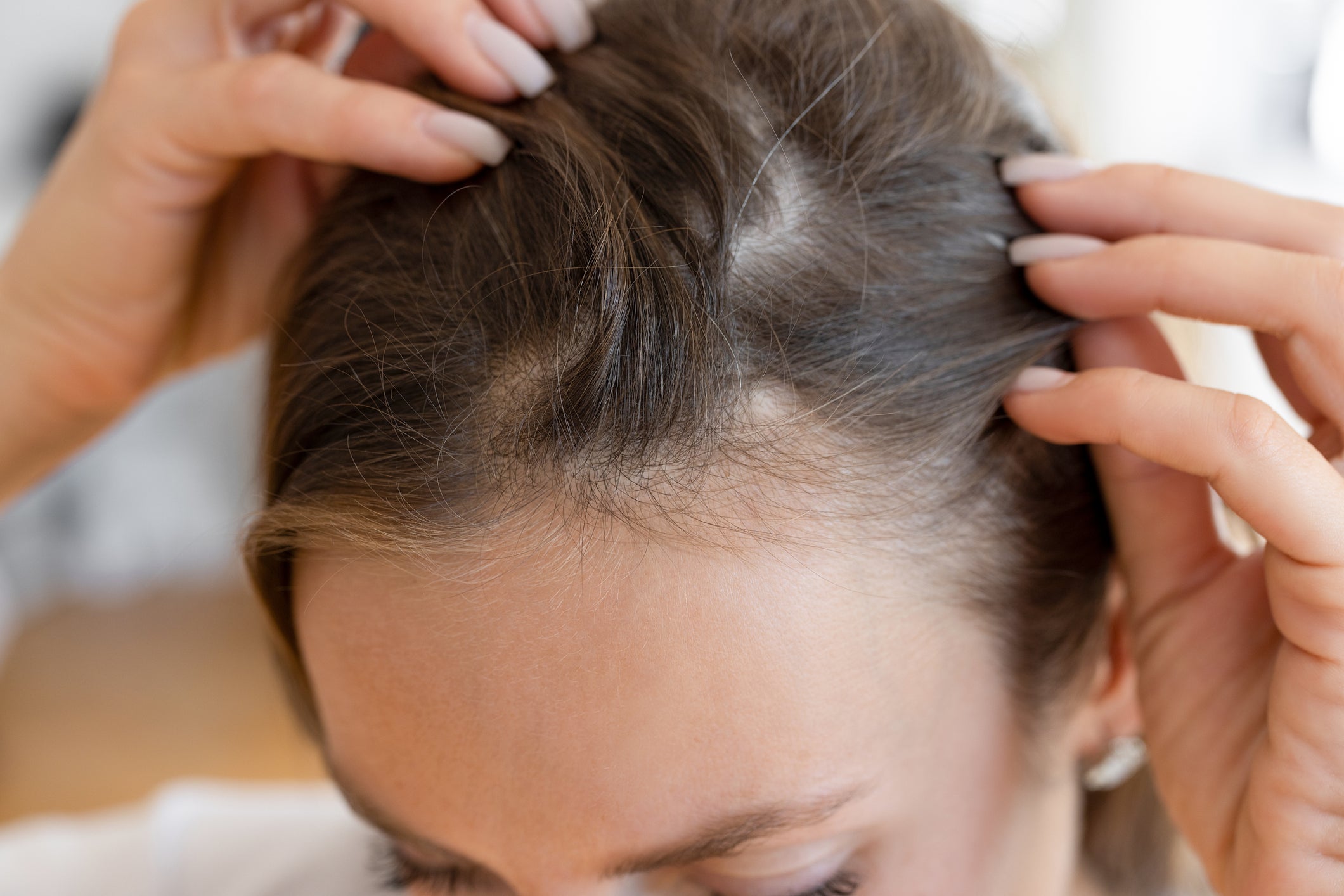
A landmark ruling by judges has officially classified baldness as a "disability" following a significant tax dispute between a specialist wig maker and HMRC.
The decision came during a £277,000 court battle involving Mark Glenn Ltd, a company co-founded by hair extension specialist Mark Sharp and former children's TV presenter Glenn Kinsey in 2001.
The business, which focuses on providing specialist wigs for women struggling with hair loss, challenged a £277,083.10 VAT bill from HMRC for sales of their innovative Kinsey System wigs, covering the tax years 2018 to 2024.
The company argued that their wigs, which cost customers approximately £2,400 annually for fitting and maintenance, should be zero-rated for VAT under an exemption for "drugs, medicines, [and] aids for the disabled."
In a groundbreaking judgment, Judge Swami Raghavan and Judge Kevin Poole of the Tax Chamber of the Upper Tribunal sided with Mark Glenn Ltd. They agreed that for the company's female customers, baldness should indeed be officially recognised as a disability, thereby exempting the wigs from VAT.
Lawyers for HMRC had argued that baldness should not be seen as a disability, saying it is a "cosmetic" problem and that other issues affecting appearance such as freckles could then also be viewed the same way.
But disagreeing, the judges said: "We conclude that severe hair loss in women constitutes an impairment that adversely affects the ability to carry out everyday activities.
"These activities include work, leisure, socialising, self-care and caring for others, activities which, at least to some degree, involve being visible to others in public.
"This is not because hair loss physically prevents participation in such activities, but because of the distress that would ordinarily be experienced by a woman with severe hair loss if no steps were taken to conceal it.

"That distress arises from the cultural significance of hair to female identity, societal expectations regarding appearance and the different standards applied to women.
"The women treated by the appellant, those with baldness or patchy hair loss rather than mere thinning, were, by virtue of that condition, 'disabled'," the judges said in their ruling.
The tribunal heard that Mr Kinsey – a 1990s ITV kids' TV presenter, magician and latterly public speaking coach – teamed up with his friend, hair extensions specialist Mark Sharp, to launch the company in 2001.
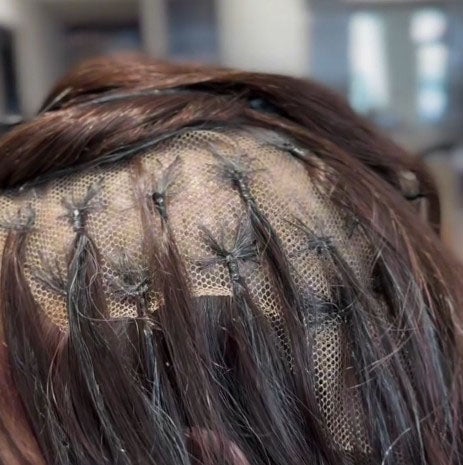
Together they developed and marketed the "Kinsey System", a partially haired wig designed particularly for women with patches of hair loss.
The wig hair is colour-matched and placed to cover bald spots, with any remaining hair "pulled through the mesh with a crochet needle" to lie alongside the wig hair.
"This technique means that healthy hair doesn't need to be shaved or hidden away and is instead integrated into the style," explained the judges in their ruling.
"The Kinsey system was designed for women with severe, patchy or widespread hair loss and that it was only clients with the most serious types of hair loss who were suitable for the system.
"It was not suitable for those with merely thinning hair, as the product worked to bridge patchy areas of loss and could not work over an area of significant hair.
"The wig was placed over the area of hair loss alongside additional wig mesh where necessary...The wig then sits in place like a 'second skin,' with native hair poking through the mesh alongside the wig hair."
The two men had regarded their product as exempt from tax under a rule giving zero VAT rating to services designed to help those with disabilities or long term illnesses.
But in 2024, they were handed a VAT bill of £277,083.10 for the previous six years and told that HMRC disagreed.
They appealed the decision in the First Tier Tribunal, but lost. However Judge Swami Raghavan and Judge Kevin Poole in the Upper Tribunal have now reversed the ruling, making a groundbreaking finding that baldness can be regarded as a disability in some circumstances.
"The FTT decision concerned the issue of whether the hair replacement system which the appellant offered to women suffering from baldness, in the form of severe and patchy hair loss, qualified for zero rating," said the judges.
"The term 'disability' is not statutorily defined. The only additional assistance given in the legislation is that it includes someone who is chronically sick.
"The term is used as an ordinary language term and should, we consider, bear its ordinary meaning. The ultimate question remains whether the condition advanced is a disability in the ordinary sense of that word.
"In respect of the parties' competing views on how to approach the question of whether a disability impacts on the carrying out of everyday activities, as we have noted, HMRC's submission makes the point that hair loss does not prevent a person from carrying out the activity.
"By contrast, the appellant's approach assesses the impact of the condition by reference not only to its physical impact but also the impact when the social context is taken into account.
"The question of whether a condition amounts to a disability should in our view recognise that the impact of the condition may arise from the background social reality of how people with the condition are treated.
"We accordingly consider HMRC's purely physically based approach as too narrow when considering the impact of the condition.
"The assessment of the impact of disability should take full account of any real-world social context. To ignore the very real impacts a disfiguring condition might have on the everyday activity of someone seeking to go about the daily business of life, which will inevitably involve activity where one is visible to and required to interact with others, is to deny social reality.
"HMRC also sought to adopt the kernel of the reasoning...that it did not make sense to view hair loss, a mere matter of physical appearance, as a disability. If it were treated as a disability the question was raised as to why other matters of physical appearance, such as unusual height or freckles, should not also be viewed as a disability. We are not persuaded by this argument.
"We see no principled reason why a condition which affects physical appearance might not through its social impact have a long term and adverse effect on the ability of the person to carry on everyday activities. Whether it does to a sufficient degree to constitute a disability would need to be assessed on the particular facts.
"Taking into account the matters of judicial notice and the evidence before us, we conclude that severe hair loss in women constitutes an impairment that adversely affects the ability to carry out everyday activities. "These activities include work, leisure, socialising, self-care and caring for others, activities which, at least to some degree, involve being visible to others in public.
"This is not because hair loss physically prevents participation in such activities, but because of the distress that would ordinarily be experienced by a woman with severe hair loss if no steps were taken to conceal it. "That distress arises from the cultural significance of hair to female identity, societal expectations regarding appearance and the different standards applied to women.
"The women treated by the appellant, those with baldness or patchy hair loss rather than mere thinning, were, by virtue of that condition, 'disabled' within the meaning of the legislation.
"We recognise that some may dispute whether hair should have the cultural significance to identity we have mentioned or reject the notion that societal perceptions ought to determine whether a condition amounts to a disability.
"The point is that...the general factual reality for women who have baldness in the form of severe and patchy hair loss is that the baldness does have a serious adverse impact on their ability to engage in everyday activities.
"We emphasise that our acceptance of the evidence and judicial notice on these matters does not imply any value judgment that the social reality should remain unchallenged or that it is immutable. It may change over time. For present purposes, however, severe hair loss in women of the type relevant to this case is, in our view, disabling.
"Standing back, and applying the ordinary meaning of 'disability,' we have no difficulty in concluding that the severe hair loss suffered by the service recipients in this case constitutes a disability.
"We stress that our decision is confined to the facts of this case and to women who experienced baldness in the form of severe and patchy hair loss.
"The question that then arises is whether the service the appellant provided can be described as that of adapting goods to suit the condition of the disabled person.
"We see no difficulty in describing the process, whereby the hairpiece and strands of hair are fitted and maintained, as one of adapting those goods so as to suit the condition of the disabled person in circumstances where the condition is the lack of hair.
"The way in which the hairpiece is constructed and it and the artificial hair strands are fixed will vary according to the particular individual pattern of hair loss of the woman. The maintenance process included within the overall supply similarly involves adjusting the anchor points of the goods to make sure they fit with the woman's remaining hair and can similarly be described as adapting the goods.
"Each of the supplies in question...were therefore zero-rated. The appellant's appeal is therefore allowed," the judges concluded.
Join our commenting forum
Join thought-provoking conversations, follow other Independent readers and see their replies
Comments
Bookmark popover
Removed from bookmarks