Daughter left just £250 in dad’s will wins court fight to split his £600k fortune with sister
Laxmikant Patel’s decision to virtually disinherit two of his children was explained by a ‘growing mistrust’
A daughter left just £250 in her dad’s will after accusations she was “bad tempered” has won a court fight to share his £600,000 fortune.
Laxmikant Patel, who died aged 85 in October 2021, handed his £600,000 house to his oldest daughter, Anju Patel, in his last will – while leaving his younger daughter, Bhavenetta Stewart-Brown, 52, and his son, Piyush Patel, 62, only £250 each.
Anju, 58, claimed her dad’s drastic decision to virtually disinherit two of his children could be explained by a growing mistrust he had developed towards them, because “they were only after his property”.
She said Laxmikant complained that Bhavenetta and Piyush had failed to show him “true affection” and, when asked to explain why he had left them anything at all, replied: “They have failed in their sense of duty, but as a father I have not forgotten them.”
He was also said to have labelled his son, Piyush, a “hugely controlling” figure and complained of Bhavenetta’s “bad temper”.
But Laxmikant’s final will of August 2021 ended up under attack in London’s High Court, with Bhavenetta claiming a “cloud of suspicion” hung over the way it was drawn up and executed – having been made just two months before the man’s death when he was terminally ill, frail and in a hospital subject to Covid restrictions.
His previous will, written up in 2019, had left £50,000 to Anju, with the rest of the estate split in shares of 33 per cent to each of the children and 1 per cent to a charitable trust administered by Anju.
After hearing evidence and legal argument on both sides, Deputy Master Jason Raeburn has now ruled in favour of Bhavenetta, upholding the 2019 will, while declaring the circumstances of the 2021 will “highly suspicious”.
He said the hospital bed will was flawed on a number of grounds, including “lack of due execution” based on there being no evidence that those who witnessed the will signed the document at the same time using the same pen.
The court heard Laxmikant was a gentle and hardworking man who had carved out a new life for his family after migrating from Uganda in the early Seventies, working shifts at the Ford motor plant in Dagenham while his wife, Shardaben, ran a newsagent’s.
A devoutly religious man, Laxmikant attended the Swaminarayan temple in Neasden, north London, every day and he and his wife donated around £180,000 to the temple throughout their lives.
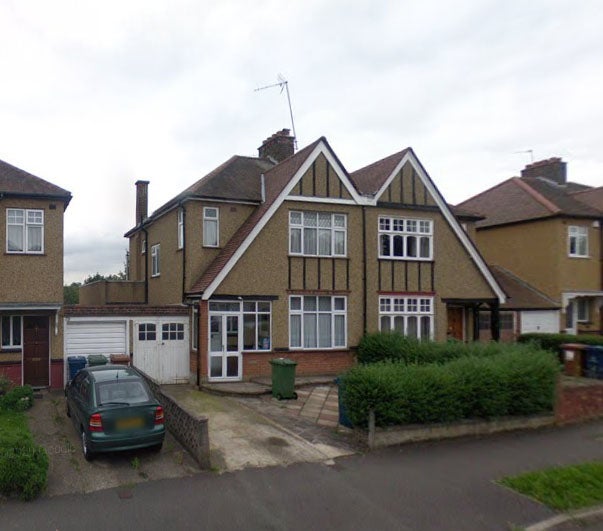
By the time of his death in 2021, his main asset was his £600,000 home in Cambridge Road, Harrow.
That house was left entirely to Anju under his last will, a decision which Bhavenetta’s barrister, Tim Sherwin, described as “most odd”.
He claimed that Anju – a Hare Krishna follower – had done what she could to distance her dad from his accustomed Swaminarayan faith, telling the judge: “The evidence ... shows a clear pattern of isolation and control over the deceased on the part of Anju and [her husband] which became especially stark when he was in the hospital at the end of his life – when, of course, the purported 2021 will was made.”
Bhavenetta’s legal team claimed Laxmikant’s apparent change of heart made no sense in light of his clear wish to split his estate predominantly equally in his previous 2019 and 2018 wills.
And her barrister urged the judge to rule the 2021 will invalid on the basis that it wasn’t properly executed and because Laxmikant, who struggled with the English language, did not “know and approve” the terms of the will.
Bhavenetta had claimed that Anju’s relationship with their dad was largely “fractured” until 2018, but that from 2019 onwards she began taking more interest in his affairs until she began “controlling access to the deceased”.
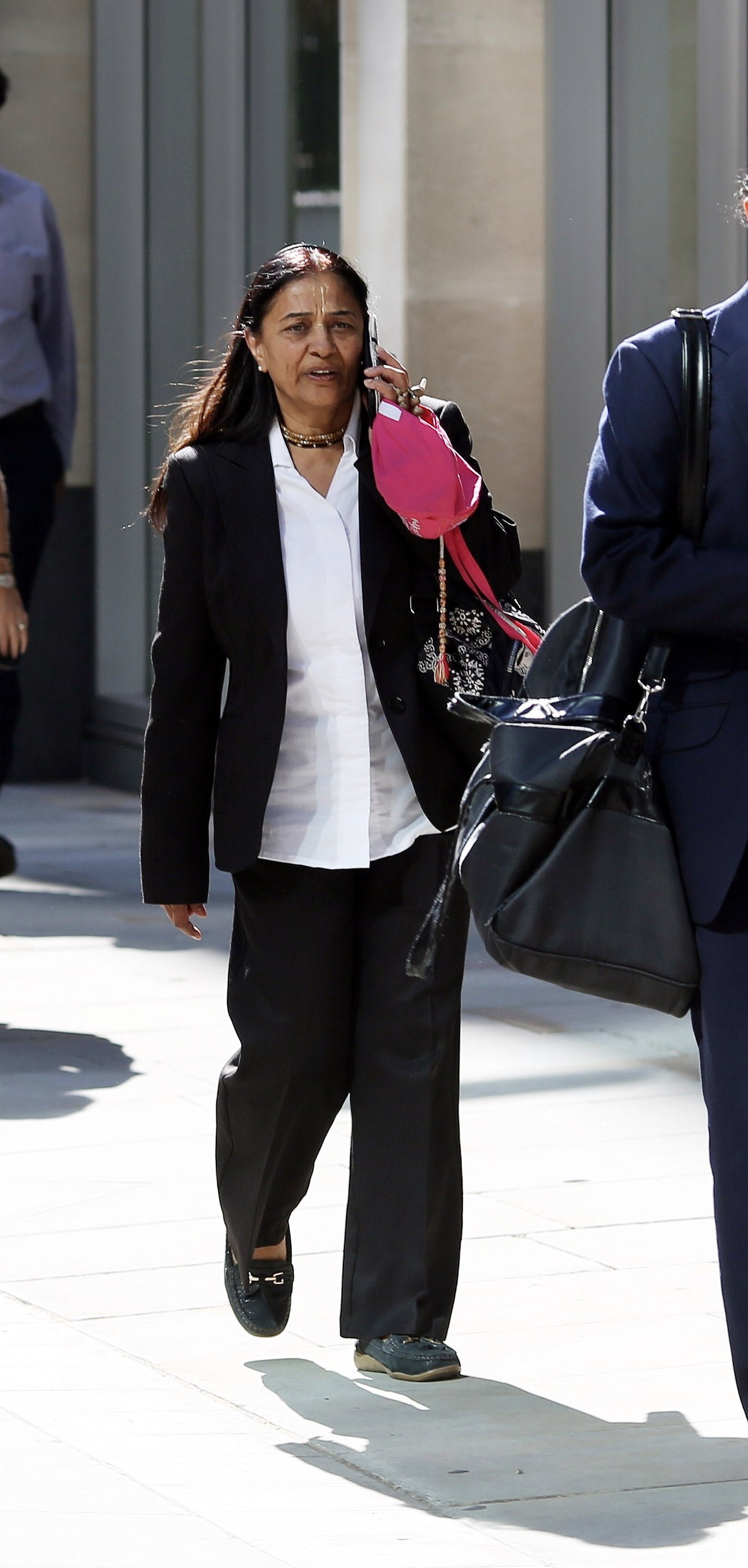
But Anju insisted she always had a “close and loving relationship” with her parents, telling the court: “I wasn't estranged from my family, I was with my sister. She chose to disconnect from me.”
Her barrister, James Kane, argued that by October 2019, Laxmikant had formed a “sharply negative” view of both Piyush and Bhavenetta, citing his alleged comments to the will writer in 2019 that Bhavenetta “has taken massive advantage of her father” – while Anju remained “the only light in his life”.
“Apparently, she has a bad temper,” the will writer said of Bhavenetta.
Anju, defending the 2021 will, had claimed her dad gave instructions for the will to Vijaykant Patel – who she knew from the Hare Krishna temple and who claimed to also be a friend of her dad – and that Vijaykant came to visit his bed at London’s Northwick Hospital where Laxmikant asked him to help prepare the will document.
Vijaykant, the executor of the 2021 will, claimed to have taken notes at the hospital meeting, with Laxmikant expressing “revulsion” towards Bhavenetta and Piyush before stating that the pair were “only after his property” and “everything goes to Anju”.
Challenging the validity of the 2021 will, Bhavenetta’s lawyers said those instructions “were completely contrary to the deceased’s wishes as expressed in the earlier 2018 and 2019 wills”.
Going on to find the 2021 hospital bed will had not been properly witnessed, the judge explained: “Both witnesses said they used the same pen as the deceased, but it’s plain from the face of the will that it wasn’t signed by all the participating parties using the same pen.
“I am not therefore satisfied that a signature was made by [Laxmikant] in the presence of all the witnesses at the same time, so there was no due execution of the will.”
This finding would have been sufficient to knock out Anju’s defence, said Master Raeburn, but on top of that, there was no compelling evidence that Laxmikant “knew and approved” of the 2021 will.

“The particular circumstances of the instructions and execution of the 2021 will are suspicious – highly suspicious,” he commented.
“The deceased was seriously ill, had been in hospital and had been recently diagnosed with terminal cancer. He was shortly to be discharged from hospital but did not wait until he was back home to make the 2021 will.”
Laxmikant’s grasp of written English was also “basic”, which could have hampered his understanding of the document he was signing.
The judge continued: “Instead of relying on the services of the solicitors or professional will writers he had used before, he instead involved the services of Vijaykant, a man whose relationship with the deceased is unclear.
“Vijaykant was, however, known to Anju, who was known to be present at the hospital at the time.”
The 2021 document was a drastic change from previous even-handed wills drawn up by Laxmikant, said the judge, noting “a particular feature was that it effectively disinherited two of his three children”.
“I have arrived at the clear conclusion that those propounding the 2021 will have not discharged the burden of establishing that he knew and approved its contents," he added, before going on to strike out the 2021 will and reinstate Laxmikant’s previous 2019 will, leaving his three children sharing his fortune on roughly equal terms.
Bookmark popover
Removed from bookmarks