Revealed: How stalkers are weaponising Airtags and GPS trackers to harass their victims
Charities say cyber stalking has been on the rise since Covid, but a surge in crimes in the years since shows it’s a problem that’s only getting worse
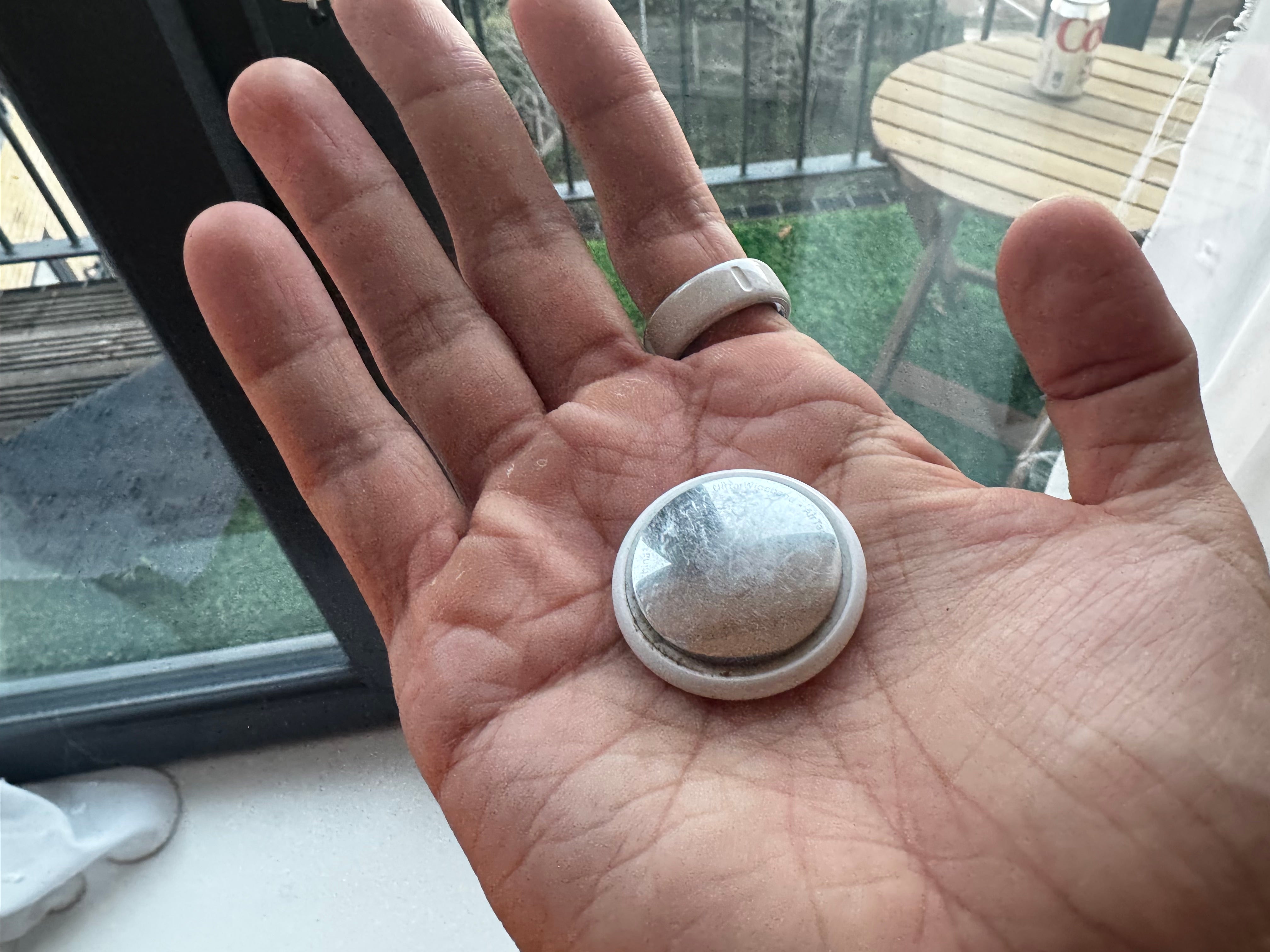
Apple AirTags and GPS tracking devices are being weaponised by stalkers, fuelling a “disturbing” surge in cases and leaving victims in fear for their lives.
Abusers have been using the coin-sized devices, which can be bought for as little as £35, along with apps designed for parental control, to track ex-partners at their workplaces and keep tabs on their location.
Some survivors have been forced to flee their homes and change jobs to avoid detection, while others have been placed in safe houses.
Campaigners warn that the issue has skyrocketed since the Covid pandemic and say some police don’t take victims’ concerns seriously enough. They are also seeing an increasing number of victims sectioned because of a collapse in their mental health.
It comes as freedom of information data from police forces in England and Wales, obtained by The Independent, found there had been a shocking 896 per cent increase in the number of stalking reports involving AirTags and GPS trackers, with the cases rising from 57 in 2018 to 568 by the end of 2024. In coercive control cases, this number had risen from 38 to 431 during the same time period – a 1,034 per cent increase.
But the true figure is likely to be far higher, as only 18 of 44 forces responded to the request for information, with charities warning that survivors face a “postcode lottery” on responses from frontline officers.
Nicola’s torment began 18 months ago after she left an abusive, short-lived relationship. Within weeks, it became apparent that her ex-partner knew her every movement, and began appearing outside her workplace, at gigs, in pubs and parked nearby when Nicola left her home to take exercise.
I’m constantly on alert, I sit with my back to the wall, I’ve changed my routines, and I’m scared of going out
Despite applying for a non-molestation court order to prevent her abuser from contacting her, and making 35 reports to the police, Nicola – whose name has been changed to protect her identity – claims the police have failed to take her concerns seriously. She said this led her to attempt to take her own life three times and self-harm a further three times since the stalking escalated in October 2024.
The offending was only uncovered during a trip to a mobile phone repair shop, when spyware programme, Mspy, which is designed for parental control, was found on her device. That meant her ex-partner had access to all her apps, GPS location and messages.
She said: “It’s absolutely horrendous. I’m constantly on alert, I sit with my back to the wall, I’ve changed my routines, and I’m scared of going out.
“I’ve never been so scared in my life – I’ve changed phones, jobs and I’ll contact venues in advance to let them know I’ve been stalked so that I can sit with a security guard.”
Emma Pickering, head of tech and economic abuse at the domestic abuse charity Refuge, said tracking and hidden surveillance had been on the rise “for a really long time” because there are “more options available” as technology has developed.
She said: “It is disturbing. A lot of new cars have GPS-enabled systems that can be tracked through an app, you can hide Apple AirTags in clothing, Find my iPhone, ring doorbell cameras – one of the biggest challenges is that we don’t know what will develop next.”

The charity first noticed an increase in the number of perpetrators downloading stalkerware to spy on their victims during the Covid lockdown.
“We thought it would peak but it never really went away. We’re busier than ever – there are no cases that we deal with where there isn’t an element of tech-based abuse,” she said.
Apple has implemented safety features such as alerts when an unknown AirTag has been tracking a person. But some victims have found devices hidden in their vehicles, in the pockets of their coats, and in some cases, slipped into their children’s backpacks by ex-partners.
Asked if technology companies were doing enough to ensure their products were not being used for nefarious purposes, Saskia Garner of the stalking charity the Suzy Lamplugh Trust said: “Not really, no. We would always advocate a safety-by-design approach.
“Once complaints were made, they made adjustments, but that’s already too late. We are also aware of other tracking technologies that are marketed directly to people who want to stalk, such as track your ex sites.
“There is a proliferation of places unashamedly advertising that they assist stalking. They are designed not to be found by stalking victims and solely benefit the perpetrators. There needs to be more regulation around this.”
In Sasha’s case, her ex-partner continued to stalk her after their breakup by analysing geolocation data embedded into her photos. He was able to add the pictures to his own camera roll, and use the geolocation to find the street where she was living.
She said: “At that point, a risk assessment was carried out and the situation was escalated. I had panic buttons installed, but eventually the police told me, ‘We can’t keep you safe here.’ Because he had made threats to my life, his own, and others’, I had to be relocated.”
In its 2022 super-complaint to UK police forces, the Suzy Lamplugh Trust raised concerns that police were failing to recognise the impact of cyber stalking on victims, and said evidence was not being sufficiently gathered.
Charlotte Hopper, of The Cyber Helpline, agreed. She said: “There appears to be an apathy towards crime that happens online. There’s also a lack of awareness of the real impact of these trackers and what to do with them – there’s such a feeling in the police that if it happens online, we’re not going to know who it is.”
She described occasions where victims had been told to throw out tracking devices or leave them by the side of the road, with no consideration that this could lead to escalated behaviour. Other times, officers have taken the device without turning it off, leading the perpetrator to realise it is being held in a police station.
“On a number of occasions, we have seen that a person has disabled a GPS tracker or removed access to their online accounts, and we will see things start to become more physical and the person will show up at the house,” she said.
“When stalking is by its nature obsessive and repetitive, you take that control away and we start to see escalations, unfortunately.”
Deputy Chief Constable Sarah Poolman, the national policing lead for stalking and harassment, said officer training has been updated to include cyber stalking and how offenders exploit technology to stalk victims, and guidance has been given on how to retrieve and preserve digital evidence to build a strong case.
But she admitted there was more work to do, adding: “Whilst forces have made progress to broaden understanding of stalking and better assess risk, there is more to do to ensure consistency across the country. Our focus is on making sure forces are using every tool available to them to better protect victims and bring more perpetrators to justice.”
In a previous statement on their website, Apple said: “Apple has been working closely with various safety groups and law enforcement agencies. Through our own evaluations and these discussions, we have identified even more ways we can update AirTag safety warnings and help guard against further unwanted tracking.”
If you are experiencing feelings of distress, or are struggling to cope, you can speak to the Samaritans, in confidence, on 116 123 (UK and ROI), email jo@samaritans.org, or visit the Samaritans website to find details of your nearest branch.
If you are based in the USA, and you or someone you know needs mental health assistance right now, call or text 988, or visit 988lifeline.org to access online chat from the 988 Suicide and Crisis Lifeline. This is a free, confidential crisis hotline that is available to everyone 24 hours a day, seven days a week. If you are in another country, you can go to www.befrienders.org to find a helpline near you
Bookmark popover
Removed from bookmarks