Scientists discover orange toad species so tiny it can fit on pencil tip
Scientists call for immediate conservation efforts to protect endangered species
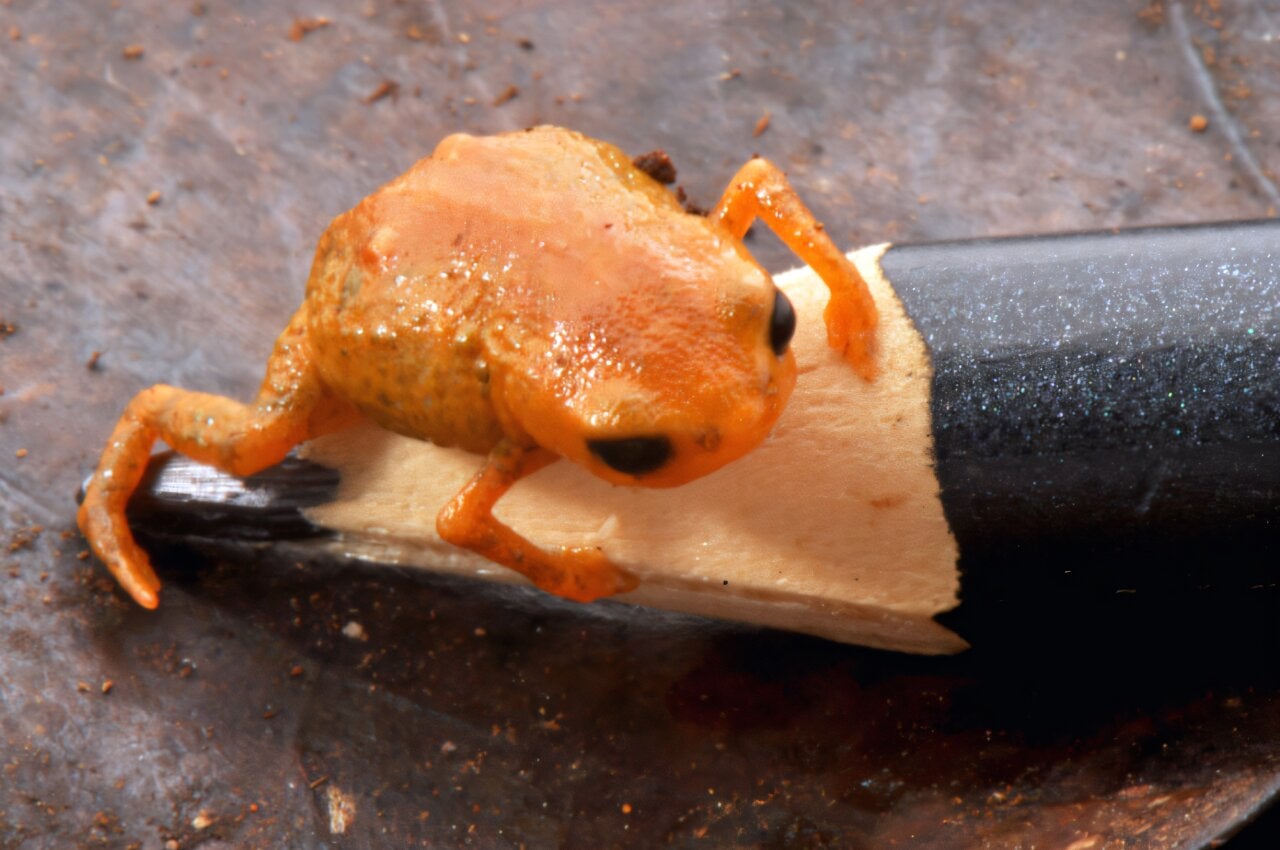
Scientists have found a new orange toad species in Brazil that is so small it fits on the tip of a pencil, highlighting the need for more conservation efforts in the country’s mountainous forest areas.
The toad species, measuring less than 14mm (0.5in), was found deep in the cloud forests of the Serra do Quiriri mountain range in the southern Brazilian Atlantic Forest.
Researchers have named the new species Brachycephalus lulai in honour of Brazil’s president Luiz Inácio Lula da Silva.
Cloud forests typically are found at altitudes between 1,000 and 2,500m and a layer of clouds at the canopy level is common year-round.
Until now, around two million animal species have been discovered in the world, with estimates suggesting that the Earth is home to around eight million of them, meaning at least six million remain yet undiscovered.
For decades, researchers have been combing the southern Brazilian Atlantic Forest to find and catalogue new species.
The region is known to be home to micro-endemic frogs and toads that are only found in small, restricted areas of the forest and are vulnerable to extinction.
In the latest study, researchers document the discovery of tiny frogs with a striking orange body and distinctive green and brown freckles.
The males were found to measure between 9 and 11mm, and females between 11 and 14mm.
They are among the smallest four-legged animals on Earth, capable of fitting fully on the tip of a pencil, researchers say.
Scientists identified the new species by its unique mating call, consisting of two short bursts of sound, unlike those of other known Brachycephalus in the area.
Researchers also conducted CT X-ray scans to look at the skeletal structure and DNA analysis to confirm what they had was indeed a new species.
Comparing DNA samples of the toad with those of other species, they found that it is most closely related to two species that live in the Serra do Quiriri.
Following the discovery, scientists immediately called for conservation efforts to protect the toad species and its relatives.
"Through this tribute (the act of naming a new species), we seek to encourage the expansion of conservation initiatives focused on the Atlantic Forest as a whole, and on Brazil's highly endemic miniaturised frogs in particular,” researchers wrote in the study published in the journal PLOS One.
"We propose the creation of the Refúgio de Vida Silvestre (RVS) Serra do Quiriri to protect this and other endemic species, without requiring government acquisition of private land,” they wrote.
Scientists call for continued monitoring of the frogs to detect any new or emerging threats to their habitat.
Join our commenting forum
Join thought-provoking conversations, follow other Independent readers and see their replies
Comments
Bookmark popover
Removed from bookmarks