World’s earliest known mosquito larva found trapped in 99-million-year-old amber
Finding indicates extinct forms of mosquitoes coexisted with modern ones during the dinosaur era
The world’s oldest known mosquito larva from when the mighty Tyrannosaurus rex roamed the earth has been discovered trapped in a piece of amber in what scientists described as a “rare stroke of luck”.
The “excellently preserved” fossil from the Cretaceous era, dating back 99 million years, comes from the Kachin region in Myanmar and can shed more light on the evolution of the insect. It represents the first mosquito larva preserved in amber from this time, as only fossils of adult mosquitoes had previously been found, according to a new study.
The fossil larva has been described as a new species of a new genus and given the name Cretosabethes primaevus.
Until now, mosquitoes from this time period have been interpreted as belonging to a distinct group, Burmaculicinae, an extinct lineage within the mosquito group Culicidae.
Scientists describe the fossil as “a rare stroke of luck” as its formation would have taken a drop of tree resin to fall into a tiny pool of water to preserve the aquatic larva in amber.
"This fossil is unique, because the larva is very similar to modern species,” says zoologist André Amaral from the Ludwig Maximilian University of Munich.
“In contrast to all other fossil discoveries of mosquitoes from this period, which exhibit highly unusual morphological traits that are no longer present in today's species," explained Dr Amaral, who is also the lead author of the study published in the journal Gondwana Research.
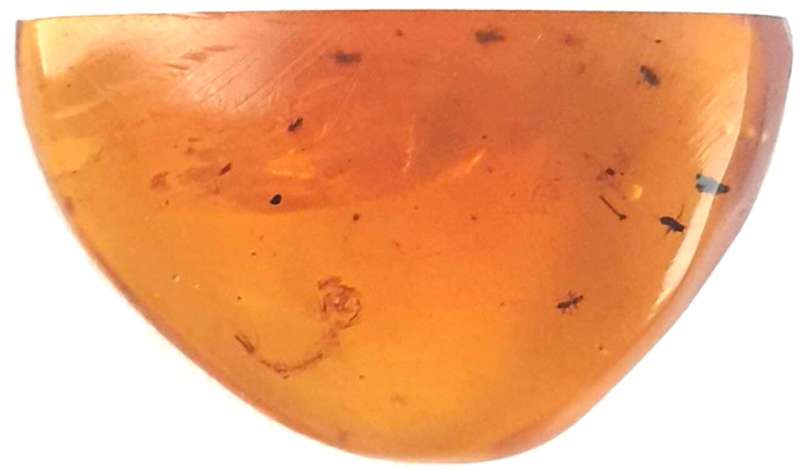
The newly discovered Cretosabethes primaevus belongs to the Sabethini group, which includes some modern species as well, researchers say.
The Cretosabethes primaevus larva, much like modern mosquitoes, is thought to have lived in small accumulations of water, such as in the hollows of tree branches or between the leaves of plants.
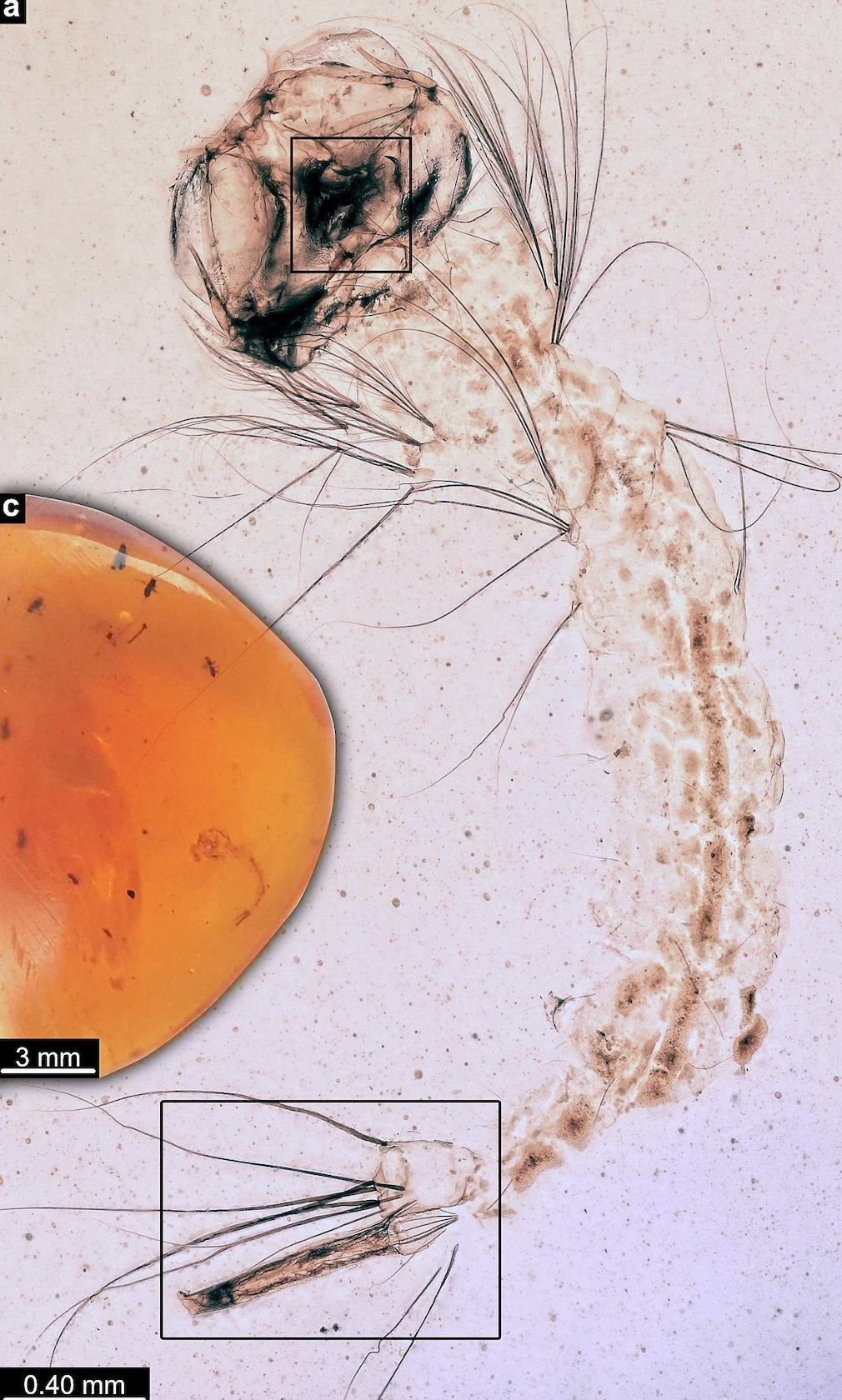
Previous fossil research has helped pin the evolutionary origins of mosquitoes to the Jurassic period of about 201 million years ago to 145 million years ago.
However, estimates based on DNA analysis suggest mosquitoes likely emerged even earlier between the Triassic and the Jurassic eras more than 200 million years ago.
The latest findings offer new clues to narrow down the exact time period when the insect first emerged.
“This new fossil indicates that extinct forms of mosquitoes coexisted with modern ones during the Cretaceous,” researchers wrote.
“Our results provide strong indications that mosquitoes had already diversified in the Jurassic period and that the morphology of their larvae has remained remarkably similar for almost 100 million years," Dr Amaral says.
Join our commenting forum
Join thought-provoking conversations, follow other Independent readers and see their replies
Comments
Bookmark popover
Removed from bookmarks