Fossil tooth lodged in skull helps reconstruct final moments of giant dinosaur that became prey
Researchers say finding indicates duckbilled plant-eating dinosaur was killed by a T rex
A dinosaur’s tooth found embedded in the skull remains of another has revealed insights into the final moments of a fight between two giant beasts over 66 million years ago.
The skull of the duckbilled plant-eating dinosaur Edmontosaurus was unearthed at the Hell Creek Formation of eastern Montana, US, in 2005.
Analysis of the specimen revealed a telling detail: there was a different dinosaur’s tooth lodged inside it.
The tooth fossil has now been used in a new study to reconstruct what exactly happened to this Edmontosaurus.
“Although bite marks on bones are relatively common, finding an embedded tooth is extremely rare,” Taia Wyenberg-Henzler, an author of the study published in the journal PeerJ, said.
“The great thing about an embedded tooth, particularly in a skull, is it gives you the identity of not only who was bitten but also who did the biting,” said Dr Wyenberg-Henzler from the University of Alberta.
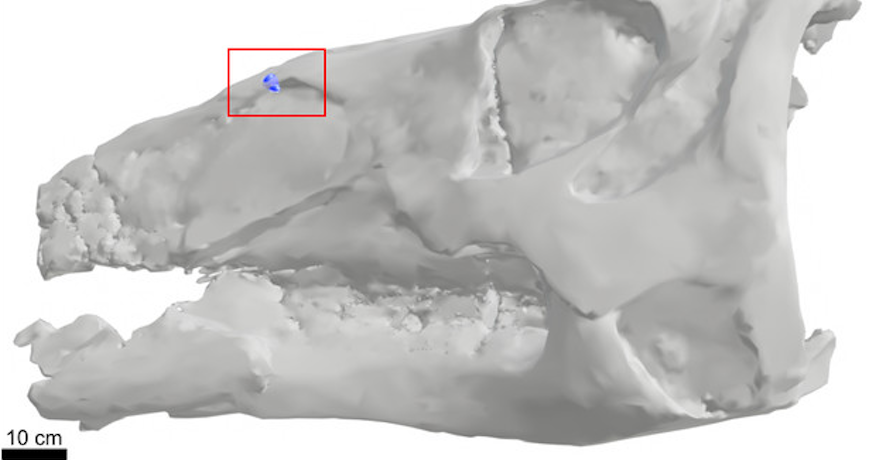
In the study, scientists compared the structure of the fossil tooth with that of other carnivorous dinosaurs known to have inhabited the Hell Creek Formation.
They found that it most closely matched the teeth of a T rex.
Researchers then conducted x-ray scans of the skull, providing greater detail.
From the way the T rex tooth was embedded in the nose of the Edmontosaurus, it was likely the duckbilled dinosaur met its attacker “face-to-face”.
“This paints a terrifying picture of the last moments of this Edmontosaurus,” Dr Wyenberg-Henzler said.
The finding provides a further glimpse into the feeding behaviour of the T rex, researchers said.
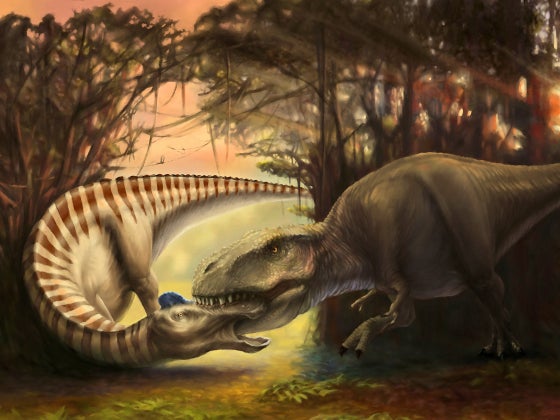
The tooth lodged in the snout indicates the T rex bite was delivered during combat to maintain control of a struggling animal.
“The amount of force necessary for a tooth to have become broken off in bone also points to the use of deadly force,” Dr Wyenberg-Henzler said.
John Scannella, another author of the study, said a fossil like this was “extra exciting because it captures a behaviour: a tyrannosaur biting into this duckbill’s face”.
“The skull shows no signs of healing around the tyrannosaur tooth, so it may have already been dead when it was bitten, or it may be dead because it was bitten,” Dr Scannella said.
Join our commenting forum
Join thought-provoking conversations, follow other Independent readers and see their replies
Comments
Bookmark popover
Removed from bookmarks