Record-breaking deep-sea snail species discovered 6km underwater
Species named after character from hit manga series
Scientists have discovered a giant snail species living at a depth of around 6km in the northwestern Pacific Ocean, marking the deepest-known habitat for any limpet.
The species, found on hard volcanic rock some 500km southeast of Tokyo, grows to about 4cm long, remarkably large for a snail at such a depth. It has about 80 clearly defined white radial streaks on the shell.
Researchers have named the species Bathylepeta wadatsumi after the god of sea in Japanese mythology and the One Piece manga series character “Large Monk” Wadatsumi.
“Here, we report a giant Bathylepeta up to a shell length of 40.5mm from 5,922m deep in the northwestern Pacific and name it Bathylepeta wadatsumi,” they wrote in a study detailing the discovery published in Zoosystematics and Evolution.
“We also take this opportunity to salute Eiichiro Oda for continuing to chart the epic voyage of One Piece, which reminds us that the greatest voyages are driven by freedom, camaraderie and an insatiable thirst for discovery.”
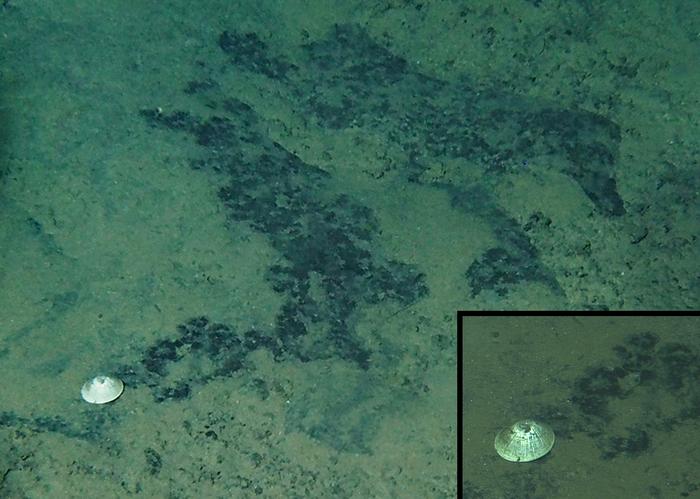
The snail grazes on sediment layers over rock, indicating it may be playing a specialised role in processing organic matter in deep-sea ecosystems.
“Members of this genus are notable not only for their very deep habitats but also for their large size considering the depth, with B laevis reaching 30 mm in shell length,” the study said. “The body size of Bathylepeta is remarkable for the depth and this genus could play an important role in utilising sedimentary carbon deposited on abyssal hard substrata.”
The discovery underlines the usefulness of submersible vehicles in accessing deep habitats, allowing for direct observation and collection of previously overlooked organisms.

Researchers used crewed submersible DSV Shinkai 6500 to make the discovery, marking the first time a member of this genus had been observed and photographed live in its natural habitat rather than after being dredged up using a net.
“Even in an age of sophisticated remotely operated vehicles, there’s often an edge to the human eye on the seafloor,” said Chong Chen, lead author of the study.
“Crewed submersibles like Shinkai 6500 let us explore with intention and nuance – spotting lifeforms like Bathylepeta wadatsumi that might otherwise be missed entirely.”
Scientists hope future studies using submersibles will reveal the true diversity and distribution of such snails and other animals living in deep-sea ecosystems.
“Our finding underscores the need for more comprehensive explorations of rocky abyssal habitats using submersibles to reveal the true diversity and distribution of Bathylepeta and other animals relying on such habitats,” they wrote.
Join our commenting forum
Join thought-provoking conversations, follow other Independent readers and see their replies
Comments
Bookmark popover
Removed from bookmarks