The people’s mollusc: Scientists name strange deep-sea creature after thousands offer suggestions online
Eleven different online participants independently suggested the same successful name
The discovery of a strange deep-sea mollusc sparked a global naming effort online, with researchers finally choosing a species name meaning "of the people”.
Scientists first discovered the deep-sea chiton – a type of marine mollusc – in 2024 in the Izu-Ogasawara Trench of the coast of Japan at a depth of over 5,500 metres (3.4 miles).
Following its discovery, a public naming campaign began after YouTuber Ze Frank featured the rare chiton from the genus Ferreiraella in an episode of his "True Facts" series.
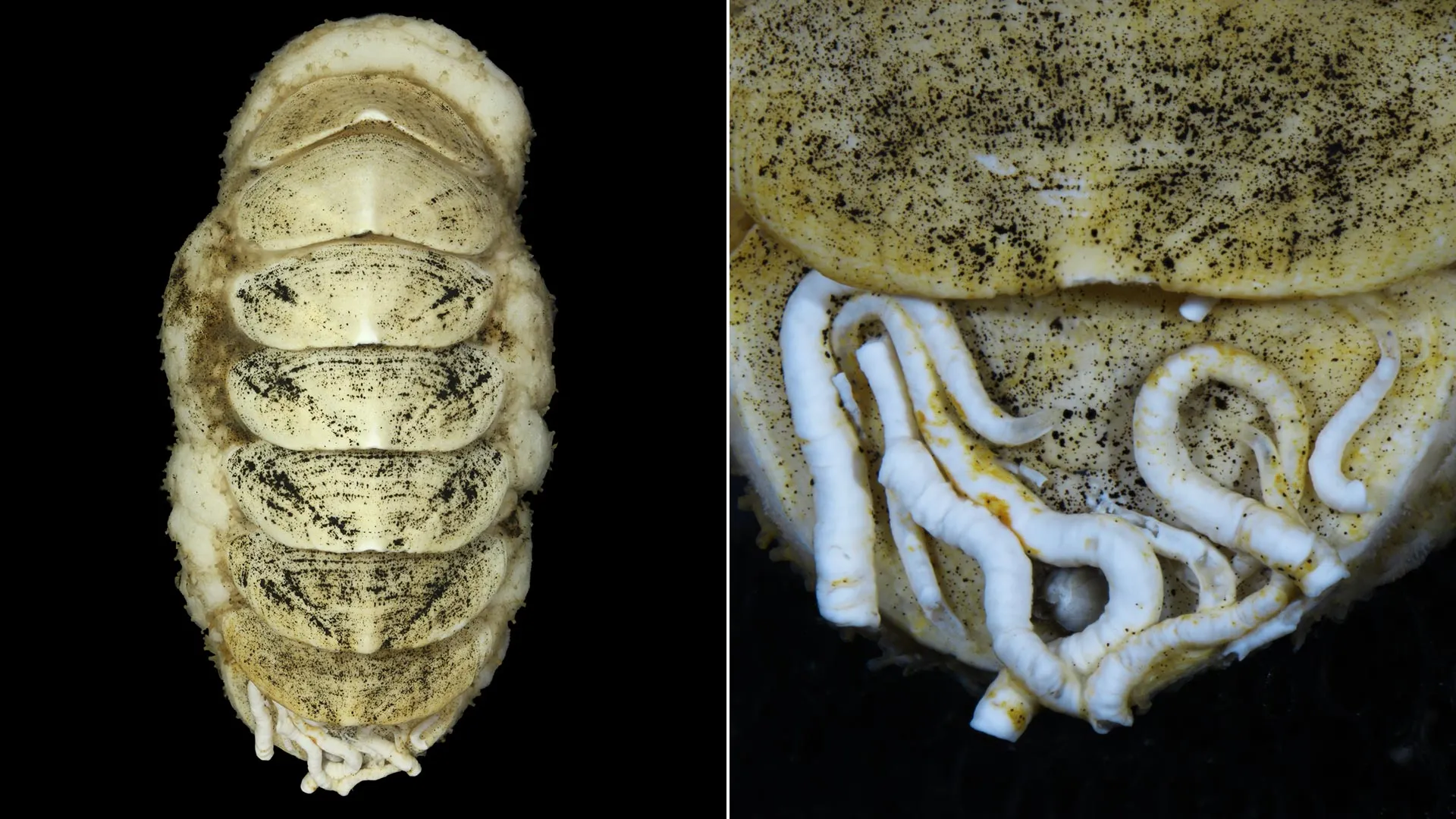
Over 8,000 name ideas were submitted through social media, and after reviewing the entries, scientists selected the name Ferreiraella populi, where the species name in Latin means "of the people”.
Eleven different participants independently suggested the same name during the online process, researchers say.
The mollusc has eight armoured shell plates and an iron-clad radula, or tongue, and belongs to a rare group known for living only on sunken wood in the deep sea.
It also hosts a small group of worms that feed on its excrement near its tail, according to details of the species revealed in the Biodiversity Data Journal.
"We were overwhelmed by the response and the massive number of creative name suggestions!" said study author Julia Sigwar from the Natural History Museum Frankfurt.
Other suggestions were also made in the online poll, including the name Fereiraella ohmu, referencing a chiton-like creature from a Studio Ghibli film and offering a nod to Japan, where the species was discovered.
Chitons, especially deep-sea ones, are rarely studied despite their key role in nutrient circulation within seafloor wood-fall ecosystems.
They resemble a mix between a snail and a beetle and have eight separate shell plates, unlike most molluscs that have only one.
This structure enables them to curl into a protective ball or cling tightly to uneven surfaces such as deep-sea wood-falls.
Some species can survive at depths of up to 7,000 metres in complete darkness, researchers say.
Scientific names are usually assigned by the authors who publish the first scientific description and must follow international rules such as the ICZN (zoology) or the ICN (botany).
Epithets are often based on physical traits, locations, mythology, or people honoured for their contributions.
"It can often take ten, if not twenty years, for a new species to be studied, scientifically described, named, and published,” Dr Sigwart said.
“Finding a name for the chiton together on social media is a wonderful opportunity to do just that! Ferreiraella populi has now been described and given a scientific name only two years after its discovery,” she added.
Discovery of the new species is crucial for the conservation of marine diversity, “especially in light of the threats it faces, such as deep-sea mining,” the marine biologist added.
Join our commenting forum
Join thought-provoking conversations, follow other Independent readers and see their replies
Comments
Bookmark popover
Removed from bookmarks