Ancient humans arrived in East Asia hundreds of thousands of years earlier than thought
Findings suggest human ancestors spread across Asia earlier, faster and possibly more successfully than commonly believed
Human ancestor species Homo erectus arrived in East Asia hundreds of thousands of years earlier than previously thought, a new fossil discovery in China shows.
Homo erectus, a distant ancestor of modern humans, originated in Africa and dispersed into Eurasia. The precise time of their arrival in eastern Asia has long been a matter of debate.
The oldest H erectus fossil found in this part of the world came from Yunxian, China, dated to nearly 1.1 million years ago.
However, a new fossil study confirms the species appeared in Yunxian 1.7 million years ago, about 600,000 years earlier than previous research indicated.
The finding rewrites our understanding of early human dispersal in the region.
It indicates our prehistoric hominin ancestors spread across Asia earlier, faster, and possibly more successfully than once thought.
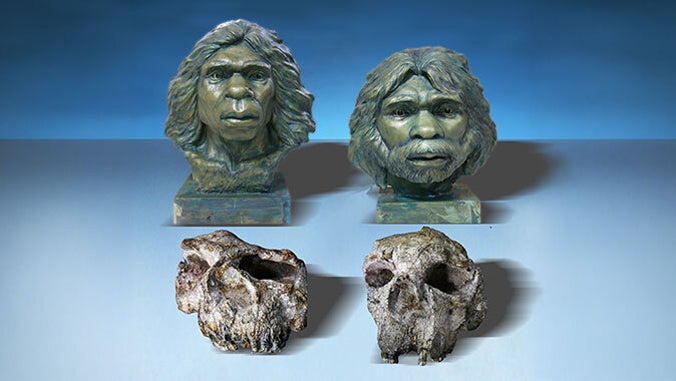
“Using the combination of the Yunxian H erectus fossils and burial dating data, we have now been able to recreate a fairly robust dating reconstruction of when these hominins appeared in eastern Asia,” said Christopher Bae, an author of the new study published in the journal Science Advances.
“A much older age assignment to Yunxian supports the model of rapid dispersal and widespread distribution of early H erectus.”
The study assessed radioactive forms of the elements aluminium and beryllium in soil sediments at the level where the fossils were found to determine when they were first buried.
These radioactive forms are produced when cosmic rays hit quartz minerals and, once buried deep underground, they begin emitting radiation and decaying to their normal forms.
“By using aluminium's and beryllium's known decay rates, and comparing the ratio of the two types of atoms left in sediment samples surrounding a fossil, researchers can calculate how long a fossil has been buried,” Hua Tu, another author of the study, said.
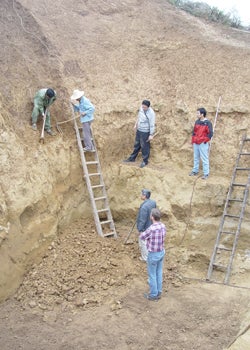
While carbon dating can be used to trace samples back 50,000 years, the radioactive method allows researchers to accurately date materials as far back as five million years ago, researchers said.
“These findings challenge long-held assumptions regarding when the earliest hominins are thought to have moved out of Africa and into Asia,” Dr Bae said.
They also raised the question of exactly when H erectus appeared first and last in the region.
“Questions remain as to when and where H. erectus initially appeared and could they have been among the earliest occupants at some of these sites in China and elsewhere,” the study noted.
Join our commenting forum
Join thought-provoking conversations, follow other Independent readers and see their replies
Comments
Bookmark popover
Removed from bookmarks