The cone-shaped vessels that have puzzled archaeologists for decades – until now
Ancient vessels found to have soot deposits in their surprisingly unfinished interiors, providing vital clues for scientists
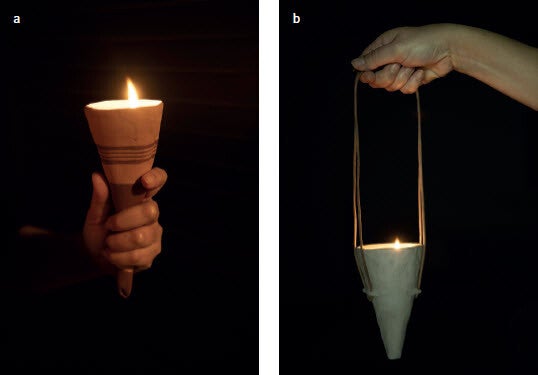
Enigmatic cone-shaped vessels recovered at several Copper Age archaeological sites in the Middle East region were actually beeswax lamps used during ancient community vigils, a new study finds.
These conical ceramic vessels were common during the Chalcolithic period between 5000 BC and 3300 BC but no evidence exists of their use at other times, perplexing archaeologists for decades.
They have been recovered in abundance from archaeological sites in Israel such as Ashkelon, 'En Gedi, Abu Hof and Grar, often coated in light or red ceramic slip.
Previous archaeological studies have suggested these were made locally, likely by local residents, although some examples also exist of cornets produced farther away by specialised potters.
Researchers have long debated their function, with theories on their use ranging from dairy farming to copper-smelting, or as lamps in a more straightforward manner.
But the latter had been disputed due to the absence of soot marks within the vessels.
Now, archaeologists have conducted the first systematic study of one of the most extensive collections of these objects discovered at the Copper Age site of Teleilat Ghassul between 1929 and 1999.
These conical vessels “have never been systematically studied to date” – until now, say researchers from Tel Aviv University.
Scientists assessed 35 complete and 550 cornet shards to test whether these cone-shaped objects were used as beeswax lamps.
The findings, researchers say, are “perplexing”.
One the one hand, scientists found that there is wide variety of clay used in these conical objects.
“Cornets are made from very coarse clay as well as from fine clay; some are heavy and compact, while others are lightweight and porous; some are made from a uniform and smooth material, while others contain large and varied non-plastic particles,” they explained in the study published in the journal Tel Aviv.
However, this same group of components has been used in varying combinations to produce the different cones, they say.
Most of the vessels were created from a single lump of clay, shaped using a round-cut stick inserted lengthwise.
The base of the vessel was then hand-pulled to create the characteristic cone shape, researchers say.
Artisans likely would have taken about 10 minutes to make each of these vessels, they say.
Despite the intricate process by which these objects were made, they all seemed to have unfinished interiors.
“Smoothing the inner surface of the cornet is simple and quick, yet it seems that the maker chose not to invest any effort in this. One possible explanation is that the cornet’s contents consistently covered its inner surface,” researchers wrote.
Scientists also found that some of these ancient vessels actually have soot deposits in their interiors, confirming they indeed functioned as beeswax lamps.
After following the entire life cycle of these cones, researchers speculate they were produced specifically for a ceremony by the participants themselves.
The cornets, they say, “were used for lighting in vigil events at Teleilat Ghassul, events depicted in wall paintings at the site”.
Join our commenting forum
Join thought-provoking conversations, follow other Independent readers and see their replies
Comments
Bookmark popover
Removed from bookmarks