Stay up to date with notifications from The Independent

Notifications can be managed in browser preferences.

Divers recover secrets of Titanic’s sister ship for the first time

The Britannic was originally conceived as a luxury cruise liner
Ap Correspondent
Wednesday 17 September 2025 06:03 EDT
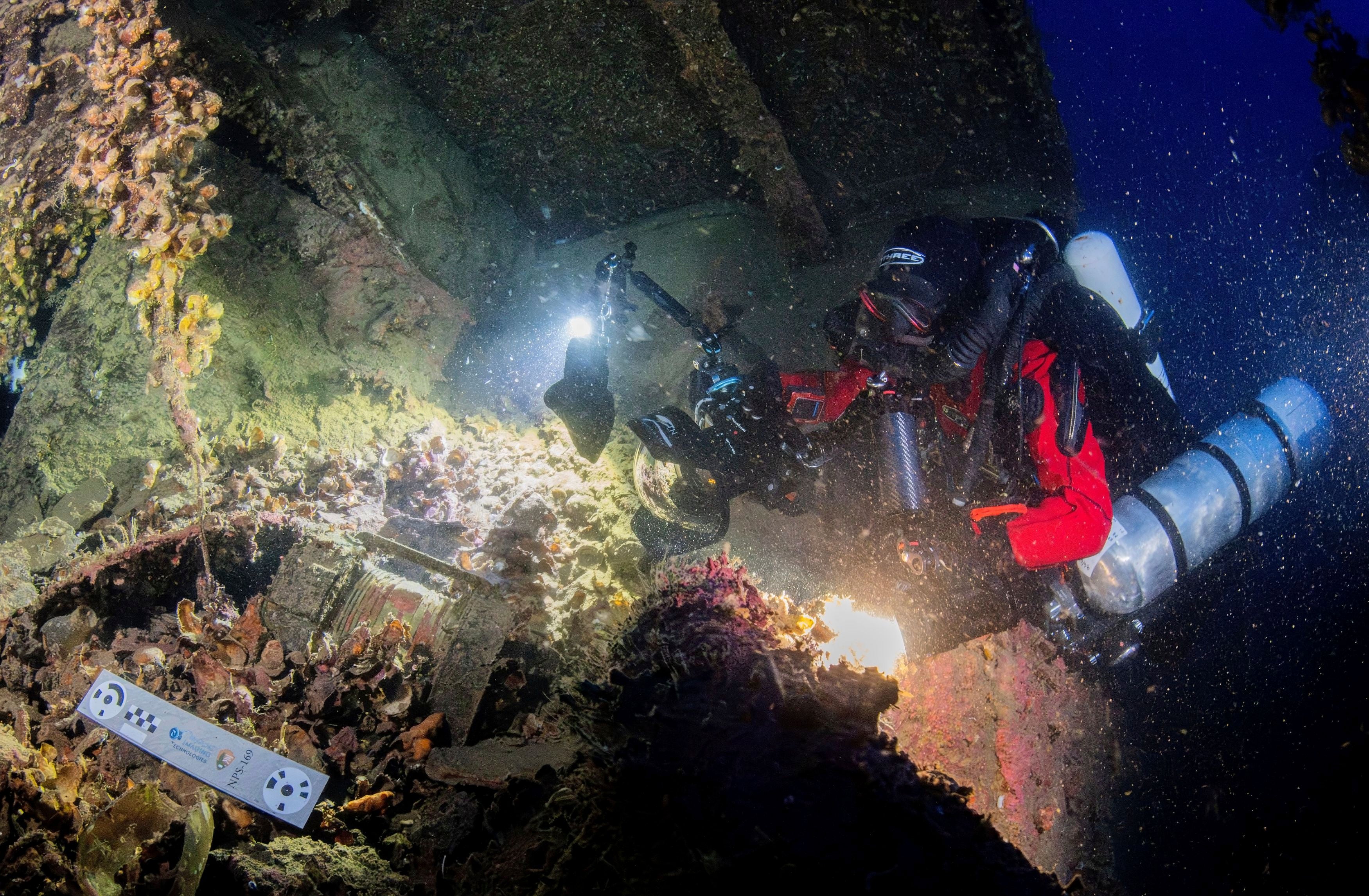
In this undated photo provided by the Greek Culture Ministry on Monday, Sept. 15, 2025, divers illuminate the wreck's interior of the Britannic, sister ship to the Titanic, for the first time since the ocean liner sank in the Aegean Sea more than a century ago after striking a mine during World War I. (Greek Culture Ministry via AP)
In this undated photo provided by the Greek Culture Ministry on Monday, Sept. 15, 2025, divers illuminate the wreck's interior of the Britannic, sister ship to the Titanic, for the first time since the ocean liner sank in the Aegean Sea more than a century ago after striking a mine during World War I. (Greek Culture Ministry via AP) (Greece's Culture Ministry)

Artifacts from the Britannic, sister ship to the ill-fated Titanic, have been recovered for the first time in over a century since the vessel sank in the Aegean Sea during the First World War.

The Greek Culture Ministry confirmed on Monday that an 11-member deep-sea diving team successfully retrieved items, including the ship’s bell and its port-side navigation light, during a week-long operation conducted in May.

Launched in 1914 by the White Star Line, the Britannic was originally conceived as a luxury cruise liner. However, its destiny shifted with the outbreak of World War I, when it was repurposed as a hospital ship.

The vessel met its end on 21 November 1916, while en route to the island of Lemnos. It struck a mine off the island of Kea, approximately 75 kilometres (45 miles) southeast of Athens, leading to its sinking.

The island of Kea:

The vessel, the largest hospital ship at the time, sank in less than an hour. Thirty of the more than 1,060 people on board died when the lifeboats they were in were struck by the ship’s still turning propellers.
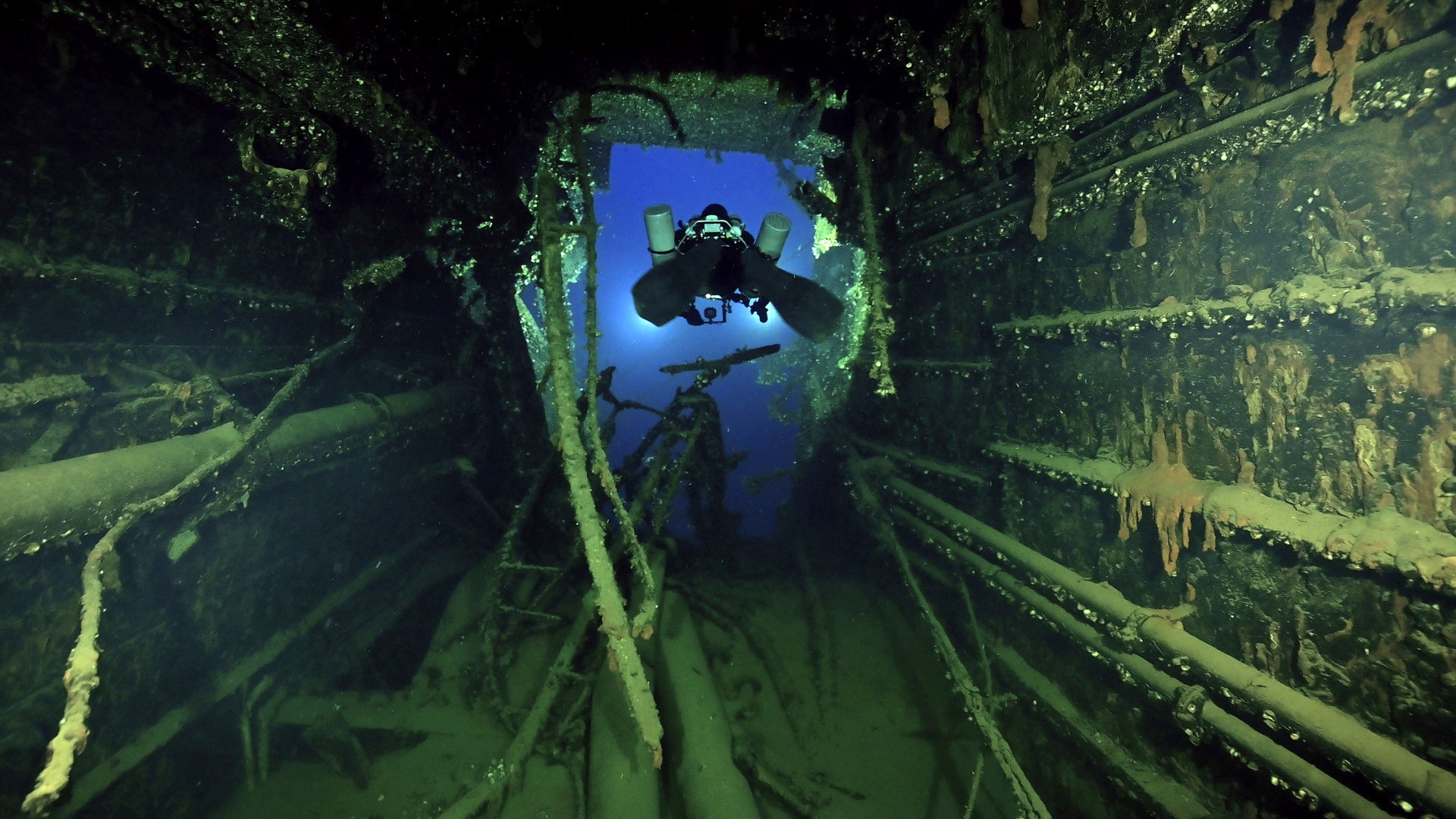
In this undated photo provided by the Greek Culture Ministry on Monday, Sept. 15, 2025, divers illuminate the wreck's interior of the Britannic, sister ship to the Titanic, for the first time since the ocean liner sank in the Aegean Sea more than a century ago after striking a mine during World War I. (Greek Culture Ministry via AP)
In this undated photo provided by the Greek Culture Ministry on Monday, Sept. 15, 2025, divers illuminate the wreck's interior of the Britannic, sister ship to the Titanic, for the first time since the ocean liner sank in the Aegean Sea more than a century ago after striking a mine during World War I. (Greek Culture Ministry via AP) (Greece's Culture Ministry)

The wreck lies at a depth of 120 meters (nearly 400 feet), making it accessible only to technical divers. The dive team used closed-circuit rebreather equipment in a recovery operation organized by British historian Simon Mills, founder of the Britannic Foundation, the Culture Ministry said.

Conditions on the wreck were particularly tough because of currents and low visibility, the ministry said. Among the items raised to the surface were artifacts reflecting both the ship’s utilitarian role and its luxurious design: the lookout bell, the navigation lamp, silver-plated first-class trays, ceramic tiles from a Turkish bath, a pair of passenger binoculars and a porcelain sink from second-class cabins.
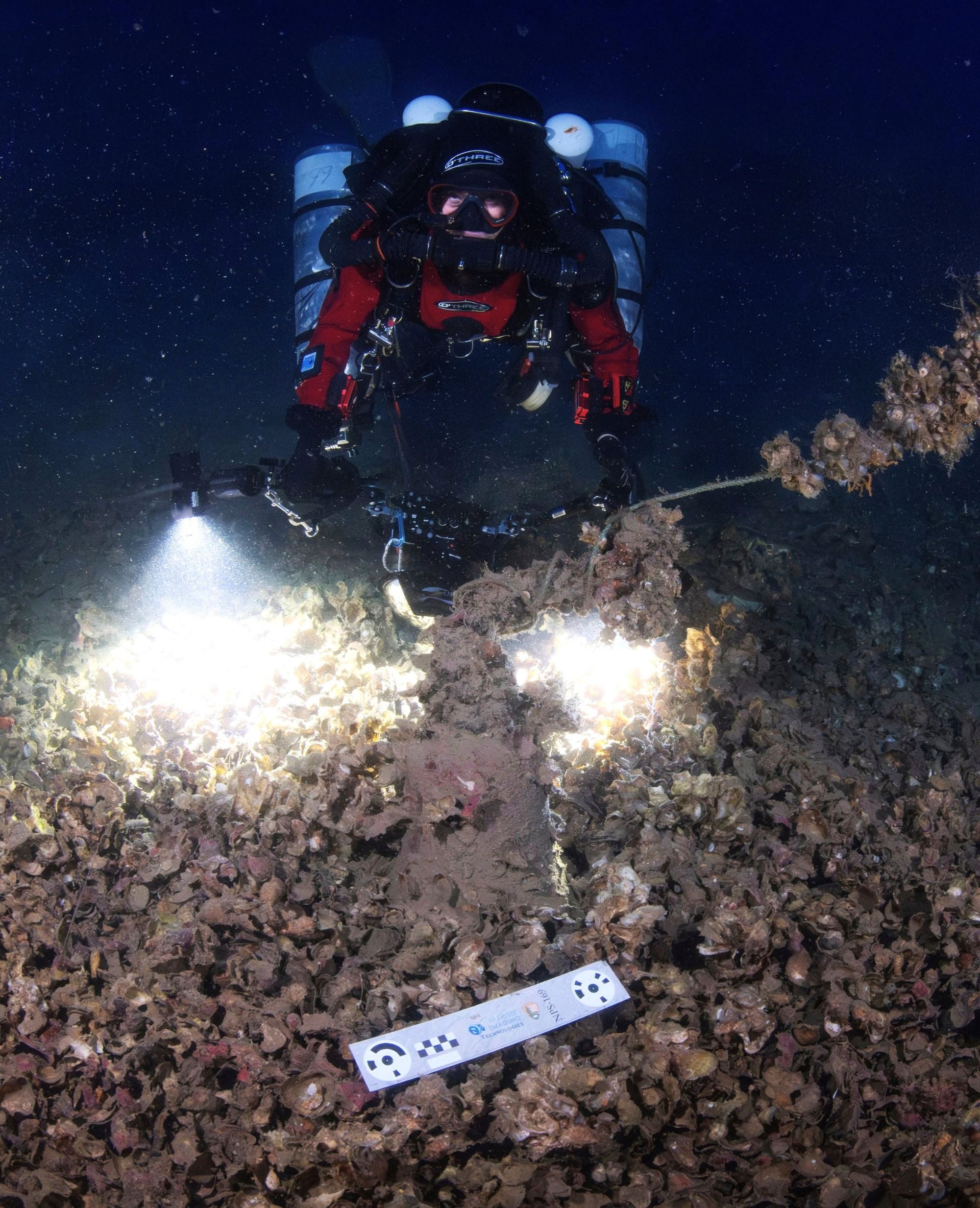
In this undated photo provided by the Greek Culture Ministry on Monday, Sept. 15, 2025, a diver carefully sifts to recover objects from the wreck site of the Britannic, sister ship to the Titanic, for the first time since the ocean liner sank in the Aegean Sea more than a century ago after striking a mine during World War I. (Greek Culture Ministry via AP)
In this undated photo provided by the Greek Culture Ministry on Monday, Sept. 15, 2025, a diver carefully sifts to recover objects from the wreck site of the Britannic, sister ship to the Titanic, for the first time since the ocean liner sank in the Aegean Sea more than a century ago after striking a mine during World War I. (Greek Culture Ministry via AP) (Greece's Culture Ministry)

The artifacts are now undergoing conservation in Greek capital Athens and will be included in the permanent collection of a new Museum of Underwater Antiquities under development at the port of Piraeus. The museum will feature a dedicated World War I section, with the items from the Britannic as a centerpiece.

Thank you for registering

Please refresh the page or navigate to another page on the site to be automatically logged inPlease refresh your browser to be logged in