How British 60-year-olds could be the UK’s best hope to prepare for war
It might conjure up the image of Private Godfrey in ‘Dad’s Army’, but the Ministry of Defence’s announcement that the age at which retired troops can be called up will increase to 65 also makes perfect sense, says defence expert Francis Tusa. In many ways, an older cohort might be even more effective


The Ministry of Defence has announced that it is increasing by 10 years the age limit for calling personnel back to serve in the forces in the event of a crisis. It had been 55, but will now be 65. It might seem strange to look to the generation of 60-65-year-olds for defence jobs – surely too old? But it makes perfect sense to me.
Think about it: in the 1980s, average life expectancy was 70 years for men and 76 for women. It is now 79 and 83 respectively, and is set to climb gently over the next decade. When retirement doesn’t officially start until we’re 67, assumptions about what you can call upon people to do, and at what ages, have changed.
Without a doubt, some will question whether a 63-year-old is physically capable of operating in a military environment. But even this kind of thinking needs to be challenged. According to the London Marathon, 2,500 runners in 2025 were aged 60-64, and a total of around 3,500 runners were aged between 60 and 80-plus years – about the same number as ran in the 20–24 age group.
Running, along with other sports, is growing among the over-60s. An October 2025 Parkrun event in southwest London saw 117 over-80s taking part. The point is that society, despite rising levels of obesity at one end, has seen significant increases in health and fitness at the other.
Compared with the 1980s and 1990s, many “combat” jobs no longer require supreme physical prowess. If you are flying a drone hundreds of kilometres away from the front, do you really need to bench press 60kg or run a marathon in under four hours?



In Sweden, you can be mobilised up to the age of 70. Finland legislated in 2022 to move to a 65-year mobilisation limit, and other Nordic nations are also looking at shifting their upper age limit for call-up to 60-plus. It has to be said that if these countries can see value in this – and they, unlike the UK, are on the frontline – it needs to be taken seriously.
As for using older troops being deployed on the ground, the war in Ukraine has overturned a number of assumptions about age. Although Kyiv is now having to consider lowering the call-up age for those in their twenties, a 2023 Harvard Kennedy School report noted that the average age of soldiers on the frontline was 48-51, adding that on then-current trends, the average age was set to rise as high as 58. This may be unthinkable in western Europe, but this force of older troops has stopped and held a far larger Russian army.
In the UK, 60-65-year-old reservists will not be expected to pick up a rifle and trudge to the frontline trenches. Many army units, for example, have clerks and similar posts. All of these have wartime roles, often as stretcher-bearers. But if you need help at headquarters, why not send the 24-year-old out with his stretcher and have a 62-year-old reservist take that job?
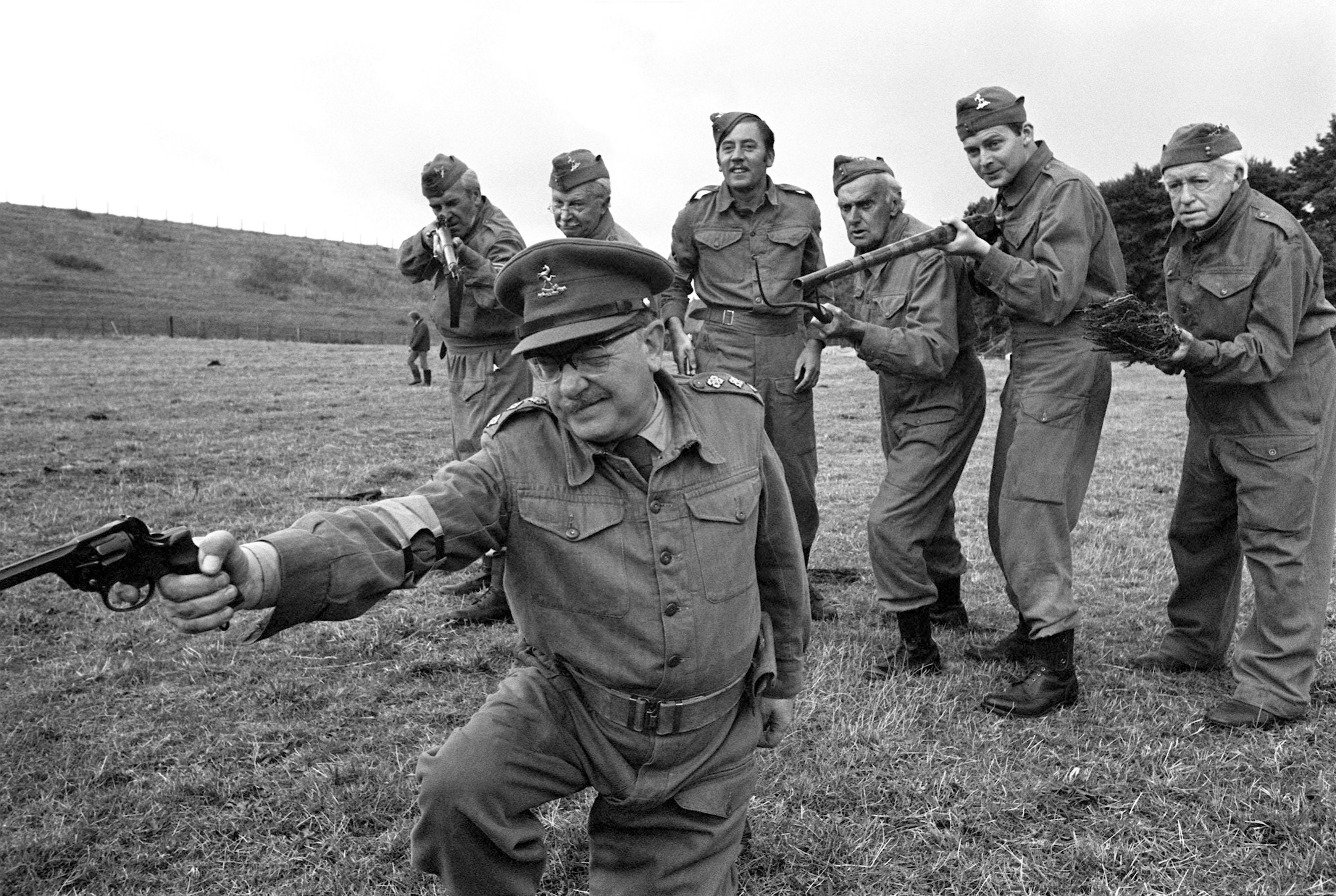
In war – and this is often forgotten in the UK – headquarters and similar facilities need security details. Do you take troops from an infantry battalion at the front, or mobilise a unit of older reservists to do the job?
The latter option was adopted in the 1980s. In 1982, amid growing tensions with the Soviet Union (spot the similarity with today), there were real concerns that the UK was at increased risk of attack and that defences needed to be improved. One option was the creation of the Home Service Force (HSF), which quickly re-enlisted thousands of older former soldiers and reservists who had several years of prior service.
I had an HSF platoon assigned to my Territorial Army platoon – and to some onlookers it might have looked a bit like Dad’s Army. But this group had deep knowledge, years of experience, and above all, enthusiasm. I know of one HSF platoon in East Anglia where the platoon commander, a lieutenant, was a former soldier who had served as a major in the 1950-53 Korean War and had been awarded the Military Cross. At the time, his Korean War experiences were only 30 years behind him – and he was a formidable operator.
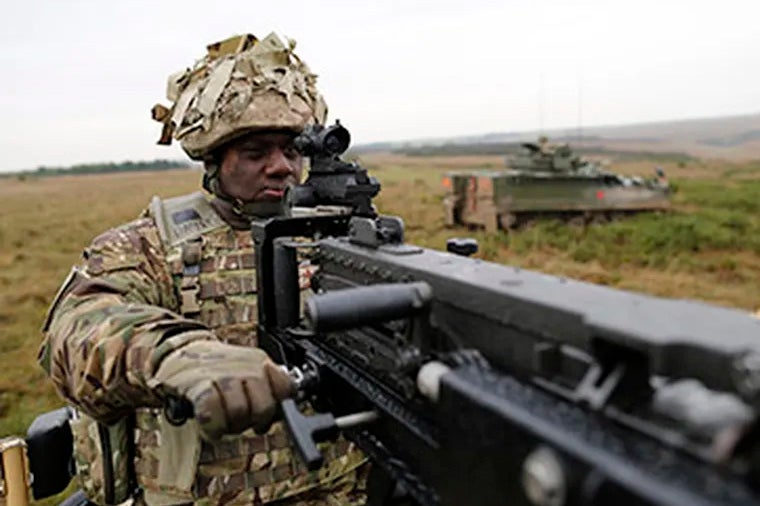
Someone who served for decades in anti-submarine warfare is unlikely to have forgotten all of that experience and could be used on staff covering that domain. That depth of knowledge would be invaluable in today’s Navy, where people tend to move jobs every two years or so. Similarly, an RAF reservist who once ran an entire airbase could also be invaluable to their younger counterpart. An older person may well have handled the physical defence of that base during the Cold War, whereas a younger officer will never have experienced the sort of planning and exercises that were commonplace in the 1980s.
Without some expansion of forces in the UK, our vulnerabilities remain huge. How many would be needed to plug the gaps? The Home Defence Territorial Army in the late 1980s numbered around 30,000-35,000, with as many as 10,000 HSF troops on top of that. Perhaps that would be too many today – but a well-equipped (absolutely vital), motivated force of more than 20,000 home defence troops would be a major step forward and far removed from the current defenceless state.
It is already MoD policy that if you are trying to recruit people to work in defence in the cyber domain – generally younger people – you cannot treat them in the same way as “normal troops” in physical roles. Cyber warriors have entirely different requirements, so why not also look to older reservists for specialist skills needed outside the usual requirements of regular forces?

Of course, it is also crucial that reserves at all levels have a training regime that keeps core skills at a satisfactory level. Once someone has been out of uniform for three years or more, studies show a ‘skills fade’ sets in. In Israel, the view is that once a reservist has gone five years without refresher training, mobilisation becomes far more difficult because of that. However, experience shows that even a weekend refresher course can keep reservists at an acceptable level.
There is, of course, one potentially dispiriting aspect of this otherwise sensible expansion of reserve age limits: it highlights that, even with strenuous efforts, it remains difficult to persuade the 18-28 age group to join either the regular forces or the reserves.
Yes, there have been improvements – but these have largely been about stopping the outflow rather than generating the inflow needed to significantly bolster defences in a crisis. But if that is the society you are dealing with, you play the cards you are dealt.
Francis Tusa is editor of Defence Analysis
Join our commenting forum
Join thought-provoking conversations, follow other Independent readers and see their replies
Comments
Bookmark popover
Removed from bookmarks